
Quatuor Ébène
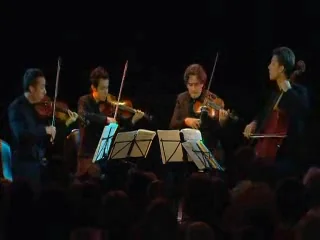
Image from Wikipedia
Image from Wikipedia
Quatuor Ébène – The French String Quartet Redefining Classical Music
Four Musicians, One Distinct Signature
Quatuor Ébène is one of the defining string quartets of its generation. The ensemble was founded in 1999 at the Conservatoire de Boulogne-Billancourt; from this academic origin, it quickly developed an international music career characterized by technical brilliance, stylistic curiosity, and an extraordinarily vibrant stage presence. Early on, the quartet stood out for its openness, understanding the classical repertoire not as a limitation, but as a starting point. (de.wikipedia.org)
The sound of the ensemble combines precision, energy, and a palpable enjoyment of risk. This is precisely what has created Quatuor Ébène's unique position in the international concert scene: a quartet that plays Beethoven, Debussy, or Bartók with the same seriousness as jazz and pop arrangements, without losing the core of chamber music discipline. This blend of musicality, analytical depth, and stylistic agility quickly made the name Ébène a trademark. (quatuorebene.com)
Biography: From Conservatory to World Career
The story of Quatuor Ébène begins in the lessons and rehearsal routines of young students, who initially formed in chamber music work and further honed their skills with Quatuor Ysaÿe in Paris as well as with Gábor Takács, Eberhard Feltz, and György Kurtág. A decisive turning point came in 2004 with their victory at the ARD Music Competition in Munich, a success that marked their international breakthrough and brought the ensemble to the major stages of Europe and North America. In the following years, the quartet received significant awards, including the Belmont Prize, the Borletti-Buitoni Trust Award, and in 2019, as the first ensemble ever, the Frankfurt Music Prize. (quatuorebene.com)
The fact that Quatuor Ébène is now regarded as one of the most prestigious chamber music formations is due not only to competition wins and accolades but also to the consistency of its artistic development. The ensemble regularly performs in venues such as the Philharmonie de Paris, Wiener Konzerthaus, Carnegie Hall, Verbier Festival, and the Philharmonie Luxembourg. Their international reputation has emerged from a long series of concerts, recordings, and programmatic decisions that position the quartet not as a specialist ensemble for a narrow canon, but as a modern, curious chamber music entity. (artsmg.com)
The Style: Classical Music with Openness, Groove, and Color
What makes Quatuor Ébène special is its ability to fill the classical form with unexpected stylistic flexibility. The musicians developed a practice of improvising over jazz standards and pop songs during their studies, from which a distinctive profile later emerged. The New York Times aptly described this adaptability as a quartet that can effortlessly transition into a jazz band; this very idea continues to shape the perception of the ensemble today. (quatuorebene.com)
In interpreting string quartets, the ensemble often begins with extreme sonic transparency, combining it with rhythmic tension and great breadth. The result is an approach that reconciles historical depth with contemporary energy. Whether it's Mozart, Schubert, Bartók, Fauré, or Shostakovich: Quatuor Ébène never presents the structural core alone but animates it with distinctive articulation, nuanced dynamics, and a striking willingness to push musical boundaries. (artsmg.com)
Discography: Between Canon, Crossover, and Sonic Exploration
The discography of Quatuor Ébène demonstrates the full range of its musical identity. Important releases include recordings of Debussy, Fauré, and Ravel, Bartók, Beethoven, Haydn, the Mendelssohn siblings, as well as projects with other renowned artists. The crossover and genre-crossing works have garnered particular attention: Fiction (2010), Brazil (2014), and Eternal Stories (2017) document their engagement with jazz, pop, and improvisatory forms as a core part of their artistic concept. (quatuorebene.com)
Among the recent highlights are collaborations with Philippe Jaroussky on Green (Mélodies françaises) and with Matthias Goerne and Gautier Capuçon in Schubert programs. In 2023, they released recordings of Mozart's String Quintets KV 515 and KV 516 with Antoine Tamestit, which received accolades such as Choc Classica, Diapason d’Or, and Gramophone’s Recording of the Month. This response underscores the authority of the ensemble even in the demanding core repertoire. (quatuorebene.com)
Beethoven Around the World and the Grand Gesture
A central project in the recent history of the ensemble is Beethoven Around the World. Between May 2019 and January 2020, Quatuor Ébène performed the complete cycle of 16 Beethoven quartets, combining this recording with a globe-spanning tour across six continents. The endeavor was not only a logistical grand project but also an artistic statement marking the quartet's 20th anniversary on stage. (quatuorebene.com)
This project particularly highlights the ensemble's way of working: the repertoire is not treated in a museum-like manner but is understood as a lively, international concert discourse. Beethoven appears here as a historical reference point and simultaneously as a contemporary author, whose music is re-examined in different spaces, acoustics, and listening cultures. The recordings that arose from this project solidified Quatuor Ébène's reputation as a quartet with great artistic breadth and extraordinary discipline. (quatuorebene.com)
Current Projects: Residencies, Academy, and New Concert Cycles
From 2024 to 2026, Quatuor Ébène remains in motion. The ensemble was the residence ensemble of the Philharmonie Luxembourg in the 2023/24 season and simultaneously performed as Quatuor en résidence à Radio France with several concerts in Paris. The opening of the String Quartet Biennale at the Philharmonie de Paris in January 2026, together with the Belcea Quartet, has also been announced; additionally, new Beethoven cycles are planned in Tokyo, Berlin, Rome, and London. (artsmg.com)
Furthermore, the ensemble is involved in educational work: since 2021, the Quatuor Ébène Academy has existed at the Hochschule für Musik und Theater München, where the ensemble is establishing its own string quartet class. This points to an artistic authority that extends beyond the concert stage and into the training of the next generation of chamber musicians. In 2024, a new cellist, Yuya Okamoto, joined the ensemble, further expanding the sound balance and identity of the group. (quatuorebene.com)
Critical Reception and Cultural Influence
For years, the music press has recognized Quatuor Ébène as an ensemble with exceptional openness and artistic sovereignty. The reviews repeatedly emphasize the connection between formal rigor and sonic imagination, technical proficiency, and stylistic fearlessness. It is precisely this blend that has made the quartet a reference point for listeners who want to experience chamber music not merely as a tradition but as a contemporary art form. (artsmg.com)
The cultural influence of the ensemble lies in breaking down rigid genre boundaries. Quatuor Ébène has shown that a string quartet can simultaneously interpret canonical works, integrate jazz and pop elements, and open new spaces in collaborative formats with singers, instrumental soloists, and orchestras. In a time when classical music must continually assert its relevance, this ensemble stands for a contemporary, audience-friendly, yet highly ambitious understanding of music. (quatuorebene.com)
Conclusion: Why Quatuor Ébène Remains Exciting
Quatuor Ébène captivates because it does not merely manage tradition but transforms it. The ensemble combines chamber music excellence with curiosity, dramaturgical sensitivity, and a rare openness to other sound worlds. Those looking to understand how vibrant a string quartet can sound in the 21st century will find here a model of artistic development at the highest level. (artsmg.com)
This quality manifests strongest in live performances: the tension of ensemble play, the precision of detail, and the immediate energy between the stage and the audience. A concert with Quatuor Ébène means chamber music as an event, not as routine. Anyone who experiences the ensemble live hears not only great works of music history anew, but also a quartet that shapes its present with impressive clarity. (artsmg.com)
Official Channels of Quatuor Ébène:
- Instagram: no official profile found
- Facebook: no official profile found
- YouTube: no official profile found
- Spotify: https://open.spotify.com/artist/2fFxNneQmtCTdIwEpfXnqe
- TikTok: no official profile found
Sources:
Upcoming Events
Quatuor Ébène
An evening full of chamber music magic in Munich: Quatuor Ébène plays Beethoven at the Prinzregententheater. 18.05.2026, 8 PM. Secure your seats now. #Munich
Quatuor Ébène with Guests
Experience an unforgettable chamber concert with Quatuor Ébène in Rossini Hall on June 22, 2026.
Beethoven String Quartet Cycle I
Discover Beethoven's early and late quartets live in the Small Beethoven Hall. A must for classical fans!
Beethovenfest 2026: Quatuor Ébène with Beethoven String Quartet Cycle I
Beethoven up close: Quatuor Ébène plays in the Kleine Beethovenhalle Muffendorf. 09/25/2026, 7:30 PM, tickets from 29 euros. #Beethovenfest