
György Ligeti
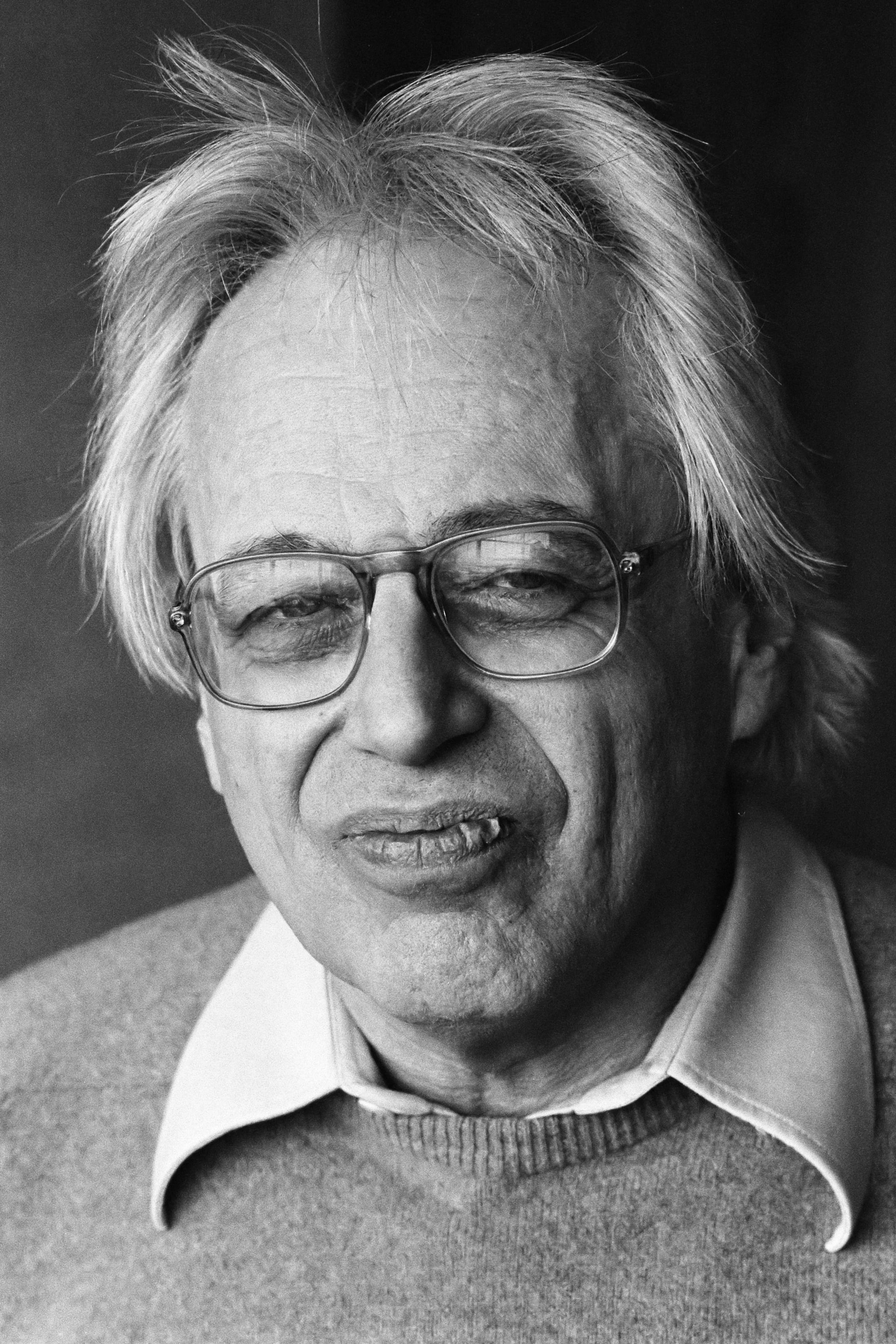
Image from Wikipedia
Image from Wikipedia
György Ligeti – The Sound Architect of Modernity
György Ligeti: The Visionary Composer Between Sound Space, Rhythm, and Cosmic Imagination
György Ligeti is considered one of the defining composers of the 20th century. His music has not only expanded New Music but has truly redefined it: with shimmering soundscapes, micropolyphonic density, radical rhythmic models, and a distinctive sense of the absurd. He gained widespread recognition mainly through the films of Stanley Kubrick, but his artistic profile extends far beyond that, continuing to influence concert halls, music schools, and the tradition of contemporary interpretation to this day. ([britannica.com](https://www.britannica.com/biography/Gyorgy-Ligeti))
Biography: Origins, Break, and New Beginning
György Sándor Ligeti was born on May 28, 1923, in Diciosânmartin in Transylvania and died on June 12, 2006, in Vienna. He grew up in a Central European environment shaped by Hungarian, Romanian, and Jewish histories; his life path was early marked by political upheavals and the experience of exile. The early influence of Béla Bartók remained important for his musical language, but Ligeti soon developed an independent position that could not be reduced to any national school or stylistic constraint. ([britannica.com](https://www.britannica.com/biography/Gyorgy-Ligeti))
After the end of the Hungarian uprising, Ligeti fled to Vienna in December 1956 with Veronika Spitz and later took on Austrian citizenship. Prior to that, he had already faced political repression in Hungary; the cultural policies of the time constrained his artistic freedom and made the path to the West almost inevitable. In Cologne, he worked from 1957 to 1958 at the Studio for Electronic Music of Westdeutscher Rundfunk and met key figures of the avant-garde such as Karlheinz Stockhausen and Gottfried Michael Koenig. ([de.wikipedia.org](https://de.wikipedia.org/wiki/Gy%C3%B6rgy_Ligeti))
The Breakthrough: From Apparitions to Atmosphères
Ligeti's early works, such as Musica ricercata and the Six Bagatelles for Wind Quintet, still show a closeness to Bartók, but already express a desire to understand musical language as a field for experimentation. The decisive step into international recognition was marked by Apparitions and especially Atmosphères, which premiered in 1961 at the Donaueschinger Musiktage and left such an impression that it had to be repeated. The work is considered a cornerstone of his oeuvre, as it exemplarily consolidates sound space composition and micropolyphony. ([de.wikipedia.org](https://de.wikipedia.org/wiki/Gy%C3%B6rgy_Ligeti))
With these works, Ligeti radically detached himself from serial music. Instead of linear thematic dramaturgies, he devised dense textures in which many individual voices merge into a floating whole. This method changed the perception of orchestral sound and made Ligeti a composer whose music is narrated not through melodies in the classical sense but through movement within the sound. ([de.wikipedia.org](https://de.wikipedia.org/wiki/Gy%C3%B6rgy_Ligeti))
The Music of the Absurd: Theater, Opera, and Intellectual Wit
Ligeti was not only a sound researcher but also an author with a strong sense for theater, irony, and grotesque exaggeration. His opera Le Grand Macabre, created from 1974 to 1977, expands his sound language to include traditional forms without abandoning its experimental core. The work demonstrates how adeptly Ligeti could navigate between seriousness and parody, musical precision, and absurd music theater. ([de.wikipedia.org](https://de.wikipedia.org/wiki/Gy%C3%B6rgy_Ligeti))
This character also clearly emerges in pieces such as Poème symphonique for 100 Metronomes or in his vocal works. Ligeti loved paradox: technical complexity met playful ideas, intellectual rigor met a wit that was never merely decorative. It is precisely this balance that makes many of his compositions demanding for performers while simultaneously being immediately fascinating for audiences. ([theguardian.com](https://www.theguardian.com/music/2018/may/14/ligeti-in-wonderland-review-pierre-laurent-aimard))
Late Works: Rhythmic Labyrinths and Global Influences
In the 1980s and 1990s, Ligeti significantly broadened his spectrum again. The Études pour piano, created between 1985 and 2001, are considered highlights of his late work. They combine complex rhythmic entanglements with the illusion of simultaneous speed layers, inspired by Conlon Nancarrow and by African music south of the Sahara. With this, Ligeti shifted the focus from static sound space to a highly energetic, moving rhythm. ([de.wikipedia.org](https://de.wikipedia.org/wiki/Gy%C3%B6rgy_Ligeti))
His late concertos and vocal works also exhibit this openness: the Piano Concerto, the Violin Concerto, the Viola Concerto, the Nonsense Madrigals, and the Hamburg Concerto demonstrate an artistic evolution that has never been exhausted. Particularly noteworthy is that Ligeti incorporated influences from Europe, Africa, and the so-called New World context into his late works, crafting music that defies simple genre categorization. ([theguardian.com](https://www.theguardian.com/music/2018/may/14/ligeti-in-wonderland-review-pierre-laurent-aimard))
Discography, Reception, and Canonization
Ligeti's discography is rich in reference recordings, not in chart hits in the popular sense. Instead of single successes, key works such as Atmosphères, Lontano, Lux aeterna, Aventures, the Études, and Le Grand Macabre are at the center of reception. The official catalog of works and numerous editions on labels such as Sony Classical, Deutsche Grammophon, Wergo, BIS, or Naxos document how intensely his music has been received by top ensembles and soloists. ([en.gyorgy-ligeti.com](https://en.gyorgy-ligeti.com/media))
The critical reception regularly highlights the radical stylistic transformation of his work. The Guardian described Ligeti as a composer who made an exceptionally radical stylistic shift in the middle of his career, particularly praising the late works as unclassifiable, rich in traditions, and of enduring originality. This is not mere newspaper praise, but an accurate observation: Ligeti remains a challenge for musicology, performance practice, and listening experience alike. ([theguardian.com](https://www.theguardian.com/music/2018/may/14/ligeti-in-wonderland-review-pierre-laurent-aimard))
Film, Culture, and Global Impact
A significant portion of Ligeti's popularity is due to Stanley Kubrick, who used Atmosphères, Lux aeterna, Aventures, Lontano, and other pieces in 2001: A Space Odyssey, The Shining, 2010: The Year We Make Contact, and Eyes Wide Shut. This connection linked Ligeti's sound language to a cultural imagery shaped by space, eeriness, and psychological tension. At the same time, this reception shows how strongly his music has entered the broader cultural memory beyond New Music. ([de.wikipedia.org](https://de.wikipedia.org/wiki/Gy%C3%B6rgy_Ligeti))
However, his influence goes deeper than the film canon. Ligeti is a focal point for composers, ensembles, and music theory because he reimagined material, form, and perception. Listening to his works provides not just modernity but an art of permanent upheaval, which still sounds fresh today. ([britannica.com](https://www.britannica.com/biography/Gyorgy-Ligeti))
Awards and Recognition
Ligeti received nearly all major music awards in Europe: the Beethoven Prize of the City of Bonn, the Bach Prize in Hamburg, the Grand Austrian State Prize for Music, the Praemium Imperiale, the Balzan Prize, the Ernst von Siemens Music Prize, the Kyoto Prize, the Polar Music Prize, and many other honors. These awards not only document fame but also the broad recognition of an oeuvre that has significantly transformed art music of the 20th century. ([de.wikipedia.org](https://de.wikipedia.org/wiki/Gy%C3%B6rgy_Ligeti))
Even posthumously, Ligeti remains present: in 2023, several institutions remembered his work on the occasion of his 100th birthday, and interest in his compositions remains unbroken. It is this lasting relevance that makes him a key figure between historical avant-garde and vibrant present. ([de.wikipedia.org](https://de.wikipedia.org/wiki/Gy%C3%B6rgy_Ligeti))
Current Projects and Releases
Since György Ligeti passed away in 2006, there are no current projects, new albums, or tours planned for 2024 or 2025. However, his work continues to live on in editions, performances, anniversary programs, and scholarly editions. The presence on the official works and media site shows that his music is still actively performed, documented, and interpreted. ([britannica.com](https://www.britannica.com/biography/Gyorgy-Ligeti))
Conclusion: Why György Ligeti Continues to Electrify Today
György Ligeti remains captivating because he understood music not as a style but as an adventure of listening. He could set sound in motion, transform rhythm into illusion, and elevate the absurd into the highest compositional discipline. Experiencing his works live immediately conveys why Ligeti is one of the great mavericks in music history: his scores open up spaces that feel both intellectual, sensual, and profoundly foreign. ([theguardian.com](https://www.theguardian.com/music/2018/may/14/ligeti-in-wonderland-review-pierre-laurent-aimard))
A concert featuring Ligeti is never merely about preserving a repertoire. It is an event that sharpens perception, challenges the ear, and makes the present of New Music immediately tangible. This is precisely where his enduring greatness lies: Ligeti composed for the future, and that future still sounds new. ([praemiumimperiale.org](https://www.praemiumimperiale.org/en/laureate-en/laureates-en/ligeti-en))
Official Channels of György Ligeti:
- Instagram: No official profile found
- Facebook: No official profile found
- YouTube: No official profile found
- Spotify: No official profile found
- TikTok: No official profile found