
Eva Illouz
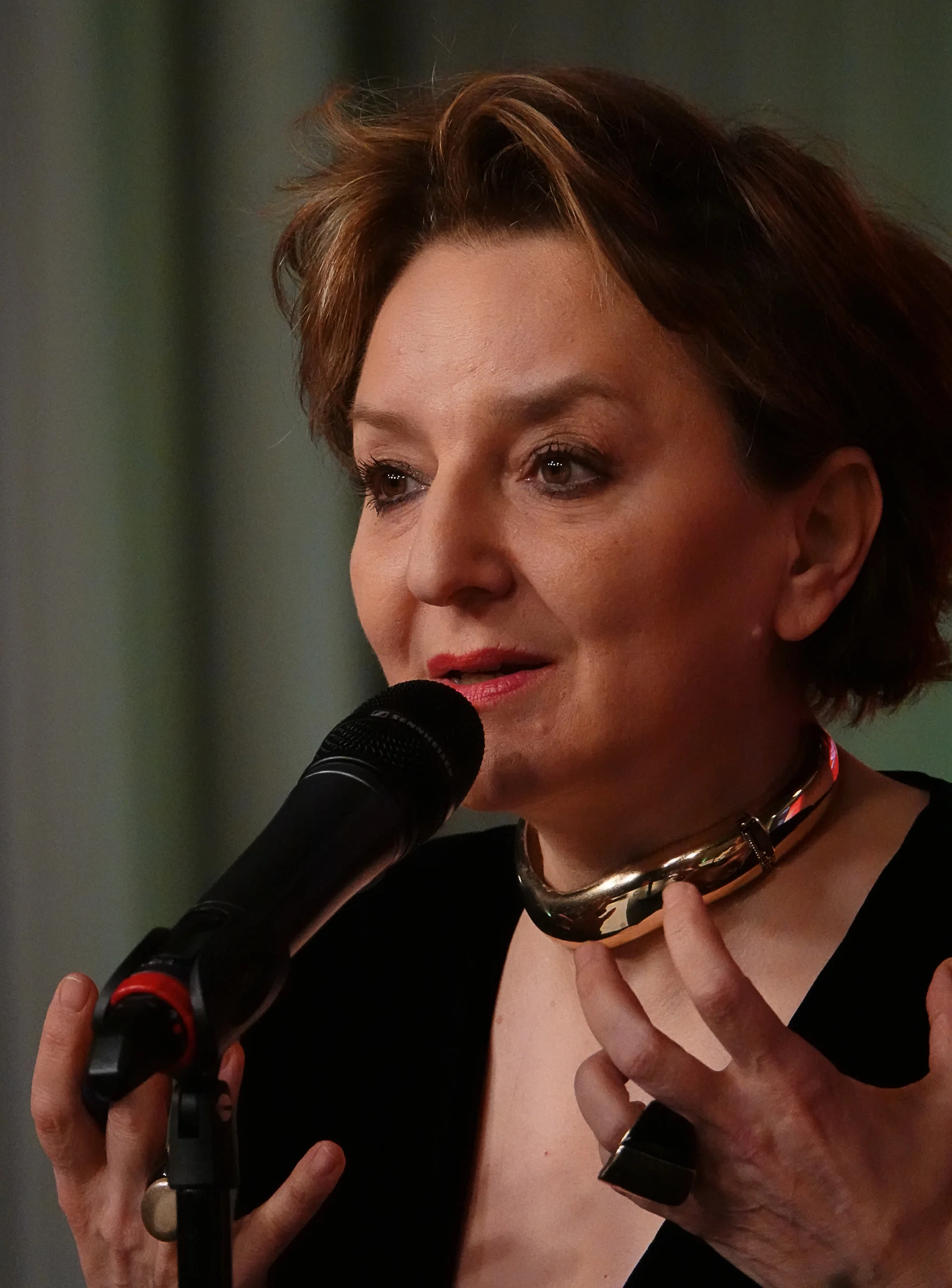
Image from Wikipedia
Image from Wikipedia
Eva Illouz: The Sociologist of Emotions, Love Capital, and Modern Society
One of the Most Influential Voices in Contemporary Sociology
Eva Illouz is one of the most prominent intellectual figures in international sociology. The French-Israeli scholar, born in 1961 in Fès, has significantly shaped a field of research on emotions, intimacy, culture, and capitalism that has gained attention far beyond academia. Her texts combine theoretical sharpness with societal observation, making visible how closely personal experience and social order are intertwined.
Illouz represents a sociology that does not remain in the abstract but takes the everyday world seriously: love, desire, shame, hope, hurt, self-optimization, and social recognition. That is where her particular impact lies. She describes modern societies as emotional systems in which economic logics, cultural expectations, and private feelings are inextricably intertwined.
Biographical Background and Academic Formation
Eva Illouz grew up in a multilingual and transnational context, which sharpened her perception of culture and social belonging early on. After her birth in Morocco, her life path led her to France and later to Israel, where she established herself as one of the leading sociologists of her generation. This biographical movement between countries, languages, and academic traditions continues to shape the breadth of her thinking today.
She is a professor of sociology at the Hebrew University of Jerusalem and also teaches at EHESS in Paris and Zeppelin University in Friedrichshafen. At the Hebrew University, she is registered as a Full Professor in the Department of Sociology and Anthropology; EHESS lists her as directrice d'études. Her institutional affiliation with three renowned academic spaces underscores her international standing and authority in contemporary social research.
The Breakthrough: Emotions as the Key to Modernity
Eva Illouz's scientific breakthrough did not rest in a single book but in the consistency with which she established emotions as a central subject of sociology. Early works, such as the 2001 contribution on emotions in sociological theory, already show how systematically she worked towards a shift in perspective. For her, feelings do not appear as private fringe phenomena but as socially shaped and culturally organized forces.
Her analysis of romantic love in the context of consumer culture and capitalist modernity became particularly influential. Books such as Consuming the Romantic Utopia, Why Love Hurts, and The End of Love made her one of the most discussed voices in critical social theory. Her works demonstrate that love, partnership, and intimacy are not timeless natural phenomena but are shaped by markets, media, psychology, and social inequality.
Research Focus: Emotion, Capitalism, and Cultural Order
Illouz’s work concentrates on the interweaving of emotionality and modernity. She analyzes how capitalist societies organize, utilize, and translate feelings into social expectations. In her studies on the emotional capitalism model, therapeutic culture, and the relationship between self-interpretation and market logic, she develops a sociology that interlaces psychological experience with political economy.
A central idea of her research is: modern people increasingly understand themselves through emotional categories. Happiness, authenticity, self-esteem, and fulfilling relationships become normative ideals that not only structure private life but also influence the world of work and the public sphere. In doing so, Illouz opens sociology to questions that are culturally deeply rooted and simultaneously highly relevant.
Current Projects and Academic Presence
In 2024 and 2025, Eva Illouz remains highly present academically. At EHESS, she will be involved in the seminar "Shame, guilt, and hatred: an emotional perspective on the public sphere" for the academic year 2024/2025; further teaching offerings are documented for 2025/2026, including "Shame and Guilt, Memory and Forgetting: An Emotional Perspective on the Public Sphere." These topics show how consistently she is developing questions of affect, publicness, and political modernity.
Zeppelin University presented her new volume Explosive Modernity in 2025 during a book launch, emphasizing how Illouz reads emotional states such as fear, hope, nostalgia, disappointment, envy, or jealousy as driving forces of social decisions. The current research focus thus remains closely tied to the present: feelings are understood not as mere byproducts but as structure-building forces of modern societies.
Discography in a Metaphorical Sense: The Canonical Books of Eva Illouz
Even though Eva Illouz is not a musician, her work possesses a kind of intellectual discography: a sequence of significant titles that form a recognizable developmental line. Her most important books include Consuming the Romantic Utopia, Saving the Modern Soul, Cold Intimacies, Why Love Hurts, The End of Love, and more recent works on emotional modernity and populism. These books mark stages of research that have consolidated over decades.
Her texts have been translated into many languages; the German Wikipedia entry lists twelve books in eighteen languages. This underscores the international reach of her work. Notably, Illouz succeeds in combining demanding theoretical argumentation with clear, accessible language, allowing her books to resonate widely not only within academia but also in cultural criticism.
Critical Reception, Influence, and Academic Authority
The reception of Eva Illouz is characterized by high recognition and intense debate. Academic journals, university presses, and cultural critique media regularly reference her work when discussing love, affect, self-optimization, consumer culture, or the emotional logic of capitalism. Her theory has significantly influenced diverse fields such as sociology, cultural studies, gender studies, and media analysis.
In 2026, she was awarded the University President’s Lifetime Achievement Award by the Hebrew University of Jerusalem, becoming the first recipient of this honor. She had previously received the Frank Schirrmacher Prize in 2024 for her outstanding research at the intersections of individual experience and social structures. Such honors confirm her status as an authority whose thinking shapes public debate.
Public Engagement and Intellectual Presence
Besides her university work, Illouz regularly writes for major media outlets such as Die Zeit, Le Monde, Haaretz, and Der Freitag. This journalistic presence adds a clear public voice to her academic profile. She belongs to the intellectuals who translate academic analysis into societal understandability without losing complexity.
This ability makes her work relevant to a broad audience. Illouz does not only speak about theories but also about the reality of modern subjects: about the tension between autonomy and dependency, the pressure for self-actualization, and the political consequences of emotional insecurity. Her sociology remains, therefore, a diagnosis of the present.
Cultural Influence and Significance for the Present
Eva Illouz has changed the way love, feelings, and social inequality are discussed. Her works demonstrate that intimate relationships do not exist outside of society; rather, they are a place where capitalism, gender relations, media culture, and self-images intersect. In doing so, she has created a theoretical framework that extends far beyond sociology.
Her cultural influence also lies in the fact that she addresses large societal questions not in dry academic language but describes them as a dramatic intertwining of experience, power, and modernity. Anyone wanting to understand why love, attachment, and identity feel so contradictory in the present will find one of the most precise and insightful analyses of contemporary sociology in Eva Illouz.
Conclusion: A Thinker who Makes Emotional Modernity Readable
Eva Illouz remains compelling because she makes the invisible rules of the emotional world visible. She reads modern society like a score of affects, expectations, and cultural scripts – showing how deeply economic and emotional processes interlink. Her works possess the rare power to connect theoretical precision with social urgency.
Those who read her books or attend her lectures encounter a thinker with an extraordinary presence of mind: clear, pointed, and uncompromisingly analytical. Eva Illouz is worth every intense engagement because she provides the language for what many only feel vaguely. Her voice is among the most important of our time – and she deserves to be rediscovered time and again.
Official Channels of Eva Illouz:
- Instagram: no official profile found
- Facebook: no official profile found
- YouTube: no official profile found
- Spotify: no official profile found
- TikTok: no official profile found
Sources:
- Wikipedia – Eva Illouz
- The Hebrew University of Jerusalem – Eva Illouz
- The Hebrew University of Jerusalem – Department of Sociology and Anthropology
- The Hebrew University of Jerusalem – Lifetime Achievement Award
- EHESS – Seminar 2024/2025 by Eva Illouz
- EHESS – Seminar 2025/2026 by Eva Illouz
- Zeppelin University – Explosive Modernity
- Zeppelin University – Visiting Scholar Profile