
Bettina Tremmel
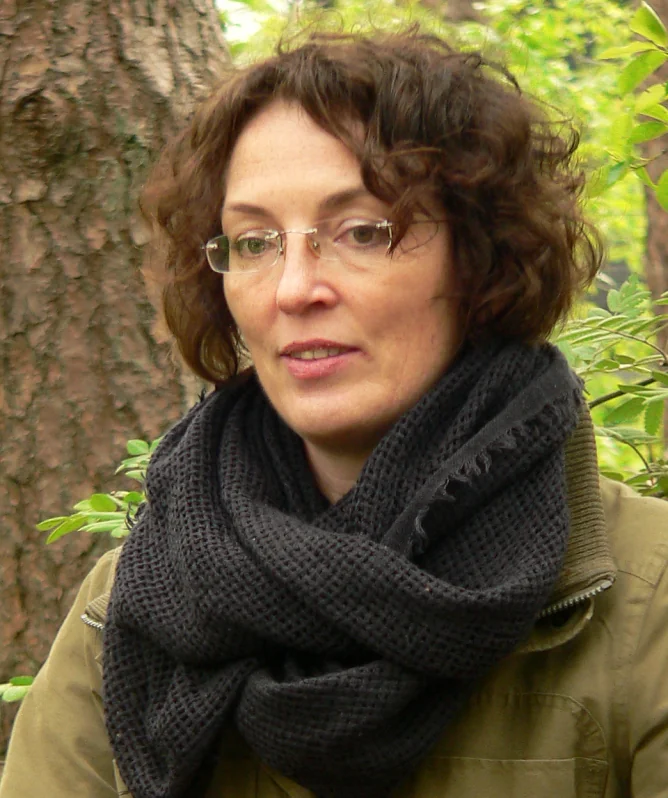
Image from Wikipedia
Image from Wikipedia
Bettina Tremmel: The Archaeologist of Roman Traces in Westphalia
A researcher between excavation, history, and precise trace analysis
Bettina Tremmel is a German provincial Roman archaeologist whose work is closely associated with the study of Roman presence in Westphalia. Born in 1971 in Schwarzach, her academic journey after completing high school in 1990 led her through Munich, Tübingen, and Aix-en-Provence into professional archaeology. Today, her name is synonymous with meticulous fieldwork, source-driven research, and the persistent reconstruction of a past that often survives only in fragments beneath the earth. ([de.wikipedia.org](https://de.wikipedia.org/wiki/Bettina_Tremmel))
From Academic Training to Archaeological Practice
The core of Tremmel's career lies in the integration of university education and practical heritage preservation. She studied provincial Roman archaeology, prehistory, and ancient history, earning her doctorate with a thesis on the castle vicus of Augusta Vindelicum. Even this focus reveals a researcher who does not settle for a general reception of Roman history but instead takes a closer look at the specific settlement, military, and everyday history of the Roman world. ([de.wikipedia.org](https://de.wikipedia.org/wiki/Bettina_Tremmel))
Her professional activity began as a scientific intern in the provincial Roman archaeology department of LWL-Archäologie für Westfalen in Münster under Johann-Sebastian Kühlborn. Since 2009, she has worked there as a scientific advisor. This continuity is particularly significant for an archaeologist, as field research, evaluation, publication, and public communication are closely intertwined in this profession. ([de.wikipedia.org](https://de.wikipedia.org/wiki/Bettina_Tremmel))
Focus on Westphalia: Roman Camps, Lippe, and Haltern
Tremmel's research focus is on the Roman camps along the Lippe and other remnants of the Romans in Westphalia. In doing so, she is working in a historical area that is central to understanding Roman military presence north of the Alps. Her responsibilities encompass excavation, evaluation of findings, and the contextualization of individual find locations within a larger network of Roman expansion, supply, and camp logistics. ([de.wikipedia.org](https://de.wikipedia.org/wiki/Bettina_Tremmel))
In 2011, she led the archaeological investigations of the Roman camp in Olfen, and since 2012 has been directing excavations at the LWL Roman construction site Aliso within the main camp of the former Roman camps in Haltern. Haltern is perceived publicly as one of the most important sites of Roman military archaeology in Germany, and Tremmel's work at this site represents the transition from classic excavation to museum-mediated research landscapes. Her role in such locations makes visible the extent to which modern archaeology navigates between scientific precision and cultural communication. ([de.wikipedia.org](https://de.wikipedia.org/wiki/Bettina_Tremmel))
Methodology, Excavation Leadership, and Research Depth
Archaeological work in this context demands more than just uncovering findings. Tremmel's profile showcases a researcher who integrates excavation leadership, documentation, and interpretation while paying particular attention to the military and infrastructural dimensions of Roman presence. The LWL-Archäologie für Westfalen explicitly names her as a scientific advisor in the provincial Roman archaeology department, underscoring her professional authority within a public heritage preservation institution. ([lwl-archaeologie.de](https://www.lwl-archaeologie.de/de/kontakt/archaologische-denkmalpflege/provinzialromische-archaologie/))
She also engages in public academic events with specific topics. In the program for the Archaeology in Westphalia-Lippe 2025 annual conference, she is listed for the lecture "Two Unusual Bread Ovens from the Main Camp in Haltern." Such contributions demonstrate that Tremmel's work does not solely aim at large military historical narratives but also focuses on the material details of camp life, infrastructure, production, and supply. ([lwl-archaeologie.de](https://www.lwl-archaeologie.de/media/filer_public/46/89/4689c438-a591-4cda-a45e-832220490080/jahrestagung_afwl_2025_prgramm.pdf))
Publications and Scientific Contributions
Among Tremmel's most significant academic publications is her dissertation "The Wooden Structures of the 1st Century AD in the Castle Vicus of Augusta Vindelicum" and its revised version "The Castle Vicus of the 1st Century AD from Augusta Vindelicum, Augsburg." These titles refer to research that examines the architecture, settlement structure, and functional contexts of Roman spaces. For the archaeological community, this integration of finds, typology, and historical interpretation is central. ([de.wikipedia.org](https://de.wikipedia.org/wiki/Bettina_Tremmel))
Another testament to her scholarly work is a chapter in Propylaeum on the Roman pottery from Holsterhausen. The fact that Tremmel has contributed to such a specialized work underscores her expertise not only in military archaeology but also in ceramic find evaluation, an area essential for dating, trade relations, and everyday reconstruction. Archaeological competence is manifest here in the precision of material rather than in spectacular individual images. ([books.ub.uni-heidelberg.de](https://books.ub.uni-heidelberg.de/propylaeum/catalog/book/1237/chapter/17271?utm_source=openai))
Public Presence and Archaeological Communication
Tremmel is not only present in the excavation site but also in public science communication. In 2021, LWL-Archäologie referred to her participation in a Terra X documentary about the Battle of the Teutoburg Forest. In such formats, she serves as an expert voice, making historical complexities understandable while marking the limits of archaeological certainty. A crucial part of her authority lies precisely in this: expertise is conveyed accurately rather than simplified. ([lwl.org](https://www.lwl.org/pressemitteilungen/nr_mitteilung.php?urlID=54738&utm_source=openai))
She frequently appears in press reports as a key contact for Roman finds in Westphalia. Whether in excavations at Haltern, investigations at camp and settlement sites, or new detailed findings about Roman infrastructure, Tremmel embodies an archaeology that excavates the ground not merely to unearth, but to make historical landscapes legible. This makes her work intriguing for both professional audiences and culturally interested readers. ([lwl.org](https://www.lwl.org/pressemitteilungen/nr_mitteilung.php?urlID=56091&utm_source=openai))
The Scientific Tone: Precise, Source-Oriented, and Down-to-Earth
What particularly characterizes Bettina Tremmel's profile is the connection between hands-on work and analysis. Her career unfolds not through grand gestures but through the steady accumulation of findings, contextual relationships, and evaluations. In provincial Roman archaeology, this form of quiet excellence is crucial; only by integrating stratigraphies, pottery, architectural traces, and historical contexts can one form robust historical images from individual fragments. ([de.wikipedia.org](https://de.wikipedia.org/wiki/Bettina_Tremmel))
Additionally, the regional specialization is significant. Westphalia is not a peripheral area but a key region for understanding Roman military policy in Germania. Tremmel's work on Lippe camps, Haltern, and other sites illustrates how local excavations refine grand historical narratives. This combination of regional focus and broader relevance enhances the stability of her scholarly position. ([de.wikipedia.org](https://de.wikipedia.org/wiki/Bettina_Tremmel))
Current Projects and Professional Continuity
Tremmel remains visible in the archaeological profession today. The 2025 conference program notes her lecture on unusual ovens in the main camp of Haltern; thus, she continues her long-standing work on the Roman landscape of Westphalia. Such topics highlight that research in Haltern is ongoing and continuously generates new questions regarding supply, use, and functionality of the camp. ([lwl-archaeologie.de](https://www.lwl-archaeologie.de/media/filer_public/46/89/4689c438-a591-4cda-a45e-832220490080/jahrestagung_afwl_2025_prgramm.pdf))
LWL-Archäologie identifies her as a contact in the provincial Roman archaeology department, confirming her enduring institutional role. This position signifies professional stability, organizational experience, and a responsibility that extends beyond individual excavation seasons. Thus, Tremmel is not only working in the past but also towards the future of archaeological research and communication in Westphalia. ([lwl-archaeologie.de](https://www.lwl-archaeologie.de/de/kontakt/archaologische-denkmalpflege/provinzialromische-archaologie/))
Cultural Significance and Professional Influence
Tremmel's importance lies less in media loudness than in scientific reliability. Her works contribute to transferring the Roman history of Westphalia from the realm of legend to that of verifiable findings. Particularly in the context of Haltern and the Battle of the Teutoburg Forest, this sobriety is culturally valuable as it reconciles popular narratives with archaeological evidence. ([lwl.org](https://www.lwl.org/pressemitteilungen/nr_mitteilung.php?urlID=54738&utm_source=openai))
For archaeology in Westphalia, she stands as an exemplary figure of a generation of professionals who consider field research, heritage preservation, and public communication together. Her profile fuses academic rigor with regional responsibility, demonstrating how vibrant provincial Roman archaeology can be when consistently applied to real places, real finds, and real historical processes. ([lwl-archaeologie.de](https://www.lwl-archaeologie.de/de/kontakt/archaologische-denkmalpflege/provinzialromische-archaologie/))
For those interested in Roman studies, excavation life, and the reconstruction of ancient living environments, Bettina Tremmel represents a competent and reliable voice. Her career illustrates how persistent research leads to cultural insights. Therefore, it is worth taking a closer look at her work and at the places where she makes traces visible: there, history is not just told, but uncovered. ([de.wikipedia.org](https://de.wikipedia.org/wiki/Bettina_Tremmel))
Conclusion: Why Bettina Tremmel is So Fascinating for Archaeology
Bettina Tremmel is fascinating because she combines the Roman past of Westphalia with scientific precision, regional knowledge, and public communication. Her work in Haltern, Olfen, and along the Lippe reveals an archaeologist who does not just document finds but makes historical spaces legible. Those who wish to experience archaeological research in its best form should closely follow the development of her projects and visit the sites of Roman history in Westphalia themselves. ([de.wikipedia.org](https://de.wikipedia.org/wiki/Bettina_Tremmel))
Official Channels of Bettina Tremmel:
- Instagram: No official profile found
- Facebook: No official profile found
- YouTube: No official profile found
- Spotify: No official profile found
- TikTok: No official profile found