
Straubing
Fraunhoferstraße 23, 94315 Straubing, Deutschland
Gäubodenmuseum | Opening Hours & Roman Treasure Straubing
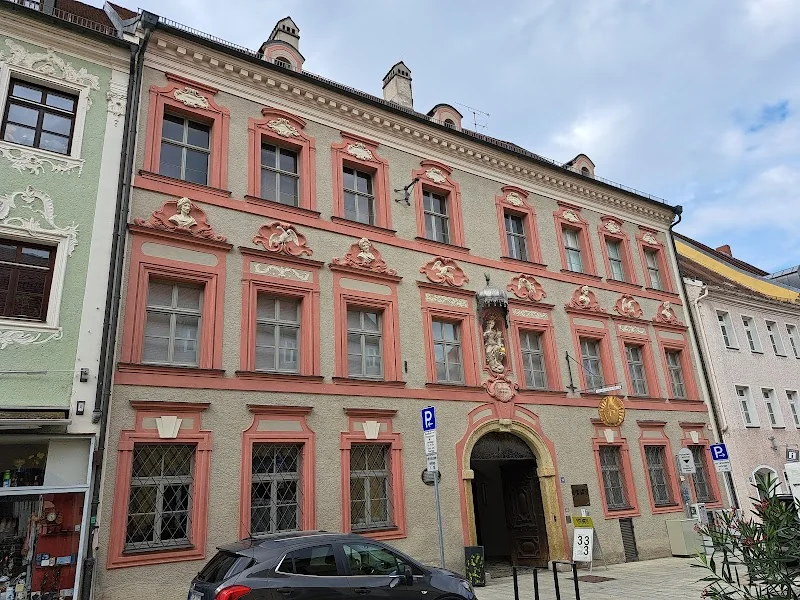
The Gäubodenmuseum in Straubing is the premier destination for 7000 years of history along the Danube. Located just off the town square at Fraunhoferstraße 23, the museum takes visitors from the Neolithic period through the Celts and Romans to local history and sacred art. The centerpiece is the internationally renowned Roman Treasure of Straubing, featuring magnificent parade armors and face helmets, which impressively illustrates the extraordinary role of the Roman military presence along the Danube. This is complemented by the section "Found in Bavaria!", which makes the early development of the Bavarians and the origins of Straubing comprehensible. Thanks to its central location, clear opening hours, and family-friendly prices, the museum serves as an easily planned destination for spontaneous outings as well as an educational site for school classes. Train and bus connections, a well-developed parking guidance system, as well as barrier-free offerings and a helpful museum app facilitate the visit. Those who want to experience culture compactly will find authentic finds from the surrounding area, carefully curated presentations, and direct access to the traces of Sorviodurum, the Roman Straubing.
Opening Hours, Admission, and Tickets: How to Plan Your Visit
The Gäubodenmuseum has reliable, clear hours: It is generally open from Tuesday to Sunday from 10:00 AM to 4:00 PM, and closed on Mondays. On certain holidays, the museum is also closed, including New Year's Day, Shrove Tuesday, Good Friday, All Saints' Day, Christmas Eve, Christmas Day, and New Year's Eve. This structure makes planning easy, whether you wish to come in the morning or early afternoon. For travelers, it is particularly convenient that the opening hours on regular holidays remain consistent from 10:00 AM to 4:00 PM. It is best to check the current daily notices in advance if you plan to visit on special days.
The admission prices are deliberately kept low: Adults pay 5.00 euros, reduced admission costs 4.00 euros (for example, for groups of 12 or more). Children and students can enter for 1.00 euro, and children under 6 years have free admission. Families can purchase a family ticket for a total price of 8.00 euros. This keeps the museum visit affordable for larger groups and families—an argument that makes the Gäubodenmuseum an attractive destination for weekend trips, school outings, or city tours.
Tickets can be easily obtained at the museum ticket office on-site. Groups, school classes, and visitors who wish to have a guided tour should register in advance via email or phone to coordinate the date, group size, and desired focus. For indoor tours, there is a maximum group size of usually 20 people per guide, allowing enough space to closely examine the objects and ask questions. Those who explore without a guide benefit from clearly structured thematic rooms, easily readable object texts, and additional digital content through the museum app. This way, individual visitors can quickly find a common thread through the 7000-year journey through time.
Directions and Parking: Easily Accessible by Train, Bus, or Car
The location of the Gäubodenmuseum at Fraunhoferstraße 23 is advantageous: You can easily reach the museum on foot from the old town. It is about 950 meters from the Straubing train station—approximately a 10 to 12-minute walk, depending on your pace. Those traveling by public transport to the old town can use the central stops around Ludwigsplatz, which are served by several lines (including 1, 2, 3, and 4). From there, it is just a few minutes' walk to the museum. This dense connection makes the visit well-planned even with a stroller, school class, or as part of a city walk.
For those arriving by car, the parking guidance system of the city of Straubing is recommended. Several parking garages and underground parking options are available in the city center, with their occupancy displayed via the guidance system. The Theresiencenter parking garage, with over 500 parking spaces in a central location, is popular; it typically offers a short free parking time and flexible rates. For those wishing to park longer or traveling by coach, the free large parking lot at Am Hagen is available—it's about a 10 to 15-minute walk to the old town. For guests with mobility impairments, there is a network of designated disabled parking spaces in the city center, including spaces on Fraunhoferstraße and at Theresien or Ludwigsplatz. This allows for individualized adjustments to the walk to the museum.
The signage in the city is clear, and due to its proximity to the town square, the museum visit can be easily combined with a stroll through the old town. Those arriving from Regensburg, Passau, or Plattling will find regular train connections that make transferring to a short walk or city buses easy. Plan for a few extra minutes for parking search during peak visitor times—such as on International Museum Day—or head directly to Am Hagen. Arriving by bicycle is also straightforward; there are parking options around the museum. Overall, thanks to short distances, public transport connections, and the parking guidance system, the accessibility of the Gäubodenmuseum is one of its practical strengths.
Visiting the Gäubodenmuseum with Children: Programs, App, and Barrier-Free Offerings
Families and school classes are explicitly welcome at the Gäubodenmuseum. For younger visitors and for educational purposes, the museum offers interactive programs about Roman times, organized by grade levels. The focus is on topics such as professions and crafts in the Roman Empire, the famous Straubing Roman Treasure as a source of knowledge, or mobility along the Danube Limes. Additionally, there are bookable formats of Living History: A performer from the local Roman group (known as "Festus") vividly conveys the everyday life of a legionary, showcases equipment, and invites visitors to touch selected replicas—a motivating approach, especially for children and teenagers. Contact persons and booking contacts are designated; early coordination of dates is advisable for schools.
The museum app is practical, providing content in both German and English for the rooms. An indoor navigation function detects the position in the building (if the corresponding tour is activated) and plays thematically relevant information. Additionally, there are videos, including 3D content, which can be particularly vividly viewed with a pyramid attachment available in the museum shop. For families, this means that children can independently discover stations while adults read in-depth texts—both remain thematically connected in a common narrative thread. For international guests, the bilingual presentation facilitates access.
Organizationally, family visits are also uncomplicated: Admission prices are family-friendly, with a favorable family ticket and very low rates for children and students. Parts of the permanent and special exhibitions are designed to be barrier-free; accessible restrooms are indicated. For children's birthdays and special events, educational offerings are available that can be tailored to age. Teachers benefit from materials that link the museum visit to the curriculum, as well as clear contact details for bookings. A tip for those traveling with strollers: Plan your tour so that the Roman section with the Roman Treasure and the "Found in Bavaria!" section are included—both areas are known to be particularly well-received due to their strong objects, clear stories, and regional relevance.
Roman Treasure, "Found in Bavaria!" and 7000 Years of History: The Highlights
The uniqueness of the Gäubodenmuseum lies in its breadth while maintaining depth: From the Neolithic period through the Celts to the Bavarians and local history, it showcases the development of the Straubing region along the Danube. The famous Roman Treasure of Straubing—discovered in 1950—belongs to the most significant finds from the Roman military milieu in Germany. Visitors can see parts of splendid parade armors, face helmets, masks, greaves, and horse frontlets. These items were part of representative appearances and demonstrate how strongly Sorviodurum (the Roman Straubing) was integrated into the border system along the Danube. The fact that several areas in Straubing have been designated as UNESCO World Heritage Sites since 2021 as part of the "Frontiers of the Roman Empire – Danube Limes (Western Section)" underscores the European dimension of the local finds; corresponding objects are displayed and historically contextualized in the museum.
The section "Found in Bavaria! The Origins of Straubing," opened on September 14, 2018, is dedicated to the early history of the Bavarians and the local burial grounds (including Bajuwarenstraße and Hochwegfeld). Jewelry, weapons, and everyday objects tell of crafts, trade relationships, and cultural influences from the 6th to the 9th centuries. The view into this transitional period from the late Roman legacy to the early medieval world clarifies how clusters of settlements, ecclesiastical centers, and markets evolved into a city. In the local history section, visitors then find the connection to the founding of the new town in 1218 under Duke Ludwig the Kelheimer and its development into the Wittelsbach administrative city—up to the beginnings of the 20th century. A cross-section of sacred art and popular piety complements the political and economic themes with religious practices, artworks, and devotional items.
The prehistoric section, on the other hand, makes it clear that the region has been continuously inhabited since about 5600 BC. Band ceramic graves with grave goods, the "Straubinger Culture" of the Early Bronze Age with metal hoards and clothing components, or a wooden well from the urn field period show how early raw materials, crafts, and extensive contacts shaped the Danube zone. Curatorially, the museum follows a linear narrative: Prehistory and early history, Roman times, Bavarians, local history, and sacred art/popular piety. This structure facilitates orientation and allows for thematic jumps or a consistent chronological approach. Those wishing to delve deeper will find research references and further literature—and with the museum app, a good supplement to call up details that may have been overlooked in the first pass.
Reviews, Impressions, and Photography Tips: How to Get More from Your Visit
The Gäubodenmuseum is considered one of the impressive regional museums in Bavaria—an impression reflected in reviews and testimonials. The Roman section with the Roman Treasure and the engaging presentation of early and local history are particularly praised. The friendly organization, clear wayfinding, and very good value for money are also highlighted positively. Many visitors find the tour to be "compact yet substantial," as it consistently follows the Straubing region through time while placing strong originals at the center. Those visiting the museum with children often report that the Roman stations, armors, and helmets create the greatest "wow effect" and remain memorable for a long time.
For meaningful photos, especially suitable are clear sightlines in the Roman section, display cases with striking objects from the "Found in Bavaria!" section, and overview panels that locate places within the city area. Please note any possible restrictions on flash and tripod use in the museum and respect the privacy of other guests. Those wishing to gather impressions in advance can find images on the official pages and in common map and travel portals. It is advisable to roughly plan your own route: Start with the Romans, move on to the Bavarians, and conclude your visit with a stroll through the local history and sacred art sections. This creates a narrative from the international horizon of the Danube border to the local identity of Straubing.
For those who value tranquility, it is best to arrive right at opening time at 10 AM or in the late afternoon. For school classes, it is advisable to clarify group size and topics in advance and, if necessary, book additional guides to ensure a relaxed visit despite many questions and stations. And one more tip: Plan a detour to the Basilica of St. Peter or the old town after your museum visit—this way, the historical perspective gained in the museum connects with the present city.
Museum Management, Contact, and Services for Groups
The museum management and the team of the Gäubodenmuseum can be reached via central contact details: by phone at 09421/944-63222 and by email at gaeubodenmuseum@straubing.de. For organizational questions—from reserving a guided tour to content focus to accessibility concerns—this is the right way to go. The museum has a collection history of over 175 years (starting in 1845), which marked a milestone in 2020; processes related to collection care, education, and visitor service are well established. Tours can be booked thematically variably: ancient military history in Sorviodurum, the early medieval burial grounds of the Bavarians, or the development of the city from the Middle Ages to modern times. For indoor tours, there is a maximum group size of usually 20 people per guide—this measure ensures audibility, visibility, and interaction.
School classes benefit from structured programs related to the curriculum and targeted contacts. For Roman topics, interactive components can be booked (e.g., "Sources of Knowledge: The Roman Treasure of Straubing") as well as lively formats with performers; designated contacts are available for date coordination and details. Travel groups can obtain information in advance about public transport access (hourly connections to Straubing) and park coaches comfortably in the large parking lot at Am Hagen. Those arriving by car follow the parking guidance system to a downtown parking garage and walk the last meters on foot. Due to the central location, gastronomy and other cultural offerings are in the immediate vicinity, making it easier to plan half-day and full-day programs. And if questions remain after the visit: The museum app, provided flyers, and references to further literature offer points of connection for individual deepening—from the Roman frontier to baroque piety in Straubing.
Sources:
- Gäubodenmuseum – Official Website
- City of Straubing – Gäubodenmuseum (Profile, History, Contact)
- Regensburg Transport Association – Gäubodenmuseum (Directions, Opening Hours)
- Tourispo – Prices & Opening Hours Gäubodenmuseum Straubing
- UNESCO World Heritage Danube Limes – School Programs at Gäubodenmuseum
- ADAC Maps – Gäubodenmuseum (Roman Treasure, Highlights)
Mehr anzeigenWeniger anzeigen
Gäubodenmuseum | Opening Hours & Roman Treasure Straubing
The Gäubodenmuseum in Straubing is the premier destination for 7000 years of history along the Danube. Located just off the town square at Fraunhoferstraße 23, the museum takes visitors from the Neolithic period through the Celts and Romans to local history and sacred art. The centerpiece is the internationally renowned Roman Treasure of Straubing, featuring magnificent parade armors and face helmets, which impressively illustrates the extraordinary role of the Roman military presence along the Danube. This is complemented by the section "Found in Bavaria!", which makes the early development of the Bavarians and the origins of Straubing comprehensible. Thanks to its central location, clear opening hours, and family-friendly prices, the museum serves as an easily planned destination for spontaneous outings as well as an educational site for school classes. Train and bus connections, a well-developed parking guidance system, as well as barrier-free offerings and a helpful museum app facilitate the visit. Those who want to experience culture compactly will find authentic finds from the surrounding area, carefully curated presentations, and direct access to the traces of Sorviodurum, the Roman Straubing.
Opening Hours, Admission, and Tickets: How to Plan Your Visit
The Gäubodenmuseum has reliable, clear hours: It is generally open from Tuesday to Sunday from 10:00 AM to 4:00 PM, and closed on Mondays. On certain holidays, the museum is also closed, including New Year's Day, Shrove Tuesday, Good Friday, All Saints' Day, Christmas Eve, Christmas Day, and New Year's Eve. This structure makes planning easy, whether you wish to come in the morning or early afternoon. For travelers, it is particularly convenient that the opening hours on regular holidays remain consistent from 10:00 AM to 4:00 PM. It is best to check the current daily notices in advance if you plan to visit on special days.
The admission prices are deliberately kept low: Adults pay 5.00 euros, reduced admission costs 4.00 euros (for example, for groups of 12 or more). Children and students can enter for 1.00 euro, and children under 6 years have free admission. Families can purchase a family ticket for a total price of 8.00 euros. This keeps the museum visit affordable for larger groups and families—an argument that makes the Gäubodenmuseum an attractive destination for weekend trips, school outings, or city tours.
Tickets can be easily obtained at the museum ticket office on-site. Groups, school classes, and visitors who wish to have a guided tour should register in advance via email or phone to coordinate the date, group size, and desired focus. For indoor tours, there is a maximum group size of usually 20 people per guide, allowing enough space to closely examine the objects and ask questions. Those who explore without a guide benefit from clearly structured thematic rooms, easily readable object texts, and additional digital content through the museum app. This way, individual visitors can quickly find a common thread through the 7000-year journey through time.
Directions and Parking: Easily Accessible by Train, Bus, or Car
The location of the Gäubodenmuseum at Fraunhoferstraße 23 is advantageous: You can easily reach the museum on foot from the old town. It is about 950 meters from the Straubing train station—approximately a 10 to 12-minute walk, depending on your pace. Those traveling by public transport to the old town can use the central stops around Ludwigsplatz, which are served by several lines (including 1, 2, 3, and 4). From there, it is just a few minutes' walk to the museum. This dense connection makes the visit well-planned even with a stroller, school class, or as part of a city walk.
For those arriving by car, the parking guidance system of the city of Straubing is recommended. Several parking garages and underground parking options are available in the city center, with their occupancy displayed via the guidance system. The Theresiencenter parking garage, with over 500 parking spaces in a central location, is popular; it typically offers a short free parking time and flexible rates. For those wishing to park longer or traveling by coach, the free large parking lot at Am Hagen is available—it's about a 10 to 15-minute walk to the old town. For guests with mobility impairments, there is a network of designated disabled parking spaces in the city center, including spaces on Fraunhoferstraße and at Theresien or Ludwigsplatz. This allows for individualized adjustments to the walk to the museum.
The signage in the city is clear, and due to its proximity to the town square, the museum visit can be easily combined with a stroll through the old town. Those arriving from Regensburg, Passau, or Plattling will find regular train connections that make transferring to a short walk or city buses easy. Plan for a few extra minutes for parking search during peak visitor times—such as on International Museum Day—or head directly to Am Hagen. Arriving by bicycle is also straightforward; there are parking options around the museum. Overall, thanks to short distances, public transport connections, and the parking guidance system, the accessibility of the Gäubodenmuseum is one of its practical strengths.
Visiting the Gäubodenmuseum with Children: Programs, App, and Barrier-Free Offerings
Families and school classes are explicitly welcome at the Gäubodenmuseum. For younger visitors and for educational purposes, the museum offers interactive programs about Roman times, organized by grade levels. The focus is on topics such as professions and crafts in the Roman Empire, the famous Straubing Roman Treasure as a source of knowledge, or mobility along the Danube Limes. Additionally, there are bookable formats of Living History: A performer from the local Roman group (known as "Festus") vividly conveys the everyday life of a legionary, showcases equipment, and invites visitors to touch selected replicas—a motivating approach, especially for children and teenagers. Contact persons and booking contacts are designated; early coordination of dates is advisable for schools.
The museum app is practical, providing content in both German and English for the rooms. An indoor navigation function detects the position in the building (if the corresponding tour is activated) and plays thematically relevant information. Additionally, there are videos, including 3D content, which can be particularly vividly viewed with a pyramid attachment available in the museum shop. For families, this means that children can independently discover stations while adults read in-depth texts—both remain thematically connected in a common narrative thread. For international guests, the bilingual presentation facilitates access.
Organizationally, family visits are also uncomplicated: Admission prices are family-friendly, with a favorable family ticket and very low rates for children and students. Parts of the permanent and special exhibitions are designed to be barrier-free; accessible restrooms are indicated. For children's birthdays and special events, educational offerings are available that can be tailored to age. Teachers benefit from materials that link the museum visit to the curriculum, as well as clear contact details for bookings. A tip for those traveling with strollers: Plan your tour so that the Roman section with the Roman Treasure and the "Found in Bavaria!" section are included—both areas are known to be particularly well-received due to their strong objects, clear stories, and regional relevance.
Roman Treasure, "Found in Bavaria!" and 7000 Years of History: The Highlights
The uniqueness of the Gäubodenmuseum lies in its breadth while maintaining depth: From the Neolithic period through the Celts to the Bavarians and local history, it showcases the development of the Straubing region along the Danube. The famous Roman Treasure of Straubing—discovered in 1950—belongs to the most significant finds from the Roman military milieu in Germany. Visitors can see parts of splendid parade armors, face helmets, masks, greaves, and horse frontlets. These items were part of representative appearances and demonstrate how strongly Sorviodurum (the Roman Straubing) was integrated into the border system along the Danube. The fact that several areas in Straubing have been designated as UNESCO World Heritage Sites since 2021 as part of the "Frontiers of the Roman Empire – Danube Limes (Western Section)" underscores the European dimension of the local finds; corresponding objects are displayed and historically contextualized in the museum.
The section "Found in Bavaria! The Origins of Straubing," opened on September 14, 2018, is dedicated to the early history of the Bavarians and the local burial grounds (including Bajuwarenstraße and Hochwegfeld). Jewelry, weapons, and everyday objects tell of crafts, trade relationships, and cultural influences from the 6th to the 9th centuries. The view into this transitional period from the late Roman legacy to the early medieval world clarifies how clusters of settlements, ecclesiastical centers, and markets evolved into a city. In the local history section, visitors then find the connection to the founding of the new town in 1218 under Duke Ludwig the Kelheimer and its development into the Wittelsbach administrative city—up to the beginnings of the 20th century. A cross-section of sacred art and popular piety complements the political and economic themes with religious practices, artworks, and devotional items.
The prehistoric section, on the other hand, makes it clear that the region has been continuously inhabited since about 5600 BC. Band ceramic graves with grave goods, the "Straubinger Culture" of the Early Bronze Age with metal hoards and clothing components, or a wooden well from the urn field period show how early raw materials, crafts, and extensive contacts shaped the Danube zone. Curatorially, the museum follows a linear narrative: Prehistory and early history, Roman times, Bavarians, local history, and sacred art/popular piety. This structure facilitates orientation and allows for thematic jumps or a consistent chronological approach. Those wishing to delve deeper will find research references and further literature—and with the museum app, a good supplement to call up details that may have been overlooked in the first pass.
Reviews, Impressions, and Photography Tips: How to Get More from Your Visit
The Gäubodenmuseum is considered one of the impressive regional museums in Bavaria—an impression reflected in reviews and testimonials. The Roman section with the Roman Treasure and the engaging presentation of early and local history are particularly praised. The friendly organization, clear wayfinding, and very good value for money are also highlighted positively. Many visitors find the tour to be "compact yet substantial," as it consistently follows the Straubing region through time while placing strong originals at the center. Those visiting the museum with children often report that the Roman stations, armors, and helmets create the greatest "wow effect" and remain memorable for a long time.
For meaningful photos, especially suitable are clear sightlines in the Roman section, display cases with striking objects from the "Found in Bavaria!" section, and overview panels that locate places within the city area. Please note any possible restrictions on flash and tripod use in the museum and respect the privacy of other guests. Those wishing to gather impressions in advance can find images on the official pages and in common map and travel portals. It is advisable to roughly plan your own route: Start with the Romans, move on to the Bavarians, and conclude your visit with a stroll through the local history and sacred art sections. This creates a narrative from the international horizon of the Danube border to the local identity of Straubing.
For those who value tranquility, it is best to arrive right at opening time at 10 AM or in the late afternoon. For school classes, it is advisable to clarify group size and topics in advance and, if necessary, book additional guides to ensure a relaxed visit despite many questions and stations. And one more tip: Plan a detour to the Basilica of St. Peter or the old town after your museum visit—this way, the historical perspective gained in the museum connects with the present city.
Museum Management, Contact, and Services for Groups
The museum management and the team of the Gäubodenmuseum can be reached via central contact details: by phone at 09421/944-63222 and by email at gaeubodenmuseum@straubing.de. For organizational questions—from reserving a guided tour to content focus to accessibility concerns—this is the right way to go. The museum has a collection history of over 175 years (starting in 1845), which marked a milestone in 2020; processes related to collection care, education, and visitor service are well established. Tours can be booked thematically variably: ancient military history in Sorviodurum, the early medieval burial grounds of the Bavarians, or the development of the city from the Middle Ages to modern times. For indoor tours, there is a maximum group size of usually 20 people per guide—this measure ensures audibility, visibility, and interaction.
School classes benefit from structured programs related to the curriculum and targeted contacts. For Roman topics, interactive components can be booked (e.g., "Sources of Knowledge: The Roman Treasure of Straubing") as well as lively formats with performers; designated contacts are available for date coordination and details. Travel groups can obtain information in advance about public transport access (hourly connections to Straubing) and park coaches comfortably in the large parking lot at Am Hagen. Those arriving by car follow the parking guidance system to a downtown parking garage and walk the last meters on foot. Due to the central location, gastronomy and other cultural offerings are in the immediate vicinity, making it easier to plan half-day and full-day programs. And if questions remain after the visit: The museum app, provided flyers, and references to further literature offer points of connection for individual deepening—from the Roman frontier to baroque piety in Straubing.
Sources:
- Gäubodenmuseum – Official Website
- City of Straubing – Gäubodenmuseum (Profile, History, Contact)
- Regensburg Transport Association – Gäubodenmuseum (Directions, Opening Hours)
- Tourispo – Prices & Opening Hours Gäubodenmuseum Straubing
- UNESCO World Heritage Danube Limes – School Programs at Gäubodenmuseum
- ADAC Maps – Gäubodenmuseum (Roman Treasure, Highlights)
Gäubodenmuseum | Opening Hours & Roman Treasure Straubing
The Gäubodenmuseum in Straubing is the premier destination for 7000 years of history along the Danube. Located just off the town square at Fraunhoferstraße 23, the museum takes visitors from the Neolithic period through the Celts and Romans to local history and sacred art. The centerpiece is the internationally renowned Roman Treasure of Straubing, featuring magnificent parade armors and face helmets, which impressively illustrates the extraordinary role of the Roman military presence along the Danube. This is complemented by the section "Found in Bavaria!", which makes the early development of the Bavarians and the origins of Straubing comprehensible. Thanks to its central location, clear opening hours, and family-friendly prices, the museum serves as an easily planned destination for spontaneous outings as well as an educational site for school classes. Train and bus connections, a well-developed parking guidance system, as well as barrier-free offerings and a helpful museum app facilitate the visit. Those who want to experience culture compactly will find authentic finds from the surrounding area, carefully curated presentations, and direct access to the traces of Sorviodurum, the Roman Straubing.
Opening Hours, Admission, and Tickets: How to Plan Your Visit
The Gäubodenmuseum has reliable, clear hours: It is generally open from Tuesday to Sunday from 10:00 AM to 4:00 PM, and closed on Mondays. On certain holidays, the museum is also closed, including New Year's Day, Shrove Tuesday, Good Friday, All Saints' Day, Christmas Eve, Christmas Day, and New Year's Eve. This structure makes planning easy, whether you wish to come in the morning or early afternoon. For travelers, it is particularly convenient that the opening hours on regular holidays remain consistent from 10:00 AM to 4:00 PM. It is best to check the current daily notices in advance if you plan to visit on special days.
The admission prices are deliberately kept low: Adults pay 5.00 euros, reduced admission costs 4.00 euros (for example, for groups of 12 or more). Children and students can enter for 1.00 euro, and children under 6 years have free admission. Families can purchase a family ticket for a total price of 8.00 euros. This keeps the museum visit affordable for larger groups and families—an argument that makes the Gäubodenmuseum an attractive destination for weekend trips, school outings, or city tours.
Tickets can be easily obtained at the museum ticket office on-site. Groups, school classes, and visitors who wish to have a guided tour should register in advance via email or phone to coordinate the date, group size, and desired focus. For indoor tours, there is a maximum group size of usually 20 people per guide, allowing enough space to closely examine the objects and ask questions. Those who explore without a guide benefit from clearly structured thematic rooms, easily readable object texts, and additional digital content through the museum app. This way, individual visitors can quickly find a common thread through the 7000-year journey through time.
Directions and Parking: Easily Accessible by Train, Bus, or Car
The location of the Gäubodenmuseum at Fraunhoferstraße 23 is advantageous: You can easily reach the museum on foot from the old town. It is about 950 meters from the Straubing train station—approximately a 10 to 12-minute walk, depending on your pace. Those traveling by public transport to the old town can use the central stops around Ludwigsplatz, which are served by several lines (including 1, 2, 3, and 4). From there, it is just a few minutes' walk to the museum. This dense connection makes the visit well-planned even with a stroller, school class, or as part of a city walk.
For those arriving by car, the parking guidance system of the city of Straubing is recommended. Several parking garages and underground parking options are available in the city center, with their occupancy displayed via the guidance system. The Theresiencenter parking garage, with over 500 parking spaces in a central location, is popular; it typically offers a short free parking time and flexible rates. For those wishing to park longer or traveling by coach, the free large parking lot at Am Hagen is available—it's about a 10 to 15-minute walk to the old town. For guests with mobility impairments, there is a network of designated disabled parking spaces in the city center, including spaces on Fraunhoferstraße and at Theresien or Ludwigsplatz. This allows for individualized adjustments to the walk to the museum.
The signage in the city is clear, and due to its proximity to the town square, the museum visit can be easily combined with a stroll through the old town. Those arriving from Regensburg, Passau, or Plattling will find regular train connections that make transferring to a short walk or city buses easy. Plan for a few extra minutes for parking search during peak visitor times—such as on International Museum Day—or head directly to Am Hagen. Arriving by bicycle is also straightforward; there are parking options around the museum. Overall, thanks to short distances, public transport connections, and the parking guidance system, the accessibility of the Gäubodenmuseum is one of its practical strengths.
Visiting the Gäubodenmuseum with Children: Programs, App, and Barrier-Free Offerings
Families and school classes are explicitly welcome at the Gäubodenmuseum. For younger visitors and for educational purposes, the museum offers interactive programs about Roman times, organized by grade levels. The focus is on topics such as professions and crafts in the Roman Empire, the famous Straubing Roman Treasure as a source of knowledge, or mobility along the Danube Limes. Additionally, there are bookable formats of Living History: A performer from the local Roman group (known as "Festus") vividly conveys the everyday life of a legionary, showcases equipment, and invites visitors to touch selected replicas—a motivating approach, especially for children and teenagers. Contact persons and booking contacts are designated; early coordination of dates is advisable for schools.
The museum app is practical, providing content in both German and English for the rooms. An indoor navigation function detects the position in the building (if the corresponding tour is activated) and plays thematically relevant information. Additionally, there are videos, including 3D content, which can be particularly vividly viewed with a pyramid attachment available in the museum shop. For families, this means that children can independently discover stations while adults read in-depth texts—both remain thematically connected in a common narrative thread. For international guests, the bilingual presentation facilitates access.
Organizationally, family visits are also uncomplicated: Admission prices are family-friendly, with a favorable family ticket and very low rates for children and students. Parts of the permanent and special exhibitions are designed to be barrier-free; accessible restrooms are indicated. For children's birthdays and special events, educational offerings are available that can be tailored to age. Teachers benefit from materials that link the museum visit to the curriculum, as well as clear contact details for bookings. A tip for those traveling with strollers: Plan your tour so that the Roman section with the Roman Treasure and the "Found in Bavaria!" section are included—both areas are known to be particularly well-received due to their strong objects, clear stories, and regional relevance.
Roman Treasure, "Found in Bavaria!" and 7000 Years of History: The Highlights
The uniqueness of the Gäubodenmuseum lies in its breadth while maintaining depth: From the Neolithic period through the Celts to the Bavarians and local history, it showcases the development of the Straubing region along the Danube. The famous Roman Treasure of Straubing—discovered in 1950—belongs to the most significant finds from the Roman military milieu in Germany. Visitors can see parts of splendid parade armors, face helmets, masks, greaves, and horse frontlets. These items were part of representative appearances and demonstrate how strongly Sorviodurum (the Roman Straubing) was integrated into the border system along the Danube. The fact that several areas in Straubing have been designated as UNESCO World Heritage Sites since 2021 as part of the "Frontiers of the Roman Empire – Danube Limes (Western Section)" underscores the European dimension of the local finds; corresponding objects are displayed and historically contextualized in the museum.
The section "Found in Bavaria! The Origins of Straubing," opened on September 14, 2018, is dedicated to the early history of the Bavarians and the local burial grounds (including Bajuwarenstraße and Hochwegfeld). Jewelry, weapons, and everyday objects tell of crafts, trade relationships, and cultural influences from the 6th to the 9th centuries. The view into this transitional period from the late Roman legacy to the early medieval world clarifies how clusters of settlements, ecclesiastical centers, and markets evolved into a city. In the local history section, visitors then find the connection to the founding of the new town in 1218 under Duke Ludwig the Kelheimer and its development into the Wittelsbach administrative city—up to the beginnings of the 20th century. A cross-section of sacred art and popular piety complements the political and economic themes with religious practices, artworks, and devotional items.
The prehistoric section, on the other hand, makes it clear that the region has been continuously inhabited since about 5600 BC. Band ceramic graves with grave goods, the "Straubinger Culture" of the Early Bronze Age with metal hoards and clothing components, or a wooden well from the urn field period show how early raw materials, crafts, and extensive contacts shaped the Danube zone. Curatorially, the museum follows a linear narrative: Prehistory and early history, Roman times, Bavarians, local history, and sacred art/popular piety. This structure facilitates orientation and allows for thematic jumps or a consistent chronological approach. Those wishing to delve deeper will find research references and further literature—and with the museum app, a good supplement to call up details that may have been overlooked in the first pass.
Reviews, Impressions, and Photography Tips: How to Get More from Your Visit
The Gäubodenmuseum is considered one of the impressive regional museums in Bavaria—an impression reflected in reviews and testimonials. The Roman section with the Roman Treasure and the engaging presentation of early and local history are particularly praised. The friendly organization, clear wayfinding, and very good value for money are also highlighted positively. Many visitors find the tour to be "compact yet substantial," as it consistently follows the Straubing region through time while placing strong originals at the center. Those visiting the museum with children often report that the Roman stations, armors, and helmets create the greatest "wow effect" and remain memorable for a long time.
For meaningful photos, especially suitable are clear sightlines in the Roman section, display cases with striking objects from the "Found in Bavaria!" section, and overview panels that locate places within the city area. Please note any possible restrictions on flash and tripod use in the museum and respect the privacy of other guests. Those wishing to gather impressions in advance can find images on the official pages and in common map and travel portals. It is advisable to roughly plan your own route: Start with the Romans, move on to the Bavarians, and conclude your visit with a stroll through the local history and sacred art sections. This creates a narrative from the international horizon of the Danube border to the local identity of Straubing.
For those who value tranquility, it is best to arrive right at opening time at 10 AM or in the late afternoon. For school classes, it is advisable to clarify group size and topics in advance and, if necessary, book additional guides to ensure a relaxed visit despite many questions and stations. And one more tip: Plan a detour to the Basilica of St. Peter or the old town after your museum visit—this way, the historical perspective gained in the museum connects with the present city.
Museum Management, Contact, and Services for Groups
The museum management and the team of the Gäubodenmuseum can be reached via central contact details: by phone at 09421/944-63222 and by email at gaeubodenmuseum@straubing.de. For organizational questions—from reserving a guided tour to content focus to accessibility concerns—this is the right way to go. The museum has a collection history of over 175 years (starting in 1845), which marked a milestone in 2020; processes related to collection care, education, and visitor service are well established. Tours can be booked thematically variably: ancient military history in Sorviodurum, the early medieval burial grounds of the Bavarians, or the development of the city from the Middle Ages to modern times. For indoor tours, there is a maximum group size of usually 20 people per guide—this measure ensures audibility, visibility, and interaction.
School classes benefit from structured programs related to the curriculum and targeted contacts. For Roman topics, interactive components can be booked (e.g., "Sources of Knowledge: The Roman Treasure of Straubing") as well as lively formats with performers; designated contacts are available for date coordination and details. Travel groups can obtain information in advance about public transport access (hourly connections to Straubing) and park coaches comfortably in the large parking lot at Am Hagen. Those arriving by car follow the parking guidance system to a downtown parking garage and walk the last meters on foot. Due to the central location, gastronomy and other cultural offerings are in the immediate vicinity, making it easier to plan half-day and full-day programs. And if questions remain after the visit: The museum app, provided flyers, and references to further literature offer points of connection for individual deepening—from the Roman frontier to baroque piety in Straubing.
Sources:
- Gäubodenmuseum – Official Website
- City of Straubing – Gäubodenmuseum (Profile, History, Contact)
- Regensburg Transport Association – Gäubodenmuseum (Directions, Opening Hours)
- Tourispo – Prices & Opening Hours Gäubodenmuseum Straubing
- UNESCO World Heritage Danube Limes – School Programs at Gäubodenmuseum
- ADAC Maps – Gäubodenmuseum (Roman Treasure, Highlights)
Frequently Asked Questions
Reviews
Daniel W.
28. January 2024
The museum is surprisingly well organized and rich in valuable exhibits. It covers historical periods from the Neolithic to the early 20th century. The most impressive are the exhibits from the Roman era and the Middle Ages. The information and displayed objects from the old Hallstatt, La Tène, or Bronze Age cultures are also very interesting. You rarely see so much historical beauty in one place, especially at a price of 5 euros per ticket.
Marcel Strauß
15. October 2025
The Gäubodenmuseum is a real highlight in Straubing and ranks among the most impressive regional museums in Bavaria. Especially the Roman section with its unique finds from Roman Straubing is absolutely worth seeing - you really get a vivid sense of how much history is in this region.
Lizzy
11. September 2023
I was thrilled by the Roman treasure on display there. I also liked the room with a burial exhibition. You could learn a lot about ancient eras there, while treating the deceased with respect. This won't be my last visit.
Lorenz
9. September 2024
The quality of both the displayed finds and the museum's presentation is very high - especially the room dedicated to the Bavarian period is unmatched, but the sections on the Roman treasure and prehistory are also very well done.
Axel Thorhauer
1. October 2024
Remarkable archaeological collection, with a focus (understandably) on the Roman era and the early Middle Ages. Very vividly and contemporarily presented. Plus, there are changing small special exhibitions. Admission is only 5 euros. Highly recommended.