
Yael Bartana
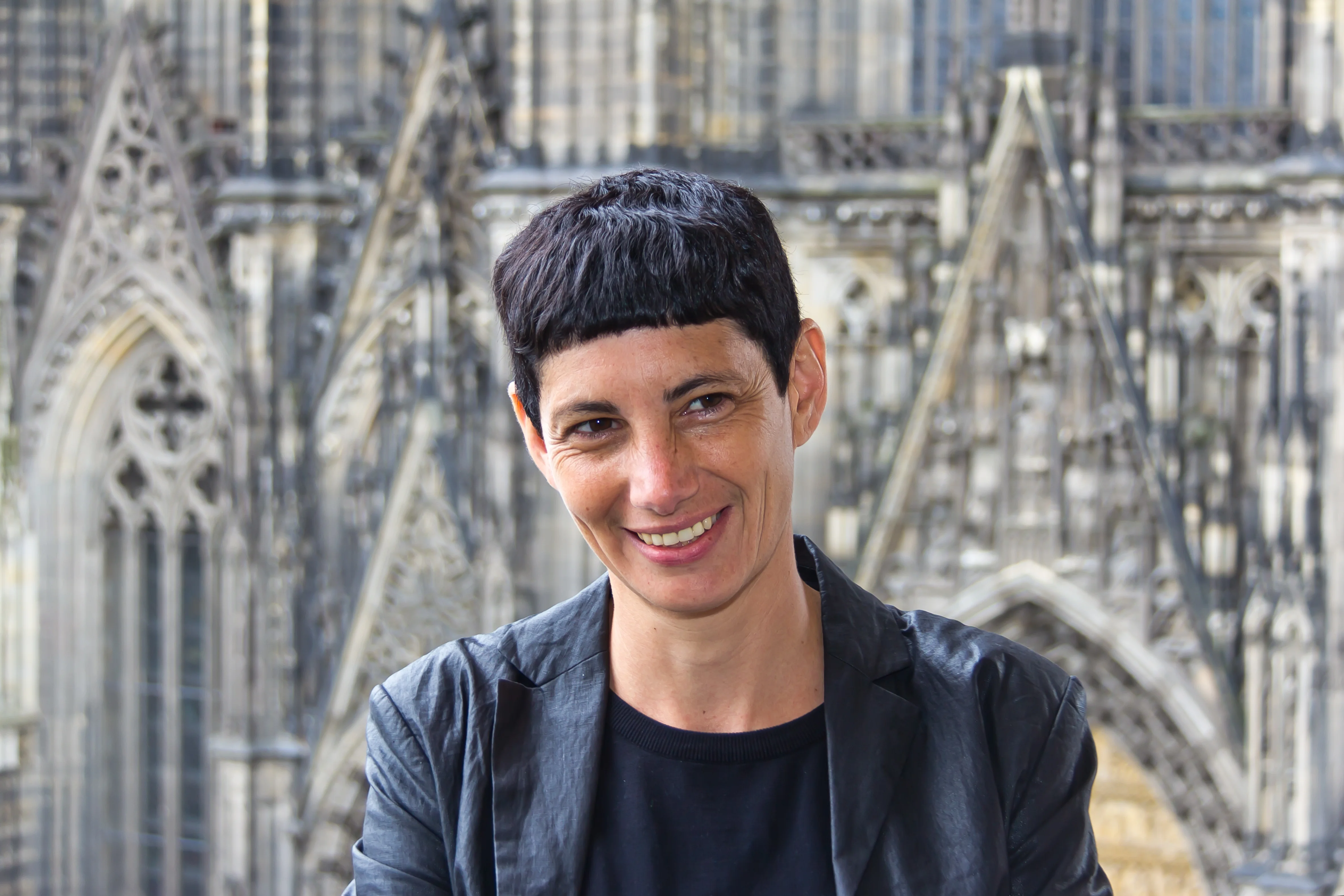
Image from Wikipedia
Image from Wikipedia
Yael Bartana: Political Images, Collective Rituals, and a Work Between Memory and Future
One of the Most Distinct Voices in Contemporary Art
Yael Bartana is one of the most internationally influential artists of her generation. Born in 1970 in Afula, Israel, the multimedia artist lives today in Berlin and Amsterdam, and works with video, video installation, sound installation, photography, performance, and neon. Her work revolves around identity, memory, community, political symbolism, and the question of how societies create their own images. It is this combination of intellectual acuity and haunting imagery that makes Yael Bartana an artist whose work extends far beyond the art world. ([goethe.de](https://www.goethe.de/ins/mm/de/kul/mag/21519636.html?utm_source=openai))
Biography: From Afula to the International Art World
Yael Bartana was born in northern Israel and developed an early awareness of the mechanisms of nationhood, belonging, and collective memory. She studied at the Bezalel Academy of Arts and Design in Jerusalem and later continued her education in Amsterdam. This biographical movement between Israel, Europe, and the Netherlands continues to shape her artistic thinking: Bartana's works examine not only political systems but also the visual languages through which communities narrate themselves. ([culture.pl](https://culture.pl/en/artist/yael-bartana?utm_source=openai))
In her early works, her interest in collective rituals, military symbolism, and the staging of power was already evident. Bartana thinks of art not as a decorative object, but as an analytical instrument. Her works ask how images preserve historical traumas, how they stabilize national myths, and how they simultaneously make alternative communities imaginable. This is where the special tension in her work lies: it is both poetic and political, precise and open at the same time. ([goethe.de](https://www.goethe.de/ins/mm/de/kul/mag/21519636.html?utm_source=openai))
The Artistic Breakthrough: Video Trilogies, Public Engagement, and Provocation
Yael Bartana achieved international recognition with the video trilogy And Europe Will Be Stunned. The work centered on Polish-Jewish history, national fantasies, and political projections, establishing Bartana as a prominent figure in contemporary art. The works of the trilogy connect fiction, documentary, ritual, and aesthetic propaganda so consistently that a new form of political narrative emerges. ([goethe.de](https://www.goethe.de/ins/mm/de/kul/mag/21519636.html?utm_source=openai))
Especially significant is Bartana's method of "historical pre-enactment," an artistic anticipation of historical possibilities. Instead of merely commenting on history retrospectively, she designs scenarios where the past, present, and future overlap. This strategy is not an effect for its own sake, but a precise artistic stance: Bartana investigates how societies conceive themselves before they act. ([yaelbartana.com](https://yaelbartana.com/work/trembling-time-2001-1?utm_source=openai))
Work and Themes: Memory, Power, and Collective Choreography
A recurring motif in Bartana's work is the public space as a stage for societal order. In Trembling Time, she observes the moment of national silence in Israel and transforms it into a study of discipline, synchrony, and collective emotion. The work shows how a state-prescribed ritual becomes an aesthetic form while simultaneously making the relationship between individual and group visible. Such works carry an almost musical structure: repetition, variation, pause, and condensation create a strong internal dramaturgy. ([yaelbartana.com](https://yaelbartana.com/work/trembling-time-2001-3?utm_source=openai))
Later works such as Tashlikh and Two Minutes to Midnight continue this exploration, albeit with an expanded thematic scope. Bartana intertwines questions of violence, trauma, female power, and geopolitical escalation with performative and installative means. Particularly in Two Minutes to Midnight, she develops a fictional political order in which women must respond to a nuclear threat. The work is organized as a space for thought about power, demonstrating how Bartana's art oscillates between political analysis and symbolic condensation. ([yaelbartana.com](https://yaelbartana.com/work/two-minutes-to-midnight-2021?utm_source=openai))
Current Projects and Publications: 2024 as a New Focus
Among Bartana's recent works is Mir Zaynen Do!, a 2024 video and sound project that connects diaspora, music, and collective memory. The work was created in collaboration with the Jewish-Brazilian art space Casa do Povo and brings together a Jewish-Brazilian choir with an Afro-Brazilian music ensemble. In doing so, Bartana further opens her work to sound, song, and transcultural entanglements. ([yaelbartana.com](https://yaelbartana.com/work/mir-zaynen-do-2024?utm_source=openai))
Also produced in 2024 were works like Light to the Nations / Farewell and Light to the Nations / Life in the Generation Ship, which were showcased in connection with the 60th Venice Biennale. These works address narratives of the future, farewell, space travel, and collective imagination. Bartana remains true to her method: she combines grand political images with choreographic precision and a keen sense for symbolic architecture. ([yaelbartana.com](https://yaelbartana.com/work/light-to-the-nations-farewell-2024?utm_source=openai))
Discography? No: A Multimedia Work Instead of Traditional Music Releases
In the traditional sense, Yael Bartana does not have a discography, as she is not a musician but a visual and multimedia artist. Therefore, there are no suitable equivalents for inquiries about songs, albums, or charts. Instead, her oeuvre consists of video works, sound installations, performances, photographs, and public art projects that function like chapters of a grand political picture novel. ([yaelbartana.com](https://yaelbartana.com/works/video?utm_source=openai))
Sound plays a crucial role in her work, however. Bartana uses sound not as accompaniment but as a structuring element: sirens, choirs, collective voices, rituals, and musical formations create an atmosphere in which political history becomes physically tangible. In Mir Zaynen Do!, this approach is particularly evident, as song is highlighted as cultural memory and a means of diasporic connection. ([yaelbartana.com](https://yaelbartana.com/work/mir-zaynen-do-2024?utm_source=openai))
Style and Artistic Development: Between Propaganda, Ritual, and Utopia
Yael Bartana's style is immediately recognizable: precisely composed images, performative settings, institutional spaces, and an aesthetic reminiscent of political staging. Reviews and museum profiles repeatedly highlight her interest in forms of propaganda, collective ceremonies, and memory politics. Her work is never mere accusation but engages with ambivalence, irony, and a deliberately open dramaturgy. ([kunstmuseumsg.ch](https://kunstmuseumsg.ch/unser-programm/archiv/yael-bartana?utm_source=openai))
This artistic development shows a consistent expansion: from observations specific to Israel to global questions concerning diaspora, democracy, violence, and the future. Bartana not only investigates what states and societies believe but also how these beliefs are visually and performatively produced. This grants her work an unusual authority, as it is historically informed, formally sovereign, and politically present. ([goethe.de](https://www.goethe.de/ins/mm/de/kul/mag/21519636.html?utm_source=openai))
Cultural Influence and International Resonance
Yael Bartana has been featured in major museums and exhibitions, including the Museum of Modern Art in Warsaw, the Van Abbemuseum in Eindhoven, PS1 in New York, and Moderna Museet Malmö. She was showcased at the Biennale di Venezia and gained additional international attention with the German Pavilion of the 60th Biennale in 2024. This presence in central institutions underscores her rank as an artist whose works shape global debates on identity and memory. ([ccs.bard.edu](https://ccs.bard.edu/people/960-yael-bartana?utm_source=openai))
Art criticism repeatedly emphasizes Bartana's ability to translate political content into powerful images. Her works are described as reflective engagement with Jewish identity, Polish-Jewish history, collective memory, and national symbol systems. Engaging with Bartana leads to experiencing art that is not merely observed but is intended to be intellectually and emotionally traversed. ([goethe.de](https://www.goethe.de/ins/mm/de/kul/mag/21519636.html?utm_source=openai))
Conclusion: Why Yael Bartana Remains So Exciting
Yael Bartana is compelling because she takes art as a form of thought seriously. Her works open spaces for memory, conflict, and utopia, while never providing simple answers. Those who experience her installations, performances, and videos immediately feel the special tension between political analysis and poetic imagery. This mixture makes her work particularly relevant for a present that is seeking new forms of coexistence. ([yaelbartana.com](https://yaelbartana.com/works/video?utm_source=openai))
Those who encounter Yael Bartana live or in exhibition do not see mere art in space, but a precisely staged engagement with history, power, and hope. Her work demands attention, rewarding it with intense, long-lasting imagery. This is where her greatness lies: Bartana creates art that is not only observed but also remembered, questioned, and further thought. ([de.wikipedia.org](https://de.wikipedia.org/wiki/Yael_Bartana?utm_source=openai))
Official Channels of Yael Bartana:
- Instagram: no official profile found
- Facebook: no official profile found
- YouTube: no official profile found
- Spotify: no official profile found
- TikTok: no official profile found
Sources:
- Yael Bartana - Official Website
- Yael Bartana - Trembling Time
- Yael Bartana - Two Minutes To Midnight
- Yael Bartana - Malka Germania
- Yael Bartana - Mir Zaynen Do!
- Yael Bartana - Light to the Nations / Farewell
- Yael Bartana - Works / Video
- Goethe-Institut - The Image Activist
- Culture.pl - Yael Bartana Biography
- Capitain Petzel - Yael Bartana
- Wikipedia - Yael Bartana
Upcoming Events
Art Break: Yael Bartana
Take a short dive at noon: Experience Yael Bartana at Kunsthalle Bielefeld, curated by Benedikt Fahrnschon. Art Break on 05.05.2026. #Art
Public Tour at the Kunsthalle Bielefeld
An evening full of art and perspectives at the Kunsthalle Bielefeld: tour through current exhibitions, clear insights, strong images. 13.05.2026, admission plus €3.50. Experience culture live now. #KunsthalleBielefeld
Public Tour at Kunsthalle Bielefeld
An evening for art lovers: The Public Tour at Kunsthalle Bielefeld connects current exhibitions, collection, and architecture. 20.05.2026, 7 PM, entry + 3.50 Euros. #KunsthalleBielefeld
Public Tour
An intensive tour through current exhibitions at Kunsthalle Bielefeld: Art history, space, and the present in dialogue. May 24, 2026, admission plus 3.50 €. #KunsthalleBielefeld
Public Tour in the Kunsthalle Bielefeld
An evening for art lovers: Public tour in the Kunsthalle Bielefeld with current exhibitions and clear mediation. 27.05.2026, 7 PM, admission + 3.50 €. #KunsthalleBielefeld
Public Tour at Kunsthalle Bielefeld
See art anew at Kunsthalle Bielefeld: Public tour through current exhibitions on May 27, 2026, at 7 PM. Admission + 3.50 Euros. #Art