
Rolf Nobel
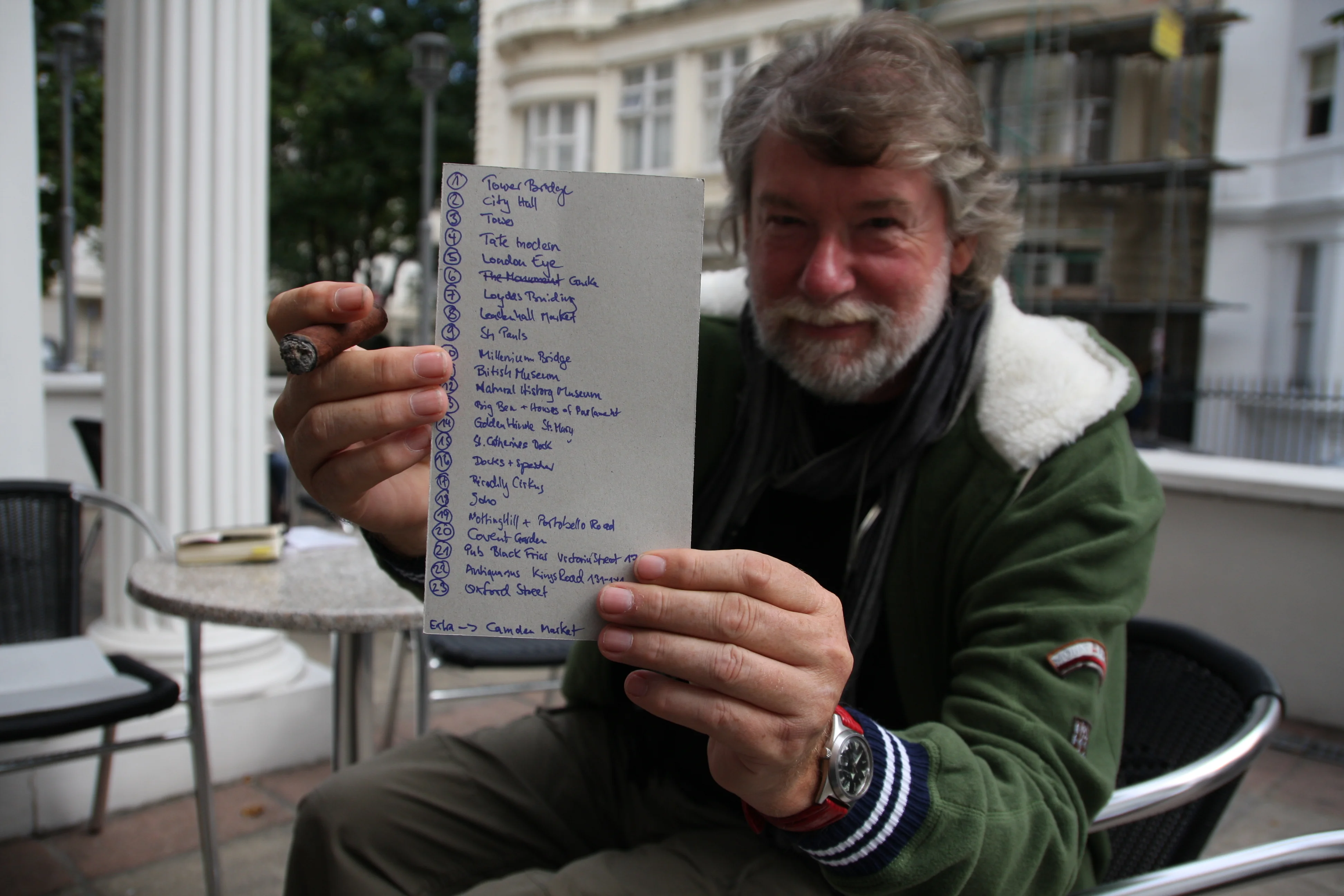
Image from Wikipedia
Image from Wikipedia
Rolf Nobel – Photographer, Photojournalist, University Lecturer
A Life Dedicated to Narrative Photography: Rolf Nobel Makes Working Worlds Visible and Shapes Generations of Photojournalists
Rolf Nobel, born in 1950 in Hamburg, is considered one of the defining voices of German photojournalism. While his music career might be metaphorically absent, his artistic development as a photographer possesses a similar drama to that of a great performing artist: early influences, focused work on visual language, a breakthrough in leading magazines, a rich "discography" in the form of photobooks and reports, and finally, significant authority as a university lecturer. Nobel gained recognition in the 1980s and 1990s through deeply researched photo reports for Geo, mare, and Stern. From 2000 to 2016, he shared his experience as a professor, shaped curricula, and inspired new generations – with a stage presence in the lecture hall that was as clear and impactful as his photographic compositions.
His work revolves around the lives and working worlds of people who rarely stand in the limelight: fishermen, seaweed collectors, miners, lighthouse keepers, street children. In Nobel's hands, composition, arrangement, and photographic production become the instruments of a humanistic visual language. His reports are carefully constructed like suites – serial, rhythmic, and dramatic. His artistic development also reflects the history of German photojournalism since the 1970s: from the analog darkroom to curated exhibitions in museums and festivals.
Early Years and Education: From Lithography to Camera
Before Rolf Nobel became one of the defining figures of reportage photography, he completed an apprenticeship as a lithographer – a craft that requires precision, tonal sensitivity, and technical understanding. These foundations shaped his sense of quality for print and image impact. From 1977 to 1983, he studied communication design with a focus on photography at the University of Fine Arts in Hamburg and graduated with a diploma. This education marked the transition from graphic design to narrative photography – a step that grounded his later artistic development and led him to the field of journalism.
Since 1979, Nobel has worked as a freelance photojournalist. Early on, he leveraged his proximity to editorial offices to develop long-term topics. His perspective remains documentary, with focused image dramaturgy: people, places, actions; a composition that shows attitude without heroizing. This early periodization explains why his later oeuvre appears so cohesive: the school of lithography sharpened his eye, his studies provided context, and fieldwork supplied the stories.
Rise in Magazine Journalism: GEO, mare, stern
The 1980s and 1990s became a decisive decade in his career. Nobel published in leading German magazines such as Geo, mare, and stern – publications known for demanding photo reports, excellent image editing, and a strong culture of visual storytelling. His breakthrough in these media not only documents artistic maturity but also editorial reliability: topic identification, research, on-site work, sequencing, and final production. These works laid the foundation for his reputation as one of the defining reportage photographers of his generation, establishing him as a voice with his own visual language.
In 1990, Nobel joined the renowned Hamburg photo agency VISUM and later became a co-owner. The agency served as a professional ecosystem for the international placement of reports and offered curatorial resonance spaces for serial work. Nobel briefly switched to image|trust but returned to VISUM – an indication of the conceptual alignment between his personal style and the agency's documentary profile.
Teaching, Program Development, and Academic Authority
With his appointment to university – first at HAW Hamburg, then from 2000 at Hanover University of Applied Sciences – Nobel increasingly shifted his artistic practice to teaching. He took on professorships in photography, developed modules on reportage, ethics, research, image editing, and incorporated his field practice into academic didactics. The result: a study program that thinks of photojournalism and documentary photography as an independent genre, with a clear methodology from topic, image idea, composition, sequence, editing to publication.
Since the end of 2010, the program in Hanover has been accredited as Germany's first Bachelor’s degree in photojournalism and documentary photography – a milestone in educational policy with cultural journalistic significance. The program combined technical excellence with historical context, technical updates, and an ethics of the documentary. Students learned how composition and arrangement serve a clear story. In 2016, Nobel retired, but his pedagogical influence continues – in editorial offices, agencies, festivals, and curatorial boards.
Festival and Gallery Work: LUMIX and GAF as Resonance Spaces
As the founder and long-time director of the LUMIX Festival for Young Photojournalism (established in 2008, later developed into a festival for young visual journalism), Nobel made Hanover a meeting point for the international emerging scene. The festival, realized by students and faculty at Hanover University – supported by partners like Panasonic and the photographers' association FREELENS – became one of the largest platforms of its kind. It combined exhibitions, panels, portfolio reviews, and award ceremonies – a curated ecosystem where reportage, visual essays, and multimedia storytelling converged.
In parallel, Nobel engaged as a founding member of the association for the promotion of photography in Hanover e.V. In 2014, he opened the Gallery for Photography (GAF) in the Eisfabrik. The GAF hosts several exhibitions annually focusing on journalistic and documentary photography. Thus, what was initiated in teaching became tangible in public: sequences that open thought spaces; series of images that establish discourse; conversations among audiences, authors, and editorial offices.
Themes, Stylistics, and Method: The Art of Serial Reportage
Rolf Nobel's choice of themes follows a documentary-humanistic compass. He portrays working environments – from coastal fishing to seaweed collecting, from lighthouse service to small mines – social margins, and life plans that otherwise receive little attention. Formally, he works with binding composition, clear lighting, and a dramaturgy that creates closeness without voyeurism. Series are conceived as dramatic units: opening, intensification, resting point, closing image.
This method creates a musical resonance: recurring motifs, visual ostinati, arcs of tension. In production, Nobel emphasizes craftsmanship, from preliminary discussions through fieldwork to the final image selection. Technical means serve the narrative, not vice versa. The visual language remains grounded, never mannered – and thereby achieves the poetic depth that characterizes his reports.
Publications and Books: A "Discography" in Images
His published work includes not only magazine reports but also books. Early titles such as “The False Players of God – The Truth about Jehovah's Witnesses” (1984) and “Across Germany” (1985) were structured as journalistic reportage volumes. Later, “On Stopping and Continuing” (2016) followed, offering a dialogical look at his work and that of his students in the photojournalism and documentary photography program. These titles mark three cornerstones: investigative, country-specific, pedagogical-curatorial. They are held together by Nobel's commitment to factual integrity, precision, and image ethics.
At the same time, for decades Nobel published in editorial offices known for rigorous editing and visual narrative power – a continuity that solidified his authority. Publication in Geo or mare functions within the scene not only as a quality hallmark but also as evidence that form, content, and photographic production comprise an organic unity.
Awards, Memberships, and Critical Reception
In 2016, Rolf Nobel received the Dr. Erich Salomon Prize from the German Society for Photography (DGPh), one of the most significant recognitions for "exemplary application of photography in journalism." The award was presented during the LUMIX Festival in Hanover – a fitting context that highlighted Nobel's dual role as a photographer and promoter. His influence on the German university education in photojournalism was emphasized, which he had made "a trademark."
Additionally, Nobel is an honored member of the DGPh. His name appears in press reviews, festival reports, and city publications when it comes to the institutionalization of documentary photography in Hanover. Reviews emphasize the clarity of form, the grounded nature of themes, and the integrity of approach – three constants that have sustained his work over decades.
Agency and Association Work: VISUM and FREELENS
His agency experience at VISUM enhanced Nobel's international visibility. Working within a collegial network sharpened his understanding of markets, ethics, and rights. In 1995, he co-founded and became a board member of the photographers' association FREELENS – a signal for professional engagement and the defense of journalistic standards. This level, too, belongs to his metaphorical music career: those who wish to have an impact need a stage, ensemble, and resonance space – agencies, associations, festivals.
In lectures and essays, Nobel reflects on reporter photography, war and crisis reporting, the responsibility towards protagonists, and the necessity of being able to "tell stories." In doing so, he provides expertise for a field that is changing rapidly in technical terms but defends the same virtues in content: research, empathy, and craftsmanship precision.
Current Projects and Exhibitions
Even after his university years, Rolf Nobel remains active: exhibitions showcase retrospectives and thematic ensembles of his reports, most recently at the Culture Forum in Schwerin. There, the long-term interest in working worlds was the focus – a kind of best-of serial reports that bring together new readers and viewers with classics of his work. Such presentations attest to the sustainability of his archive, which generates new interpretations with each reorganization.
At the same time, Nobel maintains his website as a curated portfolio. The chapters – from "Travellers" to "Seacoalers" to "Lighthouse Keepers" – function like cycles of a complete work. They continuously advance themes, update image groups, and provide an overview of the breadth of his work. For the scene, such online portfolios serve as a reliable primary access point to the work and biography.
Cultural Influence and Legacy
Rolf Nobel's influence is derived from four pillars: his own practice, teaching, institutional work, and journalistic presence. This combination provides authority as it translates experience into expertise and authorship. As a photographer, he shows how composition, light, and sequence carry a narrative. As a teacher, he documents how methodological rigor and ethical orientation bring out talents. As a founder, he curates platforms that create visibility. As an author and award recipient, he himself becomes a reference point in the scene.
His legacy extends beyond individual images: it lies in the cultural technique of storytelling with photographs. Nobel's image series sharpen our understanding of work, landscape, biography, and society. They demonstrate that documentary photography – when properly researched, designed, and produced – not only informs but also generates cultural value. In this sense, his work is part of German photographic history and serves as a reference for future generations.
Conclusion
Rolf Nobel remains compelling because he combines attitude with craftsmanship, empathy with precision. His artistic development from lithographer to internationally published photojournalist and university lecturer demonstrates a rare consistency. Those who view his work recognize the quiet intensity of a narrative style that conveys without pathos yet still touches. Experience Rolf Nobel's photography where it resonates the strongest: in carefully arranged series, in exhibitions, and – when the opportunity arises – in direct conversation following a lecture. It is worthwhile to see this work live, as it poses questions that images alone cannot answer – thereby expanding the discourse.
Official Channels of Rolf Nobel:
- Instagram: No official profile found
- Facebook: No official profile found
- YouTube: No official profile found
- Spotify: No official profile found
- TikTok: No official profile found
Sources:
- Rolf Nobel – Official Website
- German Society for Photography (DGPh) – Dr. Erich Salomon Prize 2016
- Wikipedia – Rolf Nobel (retrieved, last edited December 23, 2024)
- State Capital Schwerin – Exhibition Announcement Rolf Nobel
- mare – Author Profile Rolf Nobel
- Lower Saxony Persons – Entry Rolf Nobel
- Wikipedia: Image and Text Source
Upcoming Events
Rolf Nobel: Workers of the Seas
Dive into maritime life – Rolf Nobel's photographs at the Schleswig-Holstein House, Schwerin.
Rolf Nobel: Workers of the Sea – Culture Forum Schleswig-Holstein-Haus
Dive into Rolf Nobel's Workers of the Sea at the Culture Forum Schwerin: strong documentary photography, clear curation, school offers. 25.03.2026, 11–18 hours, 6 €. Experience it now! #Photography
Exhibition Rolf Nobel: WORKERS OF THE SEA
Immerse yourself in the world of the workers of the sea with the fascinating photography exhibition by Rolf Nobel at the Kulturforum Schleswig-Holstein-Haus in Schwerin.
WORKERS OF THE SEA - Photography Exhibition
Immerse yourself in the fascinating world of coastal inhabitants with the photographs of Rolf Nobel. Now at the Schleswig-Holstein-Haus Schwerin.