
Joseph von Fraunhofer
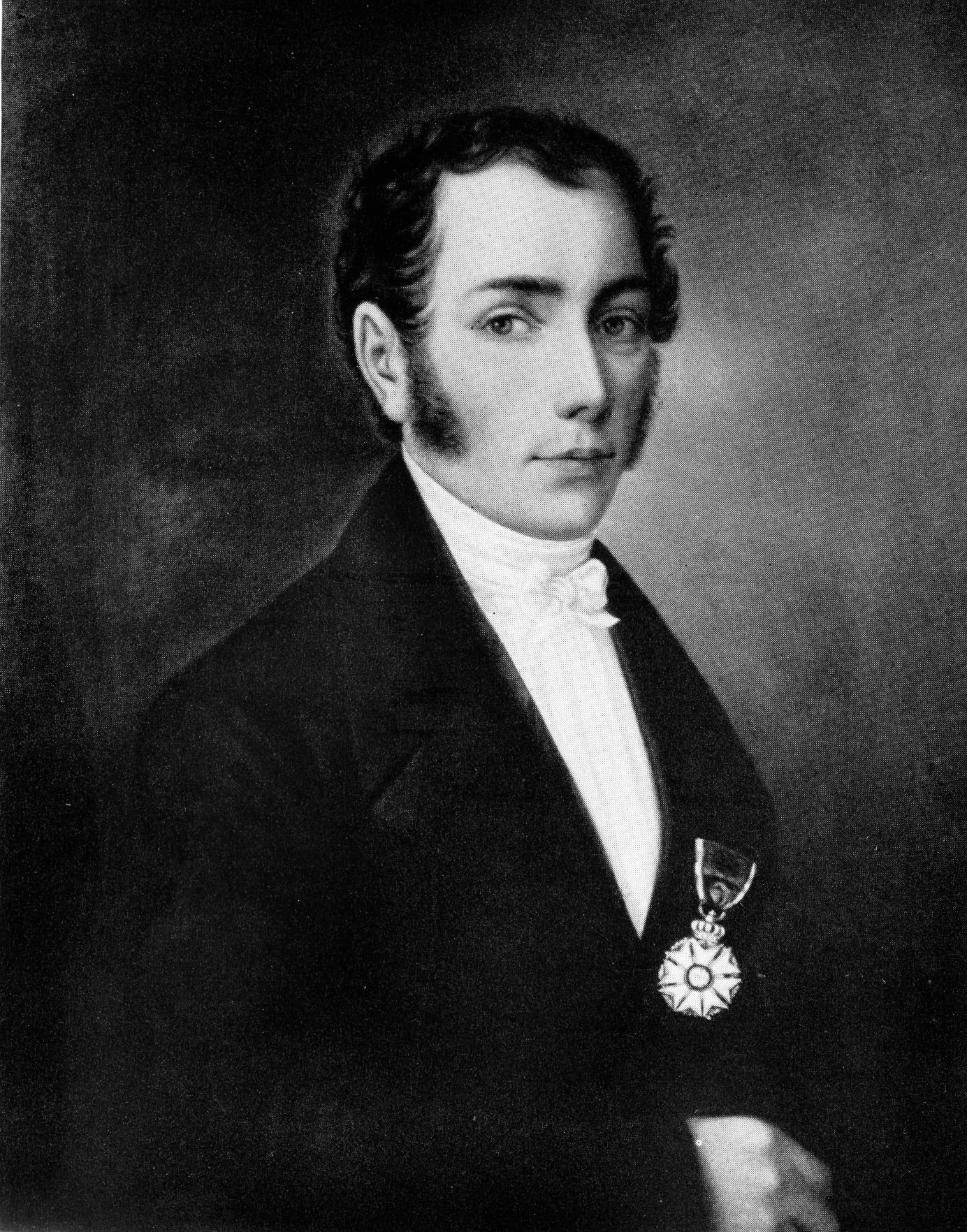
Image from Wikipedia
Image from Wikipedia
Joseph von Fraunhofer: The Precise Visionary of Optics
A Pioneer between Craftsmanship, Science, and Industrial Modernity
Joseph Fraunhofer, since 1824 Ritter von Fraunhofer, was born on March 6, 1787, in Straubing and died on June 7, 1826, in Munich. As a German optician and instrument maker, he had a lasting impact on the scientific telescope construction at the beginning of the 19th century and is considered a key figure of an era where precise measurement arts and practical applications merged into a new culture of innovation. The Fraunhofer lines named after him and the Fraunhofer lens still represent a name that extends far beyond the history of the field. ([de.wikipedia.org](https://de.wikipedia.org/wiki/Joseph_von_Fraunhofer?utm_source=openai))
Biography: From Glassmaker Apprentice to Scientific Pioneer
Fraunhofer's path did not begin in academic safety but in craftsmanship discipline. After an apprenticeship as a glazier, he worked in the optical workshop of Joseph von Utzschneider, where his talent for instrumental precision and glass processing could quickly flourish. He transformed from a simple employee into an expert who not only technically improved optical manufacturing but systematically elevated it to a new level. ([fraunhofer.de](https://www.fraunhofer.de/de/ueber-fraunhofer/profil-struktur/geschichte-fraunhofer/joseph-von-fraunhofer.html?utm_source=openai))
Especially noteworthy is Fraunhofer's rise as a self-taught individual. He acquired knowledge at a time when practical experience and scientific research were rarely as closely intertwined as in his working style. The Fraunhofer Society emphasizes this combination of research drive and market-oriented thinking as the core of his legacy even today. ([fraunhofer.de](https://www.fraunhofer.de/de/ueber-fraunhofer/profil-struktur/geschichte-fraunhofer/joseph-von-fraunhofer.html?utm_source=openai))
Career: Scientific Telescope Construction as a Master Achievement
Fraunhofer's most significant career phase began in Benediktbeuern and continued in Munich. There, he developed instruments that decisively improved astronomical observation because he manufactured lenses of previously unmatched quality. His name became inextricably linked to scientific telescope construction, a field shaped by his work on precision, material science, and systematic improvement. ([de.wikipedia.org](https://de.wikipedia.org/wiki/Joseph_von_Fraunhofer?utm_source=openai))
In 1817, he presented a groundbreaking paper on the refractive and dispersion properties of various types of glass to the Royal Academy of Sciences in Munich. In this context, he documented 574 solar spectral lines, making his work a foundation for optical spectral analysis. In 1817, he was also elected as a corresponding member of the Academy and in 1821 was admitted as an extraordinary visiting member. ([de.wikipedia.org](https://de.wikipedia.org/wiki/Joseph_von_Fraunhofer?utm_source=openai))
Musical Context? Why Fraunhofer Was Not a Pop Culture Artist
Although this text is presented in the style of an artist's page, Joseph von Fraunhofer clearly belongs to the history of physics and optics, not to music history. He left no discography, no albums, no singles, and no stage career; his "publications" were scientific papers, workshop innovations, and historically significant instruments. The artistic drama of his life, therefore, does not lie in songwriting, but in the interplay of craftsmanship, insight, and technical invention. ([de.wikipedia.org](https://de.wikipedia.org/wiki/Joseph_von_Fraunhofer?utm_source=openai))
Scientific Handwriting: Precision, Innovation, and Application
Fraunhofer's achievement was to combine precise scientific work with concrete product development. This mindset made him a model for a modern understanding of innovation: research should not end in the laboratory but should manifest in better devices, more stable processes, and more precise results. For this reason, he is considered a naming figure and leader of the Fraunhofer Society. ([fraunhofer.de](https://www.fraunhofer.de/de/ueber-fraunhofer/profil-struktur/geschichte-fraunhofer/joseph-von-fraunhofer.html?utm_source=openai))
His optical developments improved the quality of dioptric telescopes and thus made an important contribution to observational astronomy. The connection between glass, grinding, color correction, and instrumental precision made Fraunhofer a master of practical science. The fact that his name is now associated worldwide with applied research illustrates the enduring authority of his thinking. ([deutsche-biographie.de](https://www.deutsche-biographie.de/sfz16999.html?utm_source=openai))
Cultural Influence: A Name That Shaped Institutions
Fraunhofer's legacy extends far beyond his lifetime. The Fraunhofer Society explicitly refers to his spirit of innovation as the foundation of its self-understanding, and public institutions such as the Deutsches Museum honor his role as a pioneer of optics history. Thus, a glassworker became a cultural symbol for ascendance through knowledge, perseverance, and precision. ([fraunhofer.de](https://www.fraunhofer.de/de/ueber-fraunhofer/profil-struktur/geschichte-fraunhofer/joseph-von-fraunhofer.html?utm_source=openai))
The historical radiance of his name is particularly strong in the term “Fraunhofer” itself: today, it stands not only for a person but for an entire tradition of application-oriented research. This symbolism explains why his biography continues to be told as a model even today, despite beginning in the 19th century. His story is a lesson about scientific excellence, social mobility, and technical vision. ([fraunhofer.de](https://www.fraunhofer.de/de/ueber-fraunhofer/profil-struktur/geschichte-fraunhofer/joseph-von-fraunhofer.html?utm_source=openai))
Current Projects and Publications
Since Joseph von Fraunhofer died in 1826, there are no current projects, new albums, or contemporary publications in his name. Current activities relate solely to the preservation of his legacy, such as memorial formats, historical scientific research, and institutional recognitions of his work. In 2025, the Fraunhofer Society also announced a UNESCO memorial year for the 200th anniversary of his death in 2026, which will again bring attention to his significance. ([fraunhofer.de](https://www.fraunhofer.de/content/dam/zv/en/press-media/2025/november/pi-29-zv-unesco-commemorative-year-2026-200th-anniversary-of-joseph-von-fraunhofer%27s-death.pdf?utm_source=openai))
Discography and Critical Reception
A discography in the musical sense does not exist for Joseph von Fraunhofer. His "critical reception" is instead found in the history of science and technology, where he is described as an outstanding optician of his time, whose discoveries opened new avenues for research. His achievements in the construction of dioptric telescopes and his investigations into light, which permanently anchored his name in the canon of optics, are particularly highlighted. ([deutsche-biographie.de](https://www.deutsche-biographie.de/sfz16999.html?utm_source=openai))
Today's classification remains decidedly positive: Fraunhofer appears as a researcher, entrepreneur, and pioneer of a scientific culture that does not separate theory from practice. His biography is therefore less read as a sequence of individual works but as a cohesive life’s work of great methodological rigor and historical impact. ([fraunhofer.de](https://www.fraunhofer.de/de/ueber-fraunhofer/profil-struktur/geschichte-fraunhofer/joseph-von-fraunhofer.html?utm_source=openai))
Conclusion: Why Joseph von Fraunhofer Continues to Fascinate
Joseph von Fraunhofer fascinates because his life story tells the classic ascent through skill, perseverance, and intellectual curiosity. From glassmaker apprentice to recognized scientist, from workshop worker to namesake of one of the most important research institutions in Germany: this biography possesses extraordinary radiance. Those who encounter Fraunhofer discover not a musician but a precise inventor of modernity, whose thinking continues to provide guidance today. ([fraunhofer.de](https://www.fraunhofer.de/de/ueber-fraunhofer/profil-struktur/geschichte-fraunhofer/joseph-von-fraunhofer.html?utm_source=openai))
His life shows how scientific authority can arise from practical experience. Anyone interested in the history of optics, telescope construction, and great innovation biographies should learn about Fraunhofer as one of the most important names of the 19th century. And those who want to experience his story live will find the best access to an extraordinary life's work in museums, historical scientific exhibitions, and memorial formats. ([deutsches-museum.de](https://www.deutsches-museum.de/museum/presse/meldung/joseph-fraunhofer-sein-letztes-geheimnis?utm_source=openai))
Official Channels of Joseph von Fraunhofer:
- Instagram: no official profile found
- Facebook: no official profile found
- YouTube: no official profile found
- Spotify: no official profile found
- TikTok: no official profile found