
Annemarie Jacir
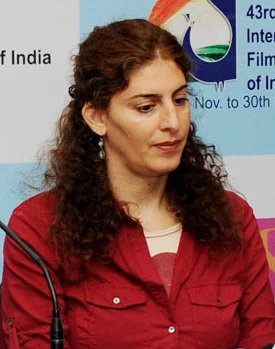
Image from Wikipedia
Image from Wikipedia
Annemarie Jacir: The Award-Winning Palestinian-American Filmmaker Navigating Memory, Resistance, and Cinema
An Artist Who Tells Palestinian History with Cinematic Force
Annemarie Jacir is among the defining voices of contemporary Arab cinema. The Palestinian-American filmmaker, writer, and producer, born in Bethlehem, has established an international career marked by work that interweaves personal memory, collective history, and political reality. She is particularly known for her feature film Salt of This Sea, which showcased Jacir as an uncompromising storyteller worldwide. ([en.wikipedia.org](https://en.wikipedia.org/wiki/Annemarie_Jacir))
Biographical Roots: Bethlehem, Diaspora, and Connection to the Homeland
Jacir was born in 1974 or, according to other biographical sources, 1975 in Bethlehem and grew up in a Palestinian-Christian environment. She spent part of her childhood and youth in Saudi Arabia before moving to the United States for her studies. She completed her Master of Fine Arts at Columbia University School of the Arts in 2002, laying the foundation for a film career characterized from the very beginning by her distinct voice, precise observation, and cultural self-assertion. ([en.wikipedia.org](https://en.wikipedia.org/wiki/Annemarie_Jacir))
The biographical tension between place, exile, and return permeates her entire oeuvre. Jacir's films repeatedly revolve around mobility, border experiences, family history, and the question of how Palestinian identity can be made visible in cinema. This perspective lends her work a unique authority: she does not tell stories from the outside but from a deeply anchored personal and cultural experience. ([en.wikipedia.org](https://en.wikipedia.org/wiki/Annemarie_Jacir))
The Artistic Breakthrough: Short Film, Festival Successes, and Early Recognition
Her international breakthrough began with the short film Like Twenty Impossibles. The work was the first Arab short film to be included in the official selection of the Cannes Film Festival and developed into an award-winning festival success. More than 15 accolades, including awards from Palm Springs, Chicago, Mannheim-Heidelberg, and the Institute du Monde Arabe, made it clear early on that Jacir was a new and independent voice in Arab and global arthouse cinema. ([en.wikipedia.org](https://en.wikipedia.org/wiki/Annemarie_Jacir))
Here, her strength as a filmmaker is already evident: Jacir works with a sparse, precise staging that makes large political themes palpable through specific human situations. Her direction connects social reality with poetic condensation, allowing even short formats to unleash immense emotional and political impact. Film critics noted this approach early on as unusually mature and formally assured. ([en.wikipedia.org](https://en.wikipedia.org/wiki/Annemarie_Jacir))
Salt of This Sea: The Film That Established Jacir Internationally
With Salt of This Sea, Jacir realized in 2007 the first feature film by a Palestinian director. The film tells the story of an American woman of Palestinian descent who travels to her family’s homeland for the first time, intertwining a private search for identity with the political realities of occupation and displacement. The official selection at Cannes in 2008 and the FIPRESCI Critics Award rendered the work a milestone in Palestinian cinema. ([en.wikipedia.org](https://en.wikipedia.org/wiki/Annemarie_Jacir))
The production and reception of Salt of This Sea demonstrate Jacir's ability to translate politically charged subjects into accessible yet demanding narrative cinema. The film was submitted as the Palestinian entry for the Foreign Oscar and won additional international awards, including the Muhr Arab Award for Best Screenplay and a prize in San Sebastián. Thus, Jacir established herself not only as a director but as a cultural representative of cinema that demands visibility and narrative self-determination. ([en.wikipedia.org](https://en.wikipedia.org/wiki/Annemarie_Jacir))
When I Saw You and Wajib: Maturity, Intimacy, and Social Acuteness
Her second feature film, When I Saw You, deepened Jacir's exploration of the history and present of Palestine. The work received the award for Best Asian Film at the Berlinale, was selected as the Palestinian Oscar entry, and gathered further accolades in Abu Dhabi, Amiens, Phoenix, and Olympia. In this film, Jacir condenses her sense for atmosphere, political melancholy, and the perspective on life amid historical upheavals. ([en.wikipedia.org](https://en.wikipedia.org/wiki/Annemarie_Jacir))
With Wajib, her artistic development reached a new level. The film won or received nominations for numerous international awards, including recognitions in Mar del Plata, Dubai, Locarno, and Kerala, as well as a jury mention at the London Film Festival. Wajib showcases Jacir's mastery in handling dialogue, family tension, and social observation. The work feels both intimate and political, ordinary yet historically charged. ([en.wikipedia.org](https://en.wikipedia.org/wiki/Annemarie_Jacir))
Cinematic Signature: Between Realism, Poetry, and Political Precision
Jacir's style is characterized by a sensitive realism that never feels merely documentary. She composes scenes with calm observation, precise rhythm, and great attention to faces, spaces, and transitions. Her films rely on subtle dramaturgical tensions rather than loud effects, lending her direction a lasting intensity. ([en.wikipedia.org](https://en.wikipedia.org/wiki/Annemarie_Jacir))
Particularly important in her work is the connection between personal perspective and collective experience. Jacir tells stories of flight, memory, return, and everyday life in Palestine not abstractly, but through concrete characters and social relationships. This results in a cinema that is both emotionally accessible and intellectually demanding, gaining high regard in international film criticism. ([en.wikipedia.org](https://en.wikipedia.org/wiki/Annemarie_Jacir))
Curator, Mentor, and Cultural Actor
Jacir is not only a director but also a curator and networker of Palestinian film culture. She founded Philistine Films and curates projects that strengthen independent cinema in the region. Furthermore, she co-founded the artistic space Dar Yusuf Nasri Jacir for Art and Research in Bethlehem, which serves as a cultural hub and production site. ([en.wikipedia.org](https://en.wikipedia.org/wiki/Annemarie_Jacir))
Her role extends far beyond her own filmography. Jacir has served on international juries, including at Cannes and the Berlinale, and teaches or mentors in various educational contexts. These positions underscore her authority in the global film industry and her influence on the next generation of Palestinian and Arab filmmakers. ([en.wikipedia.org](https://en.wikipedia.org/wiki/Annemarie_Jacir))
Current Projects: Palestine 36 and the Continuation of Her Historical Cinema
With Palestine 36, Jacir is working on a historical large-scale project that focuses on the Arab revolt of 1936. The film was announced to premiere in 2025 at the Toronto International Film Festival and is thus one of her most ambitious endeavors in recent years. Reports from industry media and festival contexts indicate that Jacir is elevating her engagement with Palestinian history to the level of an epic contemporary cinema. ([en.royanews.tv](https://en.royanews.tv/news/61542/%E2%80%9CPalestine-36%E2%80%9D-by-Annemarie-Jacir-to-Premiere-at-Toronto-International-Film-Festival?utm_source=openai))
In 2025, the project also received further attention, including support within the film funding landscape and a broad international production constellation. Jacir's current work confirms her artistic continuity: she continues to develop films that intertwine historical complexity, political urgency, and a strong visual signature. ([artreview.com](https://artreview.com/annemarie-jacir-and-mohamad-w-ali-win-inaugural-sharjah-film-platform-feature-fund/?utm_source=openai))
Critical Reception and Cultural Influence
Jacir's work has been highly regarded by film festivals, trade press, and cultural institutions for years. Her early short films received outstanding festival resonance, and her feature films have been shown at Cannes, Berlin, and other major festivals. The awarding of numerous prizes to Salt of This Sea, When I Saw You, and Wajib attests to the fact that her cinema is not only politically relevant but also exceptionally strong in terms of form and narrative. ([en.wikipedia.org](https://en.wikipedia.org/wiki/Annemarie_Jacir))
Her cultural influence especially lies in making Palestinian realities visible beyond stereotypes. Jacir portrays family ties, social tensions, humor, grief, and resistance as part of a multifaceted everyday life. This is where the quality of her cinema resides: it demands empathy without simplifying the complexity of the political situation. ([en.wikipedia.org](https://en.wikipedia.org/wiki/Annemarie_Jacir))
Conclusion: Why Annemarie Jacir Remains an Exciting Figure Today
Annemarie Jacir is one of the most important filmmakers of contemporary Palestinian cinema because she combines history, present, and personal experience with a rare sensitivity for form. Her films are politically aware, emotionally precise, and internationally relevant. Anyone who wants to experience cinema as an art of memory and resistance will find an indispensable voice in Jacir's work. A live experience at a showing, retrospective, or festival presentation is always worthwhile, as her films unleash their full power on the big screen. ([en.wikipedia.org](https://en.wikipedia.org/wiki/Annemarie_Jacir))
Official Channels of Annemarie Jacir:
- Instagram: No official profile found
- Facebook: No official profile found
- YouTube: No official profile found
- Spotify: No official profile found
- TikTok: No official profile found
Sources:
- Wikipedia - Annemarie Jacir
- Dar Jacir - English
- Galerie - Strong Roots: Annemarie Jacir Interview
- Roya News - Palestine 36 to Premiere at Toronto International Film Festival
- Rough Draft Atlanta - Annemarie Jacir and the Critical Moment of Palestine 36
- +972 Magazine - Conversation with Annemarie Jacir
Upcoming Events
Palestine 36
Palestine 36
Palestine 36 at the filmforum Duisburg
Palestine 36
Palestine 36 – Premiere at filmforum Duisburg
Palestine 36
PALESTINE 36 – Obenkino in Cottbus