Wine Festivals, Beer Festivals & Food Events in Straubing
Wine Festivals, Beer Festivals & Food Events in Straubing: What Will Be Important Next Season
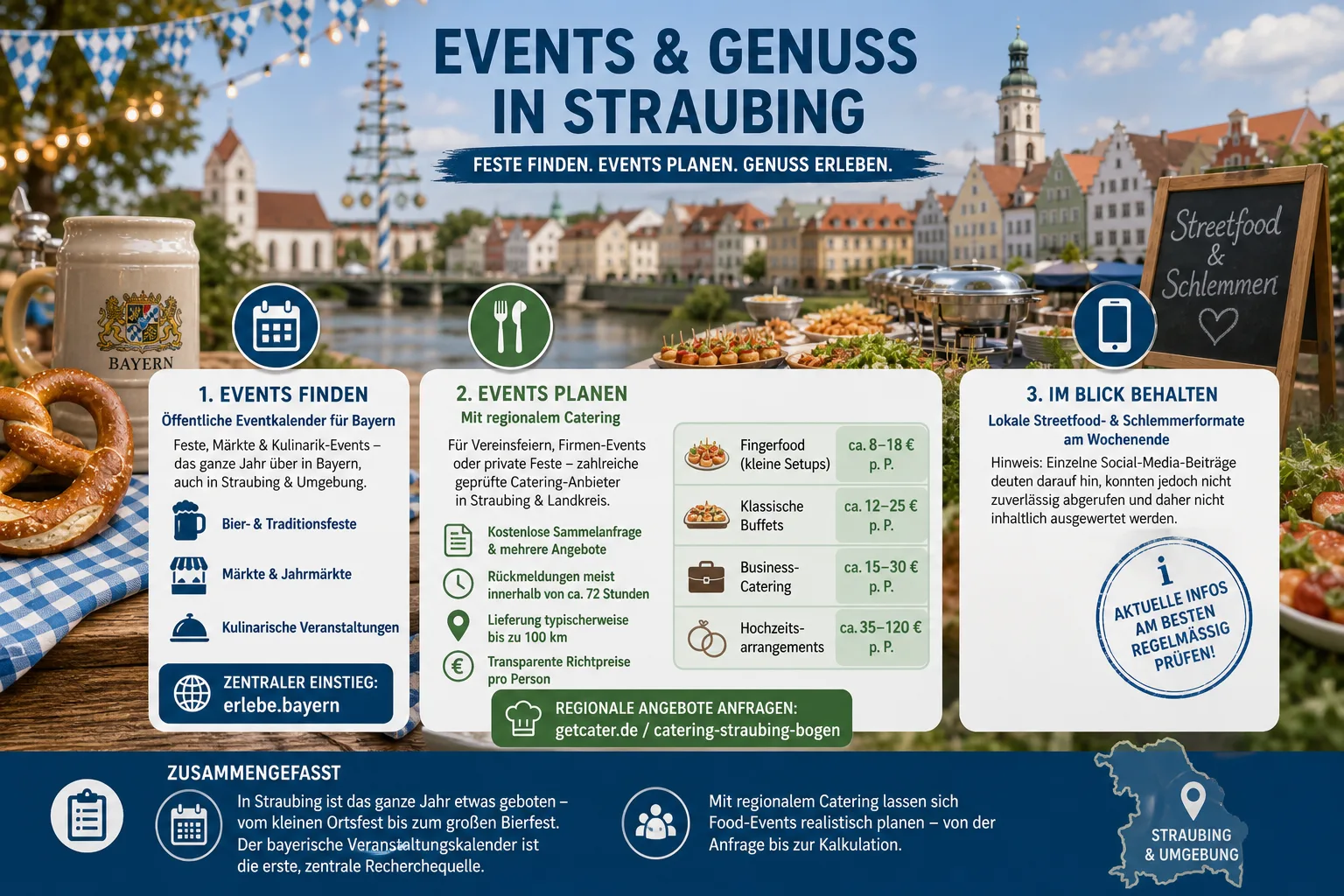
Whether it’s a wine festival in the square, a beer festival featuring regional brewing culture, or a street food format with rotating stalls: In Straubing and the surrounding area, the culinary event scene will remain a central meeting point for locals, guests, and businesses in the coming months. This overview focuses on reliably plannable, publicly accessible information sources and shows what will matter for enjoyment events in the future—from program and hygiene issues to sustainability and organization.
Which Formats Will Be Especially in Demand in 2026/2027
For the next season, food events in Straubing and the surrounding area are particularly trending toward formats that combine enjoyment with plannability and experience. Visitors increasingly expect: clear procedures, transparent offerings (also for allergies/diets), and a coherent overall package of food, drinks, music, and quality of stay.
Typical Event Formats That Can Be Further Developed
- Wine Festival Formats with a Tasting Focus: e.g., vintner stands, moderated tastings, small food portions for pairing.
- Beer Festival Formats with a Regional Profile: greater visibility for breweries, beer styles, food pairings, and non-alcoholic alternatives.
- Food Markets & Street Food Days: many small options instead of a single menu; easily combined with family times in the afternoon and music in the evening.
- Themed Evenings & Seasonal Enjoyment Weeks: e.g., regional cuisine, vegetarian/vegan, grill & smokers, bread/baking craft, or dessert specials.
What Guests Will Especially Appreciate in the Future
- Tasting-friendly Portion Sizes (more variety, less barrier to trying new things).
- Clear Labeling of allergens and additives in food and drink menus.
- Good Logistics: enough serving and return points, short waiting times, understandable routing.
- Weather and Capacity Concepts: shade/shelters, seating and standing areas, reservation options, entry management.
Planning Your Own Food Event in Straubing: Checklist for the Next Season
Whether it’s a company party, club evening, or wedding: Anyone organizing a food event in Straubing in the coming months will benefit from a structured approach. The following checklist is designed to work for both small gatherings and larger formats (with multiple stations/stalls).
1) Define Purpose, Framework, and Guest Profile
- Occasion and style: casual (street food), classic (buffet), festive (set menu), mixed (food stations).
- Time frame and schedule: reception, meal times, program points, conclusion.
- Guest profile: families, business, mixed groups; children’s options; vegetarian/vegan; allergies.
2) Choose Provider Structure
- Catering/Party Service with delivery (and optional service staff).
- Live Cooking or stations (e.g., grill, pasta, tapas, dessert bar).
- Beverage Concept: regional beer/wine, non-alcoholic alternatives, water logistics, possibly bar service.
3) Compare Budget & Offerings (Without Unpleasant Surprises)
Instead of relying on flat-rate price lists, it is especially important for the coming season to compare offers by scope of services:
- What is included (delivery, setup/takedown, keeping food warm, dishes, staff, travel, cleaning)?
- What minimum quantities/minimum sales apply?
- What are the cancellation and bad weather policies?
- What additional costs may arise (e.g., technology, refrigeration, energy, security service)?
4) Timeline for the Next Season
- 6–12 months in advance: Secure location/date (especially in popular time slots), choose basic concept.
- 3–6 months in advance: Finalize catering and beverage concept, schedule, possibly music/moderation.
- 4–8 weeks in advance: Food list, quantities, labeling (allergens), staff and logistics plan.
- 1–2 weeks in advance: Final guest tables, routes, emergency plan (weather/technology), responsibilities.
Hygiene, Safety & Responsibility: What Organizers Should Consider in the Future
Wine festivals, beer festivals, and food events are not just about taste, but also about food safety, consumer protection, and reliable information. In Germany, among other things, EU hygiene regulations and national requirements form the framework that businesses and organizers should follow for the next season.
Important Practical Areas for Future Events
- HACCP & Hygiene Organization: clean process chain from goods receipt to cooling to serving.
- Allergen Information: clear, accessible labeling and trained staff for questions.
- Drinking Water & Ice: safe supply, clean containers, traceable handling.
- Staff Hygiene: hand hygiene, work clothing, instruction; clear responsibilities.
- Waste, Fat, Wastewater: regulated disposal to keep areas clean and safe.
Transparency creates trust for visitors: visible contacts on site, understandable menus (including labeling), and clearly recognizable information points.
Sustainability: Reusables, Regionality, and Waste Concepts as Standard
In the coming years, sustainability at food events will be less of an “extra” and more of an expectation: Guests are paying more attention to waste avoidance, regional origin, and transparent processes. At the same time, legal frameworks (e.g., reusable offers in gastronomy) influence practices around cups, boxes, and take-away.
Measures That Will Prove Effective for Future Festivals
- Reusables Instead of Disposables: robust processes for distribution, return, and washing/return logistics.
- Regional Supply Chains: shorter routes, clearer communication about origin, better planning.
- Smarter Portion and Menu Planning: less overproduction, better calculation, less food waste.
- Transparent Waste Separation: well-signposted stations, simple fractions, sufficient capacity.
- Vegetarian/Vegan Core Options: not as a side offering, but as a full alternative.
Why Enjoyment Events Remain Economically Relevant for Straubing
In the next season, wine festivals, beer festivals, and food events in Straubing are expected to continue to be an important driver of footfall in the city center and event areas: They bring people together, extend stays, and connect gastronomy, hotels, crafts, culture, and regional producers.
This creates a cycle for businesses that extends beyond the event itself: Those who have a positive experience at a stand, pop-up, or tasting often seek out the provider later—and thus help ensure that culinary quality remains visible in the region in the long term.