Discover Poetry Slams & Word Art in Straubing
Poetry Slams & Word Art in Straubing: How to Find and Experience the Next Evenings
6 min readLaura Müller
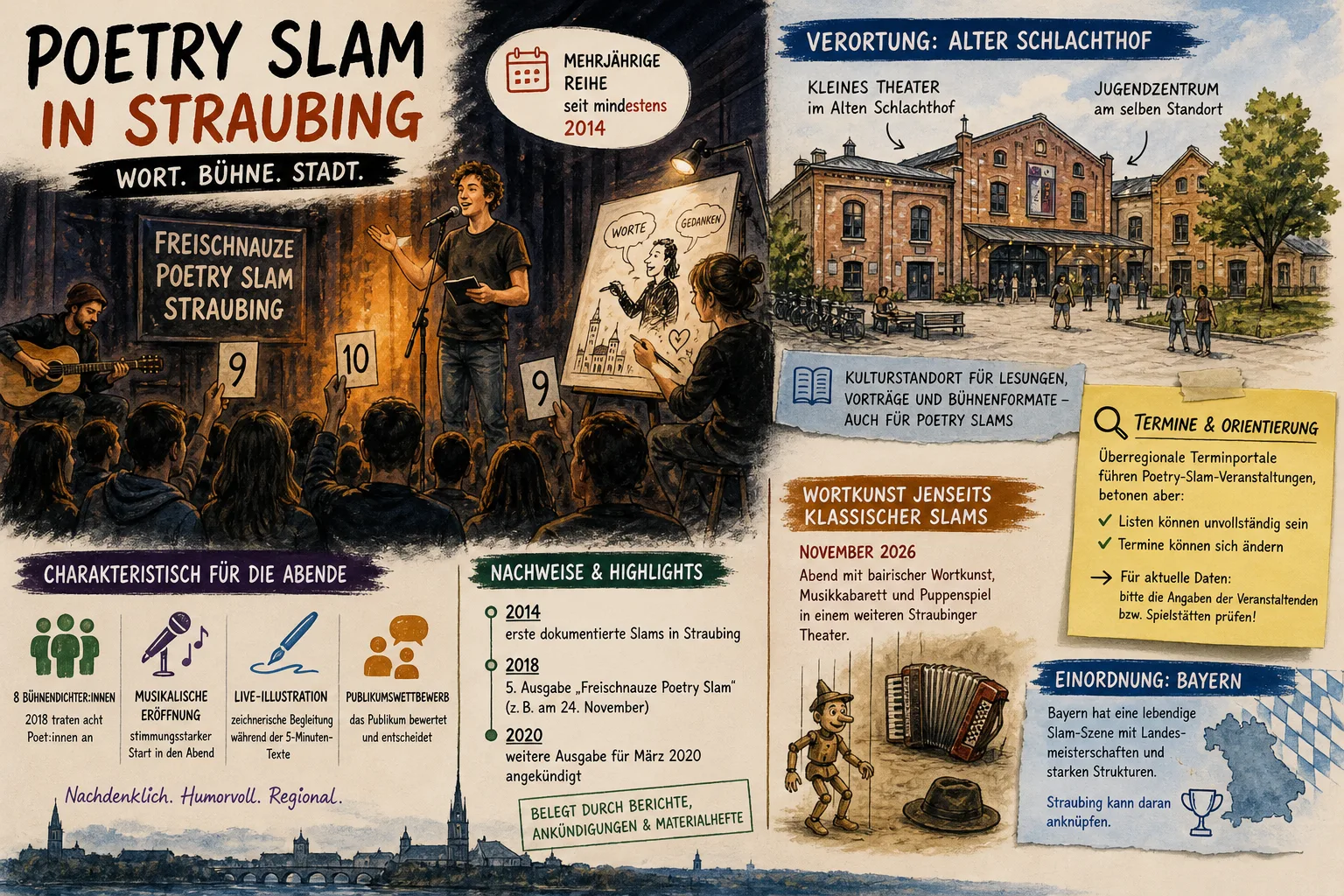
How does a city change when people not only think their stories but speak them out loud – raw, poetic, sometimes painfully honest? In Straubing, a vibrant stage culture is growing from exactly this: poetry slams, spoken word, dialect texts, and word-based hybrid forms of music, cabaret, and theater.
What to Expect at Upcoming Poetry Slam Evenings
Poetry slams function as a live literature format in which people present their own texts on stage. The next slam evenings in and around Straubing generally follow a clear basic principle: own texts, live performance, audience involvement. Depending on the event, additional elements may be added, such as music openers, themed rounds, or illustrations.
Typical Procedure (as is common at many slams)
- Welcome & Moderation: A moderator explains the rules, announces acts, and keeps up the pace.
- Round Principle: Several poets perform one after another; there is often a preliminary round and a final.
- Audience Decision: The audience evaluates (e.g., by applause, scorecards, or jury seats in the hall – depending on house rules).
- Final & Winner: At the end, there is a closing performance or a final round.
Atmosphere: Why Slam Evenings Feel Different from Readings
At a poetry slam, the impact is created in the moment: voice, timing, pauses, reactions from the room. The audience is not just "listeners" but part of the evening – through feedback, mood, and shared attention. Anyone who wants to get to know Straubing through language gets direct access to regional topics, humor, and attitudes, without needing insider knowledge.
Typical Venues in Straubing: How to Recognize Them
In Straubing, word art events preferably take place where culture regularly meets an audience: in theater and event spaces, in cultural areas with multiple uses (stage, rehearsal rooms, youth and cultural work), and in houses that also program concerts, readings, and small-scale art.
How to Identify Suitable Locations for Upcoming Dates
- Program with a "Word" Focus: Look for terms like "Poetry Slam," "Spoken Word," "Reading Stage," "Word Art," "Cabaret," or "Dialect" in the calendar.
- Cooperations: Slam evenings are often announced jointly (e.g., organizer team + youth/cultural sponsor + venue).
- Room Size: Smaller halls mean more intimacy and quicker sell-outs; larger halls are more suitable for special editions or mixed shows.
For finding specific dates: Rely on the current program pages of the venues and the channels of the organizers when planning, as line-ups, admission times, or ticket models can change at short notice.
Beyond the Slam: Word Art Formats with Dialect, Music & Scene
Not every word-based stage is a competition. In the coming months, it is especially worthwhile in Straubing to look out for formats that combine language with other arts. Such evenings often offer a low-threshold entry – even for people who do not know the "slam rules" in detail but are interested in language.
Formats You May Find in Programs
- Dialect & Vernacular Evenings: Texts in Bavarian coloring that create closeness through sound, idioms, and attitude.
- Music & Word: Spoken word with live music, songwriter parts, or rhythmic setups.
- Cabaret-Related Word Art: Political or everyday texts with punchline structure, often with scenic elements.
- Text Meets Image: Live drawing/illustration as a second narrative level that reinforces or contrasts text moods.
- Theatrical Word Formats: Monologues, character pieces, or hybrids with puppet or object theater.
Practical Planning: Tickets, Admission, Procedure
1) Stay Informed (Without Missing Anything)
Since slam series do not necessarily run on a fixed monthly schedule, planning works best via a combination of cultural calendars, newsletters/feeds of the venues, and the social channels of the organizers. Shortly before the event, also check for updates (admission time, support acts, last-minute changes).
2) Tickets & Seat Selection
- Use Advance Sales: Word art evenings in smaller halls are often the first to sell out.
- Arrive Early: With open seating, early admission improves sight and sound quality.
- Group Visits: If you come with several people, book together to sit together.
3) What You Should Bring (and What Is Not Necessary)
- Curiosity Instead of Prior Knowledge: You do not need to know slam rules by heart; the moderator will explain them.
- Respectful Attention: Poetry slams thrive on concentration in the room – especially with personal texts.
- Openness to Diversity: From humor to seriousness, from dialect to standard language: variety is part of the format.
Perform Yourself: Preparation, Rules, Fairness
If an upcoming Straubing slam offers an open list or an "open mic" slot, new voices can easily join in. The specific details vary by event; however, the basic logic remains similar.
What Is Standard at Most Slams
- Own Text: What is performed is self-written.
- Time Limit: Usually a few minutes per contribution; the moderator announces the limit at the start.
- No Elaborate Props: In classic slams, text and performance are the focus.
- Audience Rating: The live impact in the room is decisive.
Tips to Help You with a Future Performance in Straubing
- Structure for Readability: Short paragraphs, clear beats, marks for pauses – this increases stage confidence.
- Practice Out Loud: Not just reading silently: voice, tempo, and eye contact make the difference.
- A Strong Start: The first 20–30 seconds often decide whether the room is "with you."
- Finish Cleanly: A recognizable closing image (punchline, image, sentence) makes applause easier.
Fairness Principle: Poetry slams work when audience and performers together create a focused, respectful space – even when a text is polarizing.