
Sankt Englmar
Kirchpl. 2, 94379 St. Englmar, Deutschland
Chapel of Souls Sankt Englmar | History & Photos
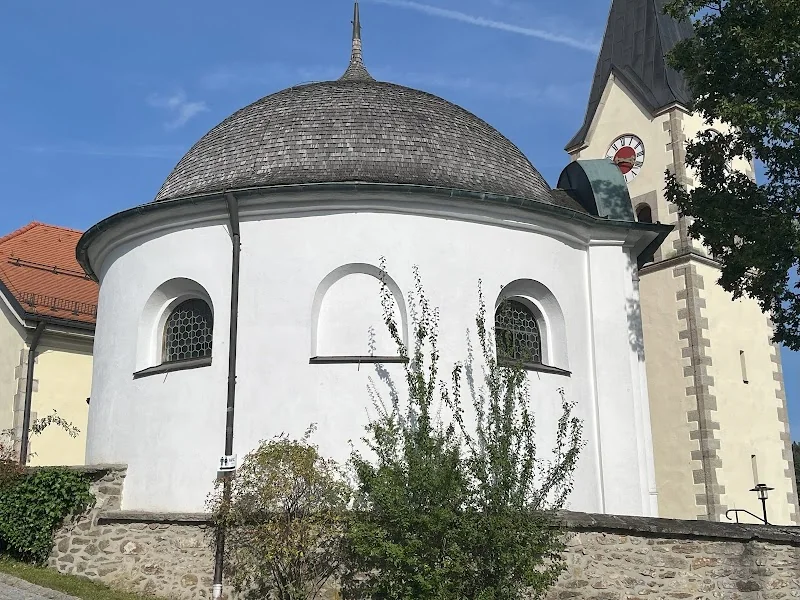
The Chapel of Souls in the old cemetery of Sankt Englmar is much more than a small sacred building next to the parish church. It is a place of remembrance, a silent testimony to the local history, and a prominent point in the historical center of the mountain village. Upon entering the church square, visitors see not only the chapel itself but also the close interplay of the parish church, the old cemetery, and the religious heritage surrounding the blessed Engelmar. This connection makes the Chapel of Souls particularly interesting for visitors: it is small, inconspicuous, and yet full of significance. In official descriptions, it is referred to as a memorial for the local patron and the poor souls; other sources highlight its baroque form, its listed status, and the careful restoration. Thus, it is an ideal destination for people who wish to connect history, architecture, quiet tourism, and living tradition. ([pfarrei-sankt-englmar.de](https://www.pfarrei-sankt-englmar.de/kirchen-kapellen.html))
History of the Chapel of Souls in the Old Cemetery
The history of the Chapel of Souls dates back to around 1700. The current building was constructed as a small baroque oval structure in the southwest corner of the cemetery that surrounds the parish church. Several sources agree that the chapel in its current form originates from this time and is listed as a historical monument. Particularly fascinating is its history of use: until after World War I, it served as a mortuary, and until the creation of the new cemetery in 1976, it was subsequently used as a storage room. It was only in the 1990s that efforts began to restore the chapel to a dignified function. This development shows how strongly the value of historical places depends on their care. A building that fades into the background over decades can return to the consciousness of a community through commitment, research, and restoration. Exactly this has happened in Sankt Englmar. The historical core of the chapel has not only been preserved but has also been consciously placed in a spiritual and cultural context. A ceiling painting in the parish church from 1735 also confirms that the cemetery chapel was already known in its present form at that time. Thus, the Chapel of Souls is not only a monument but also a tangible piece of local chronicle that impressively documents the transformation from functional building to memorial. ([bayerischer-wald.me](https://www.bayerischer-wald.me/detail/id%3D62f60f4b521d8a5c72183451))
Architecture, Floor Plan, and Restoration
Architecturally, the Chapel of Souls is surprisingly characterful for a small place. The building is oval in shape and features a layout with robust Tuscan pilasters inside, a flat ceiling, and windows in a semicircular shape high in the diagonal axes. On the outside, the blind niches that resemble the windows stand out, as well as the straight facade wall at the east side, which ends with a semicircular gable. The dome roof appears squat and curved; it was newly covered with larch wood shingles in 2001. The facade was also renewed with smooth plaster and a broken white paint. Such details show that the chapel is not just any auxiliary building but a carefully composed small baroque space. The restoration starting in 2002 was correspondingly demanding. After a condition survey and archaeological excavations, wall remnants and even skeletons were found, confirming the assumption that the oval structure was built around 1700 over an earlier rectangular chapel. The actual restoration was completed in 2005, with local companies commissioned and the restoration of the original state with original materials given the highest priority. Additionally, a new access route with barrier-free access was created. From a structural perspective, the chapel is therefore not only historically significant but also a good example of how monument preservation, research, and practical usability can go hand in hand. ([bayerischer-wald.me](https://www.bayerischer-wald.me/detail/id%3D62f60f4b521d8a5c72183451))
The Local Patron Engelmar and Spiritual Significance
The strongest emotional and spiritual connection of the Chapel of Souls lies in its association with the local patron Engelmar. The restored altar painting, which likely dates from the time of construction around 1700, depicts Engelmar in the center of the image with some poor souls below. This image content explains why the chapel was consciously understood as a Chapel of Souls again after its restoration. The local patron and the commemoration of the deceased are not abstract here but interconnected in a single image. The shrine with the Engelmar figure also plays an important role: the figure is used annually on Whit Monday during the Englmari search, making it clear that the chapel is not just a museum object but remains integrated into lived piety. The religious heritage of Sankt Englmar is overall strongly shaped by Engelmar. The parish church itself is described on the official website as a history book of the place; there, legend panels convey the story of the Blessed One. The Chapel of Souls complements this spiritual framework by providing a quieter, more focused space. Here, the tone is restrained, the furnishings are simple, and therein lies its effect. The space was deliberately designed so that the old building becomes a place of prayer with the new. For visitors, this is an invitation not only to observe history but to quietly reflect on it. The chapel thus exemplifies a place where monument, faith, and local identity intertwine. ([bayerischer-wald.me](https://www.bayerischer-wald.me/detail/id%3D62f60f4b521d8a5c72183451))
Church Square, Parish Church, and Location in the Town Center
Those who visit the Chapel of Souls do not experience it in isolation but right in the historical center of Sankt Englmar. It is located at Kirchplatz 1 in the old cemetery directly next to the parish church. This immediate proximity is important for understanding the place, as the parish church, together with the former Premonstratensian rectory, now Bayerwald-Xperium, forms the architectural and historical framework of the church square. The church itself is considered a landmark of the place, and its cohesive interior tells large parts of the local history. In this environment, the Chapel of Souls acts as a concentrated counterpoint: small, quiet, and reduced to the core of remembrance. For visitors, this means that the path to the chapel ideally connects with a short tour through the town center. The location at about 812 meters above sea level makes it clear that one is in a mountain village that visibly maintains its traditions to this day. Although the chapel itself is not a large hall or event location, it possesses strong tourist quality due to its location. It lies at a point where one can immediately experience the various levels of the place: parish church, cemetery, Engelmar tradition, and the village center. The Chapel of Souls is thus a place where the atmosphere of Sankt Englmar condenses. Those seeking photos, architecture, and historical contexts will find much in a small space. For a quiet stop on a town tour, it is therefore particularly suitable. ([bayerischer-wald.me](https://www.bayerischer-wald.me/detail/id%3D62f60f4b521d8a5c72183451))
Photos, Quiet Impressions, and Visitor Experience
The available photos and descriptions help to capture the Chapel of Souls not only factually but also atmospherically. In the image references, the chapel is shown from the east; additionally, the surroundings with old gravestones and the adjacent cemetery area become visible. It is precisely this combination of building, cemetery, and ecclesiastical environment that makes its charm. Unlike large pilgrimage sites or monumental churches, the Chapel of Souls relies on restraint. It invites quiet contemplation, not a loud program point. The classification as a place of silence and its suitability for adults, families, and individuals underline this character. Those who find their way here are usually not looking for a show but a quiet experience with historical depth. Precisely for this reason, the chapel also works so well photographically: the small format, the baroque form, the proximity to the parish church, and the old gravestones create a visual language that appears calm and focused. Visitors should take the time to notice the facade details, the dome roof, the embedding in the cemetery, and the proximity to the ecclesiastical buildings. From an SEO perspective, this is the point where search intentions for photos, history, and location ideally converge. The Chapel of Souls is not a place for quick checklist moments but for conscious observation. Those who visit experience a small space with a great impact and a quiet complement to the lively town center of Sankt Englmar. ([bayerischer-wald.me](https://www.bayerischer-wald.me/detail/id%3D62f60f4b521d8a5c72183451))
Englmari Search, Tradition, and Today's Role
The current significance of the Chapel of Souls cannot be understood without the Englmari search. The community describes this custom as a spectacle with over 150 years of tradition, which goes back to the legend of the death and discovery of the blessed Engelmar. On Whit Monday, the body of the local patron is symbolically searched for, found, and brought back to the village in a historical procession; afterwards, a field mass follows high above the village. This tradition shapes Sankt Englmar to this day and makes the name of the mountain village known far beyond the region. The Chapel of Souls is integrated into this religious and cultural network because it continues the Engelmar reference both pictorially and in content. The altar painting with Engelmar and the poor souls, the Engelmar figure in the shrine, and the embedding in the old cemetery connect memory, customs, and prayer in a small space. This is precisely why the chapel does not appear static but lively. The consecration on January 13, 2008, marked the conclusion of a development that was supported by research, restoration, and local participation. Today, the chapel stands as a symbol that a small place takes its history seriously and keeps it visible. For visitors, this means: those who come to the Chapel of Souls see not only a pretty sacred building but a piece of lived identity. Those who know the Englmari search recognize in the chapel the quiet background of this great tradition; those who are not yet familiar with the tradition find an ideal first access here. Thus, the Chapel of Souls becomes the key to better understanding Sankt Englmar. ([bayerischer-wald.me](https://www.bayerischer-wald.me/detail/id%3D62f60f4b521d8a5c72183451))
Sources:
- Parish St. Englmar - Churches and Chapels ([pfarrei-sankt-englmar.de](https://www.pfarrei-sankt-englmar.de/kirchen-kapellen.html))
- Parish St. Englmar - Parish Church St. Englmar ([pfarrei-sankt-englmar.de](https://www.pfarrei-sankt-englmar.de/KirchenKapellen/Pfarrkirche-St-Englmar/))
- Community Sankt Englmar - Englmari Search ([gemeinde.sankt-englmar.de](https://gemeinde.sankt-englmar.de/gemeinde/englmarisuchen/))
- alpenvereinaktiv - Chapel of Souls St. Englmar ([alpenvereinaktiv.com](https://www.alpenvereinaktiv.com/de/punkt/seelenkapelle-st.-englmar/806192148/))
- My Bavarian Forest - Chapel of Souls in the Old Cemetery ([bayerischer-wald.me](https://www.bayerischer-wald.me/detail/id%3D62f60f4b521d8a5c72183451))
Mehr anzeigenWeniger anzeigen
Chapel of Souls Sankt Englmar | History & Photos
The Chapel of Souls in the old cemetery of Sankt Englmar is much more than a small sacred building next to the parish church. It is a place of remembrance, a silent testimony to the local history, and a prominent point in the historical center of the mountain village. Upon entering the church square, visitors see not only the chapel itself but also the close interplay of the parish church, the old cemetery, and the religious heritage surrounding the blessed Engelmar. This connection makes the Chapel of Souls particularly interesting for visitors: it is small, inconspicuous, and yet full of significance. In official descriptions, it is referred to as a memorial for the local patron and the poor souls; other sources highlight its baroque form, its listed status, and the careful restoration. Thus, it is an ideal destination for people who wish to connect history, architecture, quiet tourism, and living tradition. ([pfarrei-sankt-englmar.de](https://www.pfarrei-sankt-englmar.de/kirchen-kapellen.html))
History of the Chapel of Souls in the Old Cemetery
The history of the Chapel of Souls dates back to around 1700. The current building was constructed as a small baroque oval structure in the southwest corner of the cemetery that surrounds the parish church. Several sources agree that the chapel in its current form originates from this time and is listed as a historical monument. Particularly fascinating is its history of use: until after World War I, it served as a mortuary, and until the creation of the new cemetery in 1976, it was subsequently used as a storage room. It was only in the 1990s that efforts began to restore the chapel to a dignified function. This development shows how strongly the value of historical places depends on their care. A building that fades into the background over decades can return to the consciousness of a community through commitment, research, and restoration. Exactly this has happened in Sankt Englmar. The historical core of the chapel has not only been preserved but has also been consciously placed in a spiritual and cultural context. A ceiling painting in the parish church from 1735 also confirms that the cemetery chapel was already known in its present form at that time. Thus, the Chapel of Souls is not only a monument but also a tangible piece of local chronicle that impressively documents the transformation from functional building to memorial. ([bayerischer-wald.me](https://www.bayerischer-wald.me/detail/id%3D62f60f4b521d8a5c72183451))
Architecture, Floor Plan, and Restoration
Architecturally, the Chapel of Souls is surprisingly characterful for a small place. The building is oval in shape and features a layout with robust Tuscan pilasters inside, a flat ceiling, and windows in a semicircular shape high in the diagonal axes. On the outside, the blind niches that resemble the windows stand out, as well as the straight facade wall at the east side, which ends with a semicircular gable. The dome roof appears squat and curved; it was newly covered with larch wood shingles in 2001. The facade was also renewed with smooth plaster and a broken white paint. Such details show that the chapel is not just any auxiliary building but a carefully composed small baroque space. The restoration starting in 2002 was correspondingly demanding. After a condition survey and archaeological excavations, wall remnants and even skeletons were found, confirming the assumption that the oval structure was built around 1700 over an earlier rectangular chapel. The actual restoration was completed in 2005, with local companies commissioned and the restoration of the original state with original materials given the highest priority. Additionally, a new access route with barrier-free access was created. From a structural perspective, the chapel is therefore not only historically significant but also a good example of how monument preservation, research, and practical usability can go hand in hand. ([bayerischer-wald.me](https://www.bayerischer-wald.me/detail/id%3D62f60f4b521d8a5c72183451))
The Local Patron Engelmar and Spiritual Significance
The strongest emotional and spiritual connection of the Chapel of Souls lies in its association with the local patron Engelmar. The restored altar painting, which likely dates from the time of construction around 1700, depicts Engelmar in the center of the image with some poor souls below. This image content explains why the chapel was consciously understood as a Chapel of Souls again after its restoration. The local patron and the commemoration of the deceased are not abstract here but interconnected in a single image. The shrine with the Engelmar figure also plays an important role: the figure is used annually on Whit Monday during the Englmari search, making it clear that the chapel is not just a museum object but remains integrated into lived piety. The religious heritage of Sankt Englmar is overall strongly shaped by Engelmar. The parish church itself is described on the official website as a history book of the place; there, legend panels convey the story of the Blessed One. The Chapel of Souls complements this spiritual framework by providing a quieter, more focused space. Here, the tone is restrained, the furnishings are simple, and therein lies its effect. The space was deliberately designed so that the old building becomes a place of prayer with the new. For visitors, this is an invitation not only to observe history but to quietly reflect on it. The chapel thus exemplifies a place where monument, faith, and local identity intertwine. ([bayerischer-wald.me](https://www.bayerischer-wald.me/detail/id%3D62f60f4b521d8a5c72183451))
Church Square, Parish Church, and Location in the Town Center
Those who visit the Chapel of Souls do not experience it in isolation but right in the historical center of Sankt Englmar. It is located at Kirchplatz 1 in the old cemetery directly next to the parish church. This immediate proximity is important for understanding the place, as the parish church, together with the former Premonstratensian rectory, now Bayerwald-Xperium, forms the architectural and historical framework of the church square. The church itself is considered a landmark of the place, and its cohesive interior tells large parts of the local history. In this environment, the Chapel of Souls acts as a concentrated counterpoint: small, quiet, and reduced to the core of remembrance. For visitors, this means that the path to the chapel ideally connects with a short tour through the town center. The location at about 812 meters above sea level makes it clear that one is in a mountain village that visibly maintains its traditions to this day. Although the chapel itself is not a large hall or event location, it possesses strong tourist quality due to its location. It lies at a point where one can immediately experience the various levels of the place: parish church, cemetery, Engelmar tradition, and the village center. The Chapel of Souls is thus a place where the atmosphere of Sankt Englmar condenses. Those seeking photos, architecture, and historical contexts will find much in a small space. For a quiet stop on a town tour, it is therefore particularly suitable. ([bayerischer-wald.me](https://www.bayerischer-wald.me/detail/id%3D62f60f4b521d8a5c72183451))
Photos, Quiet Impressions, and Visitor Experience
The available photos and descriptions help to capture the Chapel of Souls not only factually but also atmospherically. In the image references, the chapel is shown from the east; additionally, the surroundings with old gravestones and the adjacent cemetery area become visible. It is precisely this combination of building, cemetery, and ecclesiastical environment that makes its charm. Unlike large pilgrimage sites or monumental churches, the Chapel of Souls relies on restraint. It invites quiet contemplation, not a loud program point. The classification as a place of silence and its suitability for adults, families, and individuals underline this character. Those who find their way here are usually not looking for a show but a quiet experience with historical depth. Precisely for this reason, the chapel also works so well photographically: the small format, the baroque form, the proximity to the parish church, and the old gravestones create a visual language that appears calm and focused. Visitors should take the time to notice the facade details, the dome roof, the embedding in the cemetery, and the proximity to the ecclesiastical buildings. From an SEO perspective, this is the point where search intentions for photos, history, and location ideally converge. The Chapel of Souls is not a place for quick checklist moments but for conscious observation. Those who visit experience a small space with a great impact and a quiet complement to the lively town center of Sankt Englmar. ([bayerischer-wald.me](https://www.bayerischer-wald.me/detail/id%3D62f60f4b521d8a5c72183451))
Englmari Search, Tradition, and Today's Role
The current significance of the Chapel of Souls cannot be understood without the Englmari search. The community describes this custom as a spectacle with over 150 years of tradition, which goes back to the legend of the death and discovery of the blessed Engelmar. On Whit Monday, the body of the local patron is symbolically searched for, found, and brought back to the village in a historical procession; afterwards, a field mass follows high above the village. This tradition shapes Sankt Englmar to this day and makes the name of the mountain village known far beyond the region. The Chapel of Souls is integrated into this religious and cultural network because it continues the Engelmar reference both pictorially and in content. The altar painting with Engelmar and the poor souls, the Engelmar figure in the shrine, and the embedding in the old cemetery connect memory, customs, and prayer in a small space. This is precisely why the chapel does not appear static but lively. The consecration on January 13, 2008, marked the conclusion of a development that was supported by research, restoration, and local participation. Today, the chapel stands as a symbol that a small place takes its history seriously and keeps it visible. For visitors, this means: those who come to the Chapel of Souls see not only a pretty sacred building but a piece of lived identity. Those who know the Englmari search recognize in the chapel the quiet background of this great tradition; those who are not yet familiar with the tradition find an ideal first access here. Thus, the Chapel of Souls becomes the key to better understanding Sankt Englmar. ([bayerischer-wald.me](https://www.bayerischer-wald.me/detail/id%3D62f60f4b521d8a5c72183451))
Sources:
- Parish St. Englmar - Churches and Chapels ([pfarrei-sankt-englmar.de](https://www.pfarrei-sankt-englmar.de/kirchen-kapellen.html))
- Parish St. Englmar - Parish Church St. Englmar ([pfarrei-sankt-englmar.de](https://www.pfarrei-sankt-englmar.de/KirchenKapellen/Pfarrkirche-St-Englmar/))
- Community Sankt Englmar - Englmari Search ([gemeinde.sankt-englmar.de](https://gemeinde.sankt-englmar.de/gemeinde/englmarisuchen/))
- alpenvereinaktiv - Chapel of Souls St. Englmar ([alpenvereinaktiv.com](https://www.alpenvereinaktiv.com/de/punkt/seelenkapelle-st.-englmar/806192148/))
- My Bavarian Forest - Chapel of Souls in the Old Cemetery ([bayerischer-wald.me](https://www.bayerischer-wald.me/detail/id%3D62f60f4b521d8a5c72183451))
Chapel of Souls Sankt Englmar | History & Photos
The Chapel of Souls in the old cemetery of Sankt Englmar is much more than a small sacred building next to the parish church. It is a place of remembrance, a silent testimony to the local history, and a prominent point in the historical center of the mountain village. Upon entering the church square, visitors see not only the chapel itself but also the close interplay of the parish church, the old cemetery, and the religious heritage surrounding the blessed Engelmar. This connection makes the Chapel of Souls particularly interesting for visitors: it is small, inconspicuous, and yet full of significance. In official descriptions, it is referred to as a memorial for the local patron and the poor souls; other sources highlight its baroque form, its listed status, and the careful restoration. Thus, it is an ideal destination for people who wish to connect history, architecture, quiet tourism, and living tradition. ([pfarrei-sankt-englmar.de](https://www.pfarrei-sankt-englmar.de/kirchen-kapellen.html))
History of the Chapel of Souls in the Old Cemetery
The history of the Chapel of Souls dates back to around 1700. The current building was constructed as a small baroque oval structure in the southwest corner of the cemetery that surrounds the parish church. Several sources agree that the chapel in its current form originates from this time and is listed as a historical monument. Particularly fascinating is its history of use: until after World War I, it served as a mortuary, and until the creation of the new cemetery in 1976, it was subsequently used as a storage room. It was only in the 1990s that efforts began to restore the chapel to a dignified function. This development shows how strongly the value of historical places depends on their care. A building that fades into the background over decades can return to the consciousness of a community through commitment, research, and restoration. Exactly this has happened in Sankt Englmar. The historical core of the chapel has not only been preserved but has also been consciously placed in a spiritual and cultural context. A ceiling painting in the parish church from 1735 also confirms that the cemetery chapel was already known in its present form at that time. Thus, the Chapel of Souls is not only a monument but also a tangible piece of local chronicle that impressively documents the transformation from functional building to memorial. ([bayerischer-wald.me](https://www.bayerischer-wald.me/detail/id%3D62f60f4b521d8a5c72183451))
Architecture, Floor Plan, and Restoration
Architecturally, the Chapel of Souls is surprisingly characterful for a small place. The building is oval in shape and features a layout with robust Tuscan pilasters inside, a flat ceiling, and windows in a semicircular shape high in the diagonal axes. On the outside, the blind niches that resemble the windows stand out, as well as the straight facade wall at the east side, which ends with a semicircular gable. The dome roof appears squat and curved; it was newly covered with larch wood shingles in 2001. The facade was also renewed with smooth plaster and a broken white paint. Such details show that the chapel is not just any auxiliary building but a carefully composed small baroque space. The restoration starting in 2002 was correspondingly demanding. After a condition survey and archaeological excavations, wall remnants and even skeletons were found, confirming the assumption that the oval structure was built around 1700 over an earlier rectangular chapel. The actual restoration was completed in 2005, with local companies commissioned and the restoration of the original state with original materials given the highest priority. Additionally, a new access route with barrier-free access was created. From a structural perspective, the chapel is therefore not only historically significant but also a good example of how monument preservation, research, and practical usability can go hand in hand. ([bayerischer-wald.me](https://www.bayerischer-wald.me/detail/id%3D62f60f4b521d8a5c72183451))
The Local Patron Engelmar and Spiritual Significance
The strongest emotional and spiritual connection of the Chapel of Souls lies in its association with the local patron Engelmar. The restored altar painting, which likely dates from the time of construction around 1700, depicts Engelmar in the center of the image with some poor souls below. This image content explains why the chapel was consciously understood as a Chapel of Souls again after its restoration. The local patron and the commemoration of the deceased are not abstract here but interconnected in a single image. The shrine with the Engelmar figure also plays an important role: the figure is used annually on Whit Monday during the Englmari search, making it clear that the chapel is not just a museum object but remains integrated into lived piety. The religious heritage of Sankt Englmar is overall strongly shaped by Engelmar. The parish church itself is described on the official website as a history book of the place; there, legend panels convey the story of the Blessed One. The Chapel of Souls complements this spiritual framework by providing a quieter, more focused space. Here, the tone is restrained, the furnishings are simple, and therein lies its effect. The space was deliberately designed so that the old building becomes a place of prayer with the new. For visitors, this is an invitation not only to observe history but to quietly reflect on it. The chapel thus exemplifies a place where monument, faith, and local identity intertwine. ([bayerischer-wald.me](https://www.bayerischer-wald.me/detail/id%3D62f60f4b521d8a5c72183451))
Church Square, Parish Church, and Location in the Town Center
Those who visit the Chapel of Souls do not experience it in isolation but right in the historical center of Sankt Englmar. It is located at Kirchplatz 1 in the old cemetery directly next to the parish church. This immediate proximity is important for understanding the place, as the parish church, together with the former Premonstratensian rectory, now Bayerwald-Xperium, forms the architectural and historical framework of the church square. The church itself is considered a landmark of the place, and its cohesive interior tells large parts of the local history. In this environment, the Chapel of Souls acts as a concentrated counterpoint: small, quiet, and reduced to the core of remembrance. For visitors, this means that the path to the chapel ideally connects with a short tour through the town center. The location at about 812 meters above sea level makes it clear that one is in a mountain village that visibly maintains its traditions to this day. Although the chapel itself is not a large hall or event location, it possesses strong tourist quality due to its location. It lies at a point where one can immediately experience the various levels of the place: parish church, cemetery, Engelmar tradition, and the village center. The Chapel of Souls is thus a place where the atmosphere of Sankt Englmar condenses. Those seeking photos, architecture, and historical contexts will find much in a small space. For a quiet stop on a town tour, it is therefore particularly suitable. ([bayerischer-wald.me](https://www.bayerischer-wald.me/detail/id%3D62f60f4b521d8a5c72183451))
Photos, Quiet Impressions, and Visitor Experience
The available photos and descriptions help to capture the Chapel of Souls not only factually but also atmospherically. In the image references, the chapel is shown from the east; additionally, the surroundings with old gravestones and the adjacent cemetery area become visible. It is precisely this combination of building, cemetery, and ecclesiastical environment that makes its charm. Unlike large pilgrimage sites or monumental churches, the Chapel of Souls relies on restraint. It invites quiet contemplation, not a loud program point. The classification as a place of silence and its suitability for adults, families, and individuals underline this character. Those who find their way here are usually not looking for a show but a quiet experience with historical depth. Precisely for this reason, the chapel also works so well photographically: the small format, the baroque form, the proximity to the parish church, and the old gravestones create a visual language that appears calm and focused. Visitors should take the time to notice the facade details, the dome roof, the embedding in the cemetery, and the proximity to the ecclesiastical buildings. From an SEO perspective, this is the point where search intentions for photos, history, and location ideally converge. The Chapel of Souls is not a place for quick checklist moments but for conscious observation. Those who visit experience a small space with a great impact and a quiet complement to the lively town center of Sankt Englmar. ([bayerischer-wald.me](https://www.bayerischer-wald.me/detail/id%3D62f60f4b521d8a5c72183451))
Englmari Search, Tradition, and Today's Role
The current significance of the Chapel of Souls cannot be understood without the Englmari search. The community describes this custom as a spectacle with over 150 years of tradition, which goes back to the legend of the death and discovery of the blessed Engelmar. On Whit Monday, the body of the local patron is symbolically searched for, found, and brought back to the village in a historical procession; afterwards, a field mass follows high above the village. This tradition shapes Sankt Englmar to this day and makes the name of the mountain village known far beyond the region. The Chapel of Souls is integrated into this religious and cultural network because it continues the Engelmar reference both pictorially and in content. The altar painting with Engelmar and the poor souls, the Engelmar figure in the shrine, and the embedding in the old cemetery connect memory, customs, and prayer in a small space. This is precisely why the chapel does not appear static but lively. The consecration on January 13, 2008, marked the conclusion of a development that was supported by research, restoration, and local participation. Today, the chapel stands as a symbol that a small place takes its history seriously and keeps it visible. For visitors, this means: those who come to the Chapel of Souls see not only a pretty sacred building but a piece of lived identity. Those who know the Englmari search recognize in the chapel the quiet background of this great tradition; those who are not yet familiar with the tradition find an ideal first access here. Thus, the Chapel of Souls becomes the key to better understanding Sankt Englmar. ([bayerischer-wald.me](https://www.bayerischer-wald.me/detail/id%3D62f60f4b521d8a5c72183451))
Sources:
- Parish St. Englmar - Churches and Chapels ([pfarrei-sankt-englmar.de](https://www.pfarrei-sankt-englmar.de/kirchen-kapellen.html))
- Parish St. Englmar - Parish Church St. Englmar ([pfarrei-sankt-englmar.de](https://www.pfarrei-sankt-englmar.de/KirchenKapellen/Pfarrkirche-St-Englmar/))
- Community Sankt Englmar - Englmari Search ([gemeinde.sankt-englmar.de](https://gemeinde.sankt-englmar.de/gemeinde/englmarisuchen/))
- alpenvereinaktiv - Chapel of Souls St. Englmar ([alpenvereinaktiv.com](https://www.alpenvereinaktiv.com/de/punkt/seelenkapelle-st.-englmar/806192148/))
- My Bavarian Forest - Chapel of Souls in the Old Cemetery ([bayerischer-wald.me](https://www.bayerischer-wald.me/detail/id%3D62f60f4b521d8a5c72183451))
Frequently Asked Questions
Reviews
No reviews found