
Straubing
Pfarrpl. 11 A, 94315 Straubing, Deutschland
Basilica of St. James | History & Organ
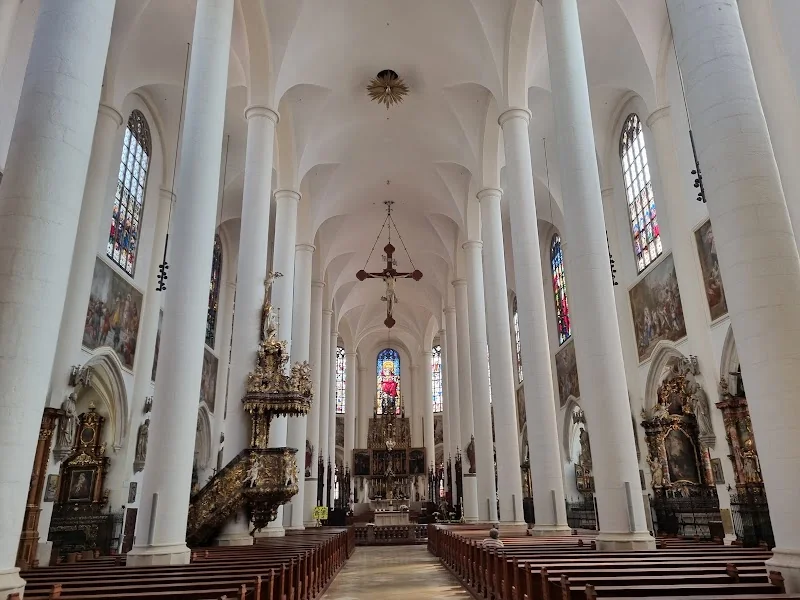
The Basilica of St. James in Straubing is much more than a distinctive house of worship in the parish square. As the city parish church of St. James and St. Tiburtius, it shapes the old town, the spiritual life, and the historical identity of the city. The city of Straubing describes it as a sacred building of national significance, and the German Foundation for Monument Protection classifies it as one of the largest hall churches in Bavaria. Thus, St. James represents exactly that mixture of faith, art, and city history that many visitors seek in a special location: a place with weight, atmosphere, and a distinctive architectural presence. Those walking through the city center discover not just a church, but a focal point that opens the view upwards, into the past, and into the present at the same time. The basilica is a structure that allows Straubing to be read like a history book made of stone, glass, and music. ([straubing.de](https://www.straubing.de/entdecken-erleben/wissens-und-sehenswertes/kirchen/index.html))
History and Significance of the Basilica in Straubing
The beginnings of the St. James Church date back further in Straubing than many visitors initially suspect. The Lower Bavarian city chronicle documents the first St. James Church as early as 1288. The construction of the present church began around 1415, when the late Gothic hall church was built under the master builder Hans von Burghausen. By 1418, the choir was partially completed, while the nave could only be finished in 1512/1513. The tower construction began in 1516; the upper square tower floor bears the year 1579, and older city views clearly show the gradual development of the tower. This long construction history shows that St. James was never a static single project but has grown over generations. It reflects the wealth, ambitions, and art-historical aspirations of a city that operated far beyond the regional framework during the Gothic and early modern periods. ([niederbayern-wiki.de](https://www.niederbayern-wiki.de/wiki/Basilika_St._Jakob_%28Straubing%29?utm_source=openai))
In the age of the Counter-Reformation, the church gained even greater ecclesiastical and symbolic significance. In 1581, the St. Tiburtius chapter was moved from Münster to St. James to solidify the Catholic character of Straubing. The interplay between St. James and St. Tiburtius thus created a dual city and parish patronage that remains visible in the name of the church to this day. The parish sees itself as the central city parish of Straubing, and this is evident in everyday life: services, festivals, church music, and liturgical celebrations make St. James a vibrant place that goes far beyond mere monument preservation. In 2016, after extensive renovations, the church was celebrated as a papal basilica minor, which further underscores its significance in the Diocese of Regensburg. Thus, the basilica connects historical depth with an active present, where faith, art, and city life intertwine closely. ([bistum-regensburg.de](https://bistum-regensburg.de/news/st-jakob-in-straubing-feiert-abschluss-der-grossen-kirchenrenovierung-4833?utm_source=openai))
Architecture, Hall Church, and Distinctive Tower
Architecturally, the basilica belongs to the great hall churches of Bavaria. The city of Straubing describes it as a brick Gothic hall church with a surrounding chapel ring; the German Foundation for Monument Protection complements the precise architectural effect with the long brick hall, massive flying buttresses, large pointed-arch traceried windows, and the low chapels between the flying buttresses. The architect was Hans von Burghausen, who is regarded as a leading master of late Gothic in Old Bavaria. This is where the charm of the building lies: it is not just large but consistently composed. From the outside, the church appears strictly structured, almost fortress-like, while the interior is open, bright, and spatially expansive. This contrast makes the visit exciting, as the Gothic logic of the building can be grasped immediately without requiring specialized knowledge. The construction leads the gaze upwards, while remaining grounded through the warm material of the brick and the calm order of the facades. ([straubing.de](https://www.straubing.de/entdecken-erleben/wissens-und-sehenswertes/kirchen/index.html))
The basilica is dominated by a tower that continues to shape the cityscape of Straubing today. The German Foundation for Monument Protection states that it is nearly 95 meters high, while the tower tours page mentions over 89 meters; regardless of the exact measurement method, it is clear that the tower is one of the dominant orientation points in the city center. The north side, with a small stair tower, is also part of the spatial diversity that distinguishes the building from many other sacred structures. The tower does not stand alone but is closely related to the parish square, the city square, and the silhouette of the old town. Those traveling in Straubing encounter it repeatedly from new perspectives. This is precisely why it serves so well as a motif for photos, as a fixed point during city walks, and as a visual symbol of the close connection between urban culture and sacred architecture. The basilica is thus not only a religious space but also an urban landmark with great visibility. ([denkmalschutz.de](https://www.denkmalschutz.de/denkmal/basilika-st-jakob.html))
Interior, Stained Glass Windows, and Artistic Furnishings
The interior is one of the strongest reasons why the basilica is so frequently sought after and visited. The city of Straubing points to an extremely rich interior decoration spanning six centuries and particularly highlights the Moses window based on a design by Albrecht Dürer. The German Foundation for Monument Protection further explains that the stained glass windows of the St. James Church make the development of Bavarian stained glass painting from the early 15th to the late 19th century visible. This makes the place particularly exciting for art lovers, as not only individual pieces but entire epochs become visible side by side. At the same time, the 38 stained glass windows, which were donated between 1895 and 1908, point to a civic engagement that continues to shape the beauty of the space today. St. James is therefore an example of how medieval structure and later glass and furnishing programs can form a harmonious unity. ([straubing.de](https://www.straubing.de/entdecken-erleben/wissens-und-sehenswertes/kirchen/index.html))
The spatial effect itself is also remarkable. The hall shape and the surrounding chapel ring create a pathway system of sight axes, side aisles, and ancillary rooms that turns the visit into a small tour through art history. Those who do not just quickly pass through the church but enter slowly experience very different impressions: above, the light from the windows; to the sides, the chapels; in the middle, the calm, generous hall space. The building always remains related to its liturgical function, as the furnishings are not museum-like and frozen but integrated into religious everyday life. This lively balance between monument and house of worship makes the basilica so strong. It is a place where contemplation, historical curiosity, and aesthetic perception can be combined simultaneously. For visitors, this means: one does not just see art objects but experiences a space that has gained its effect from centuries of use. ([straubing.de](https://www.straubing.de/entdecken-erleben/wissens-und-sehenswertes/kirchen/index.html))
Organ and Church Music in St. James
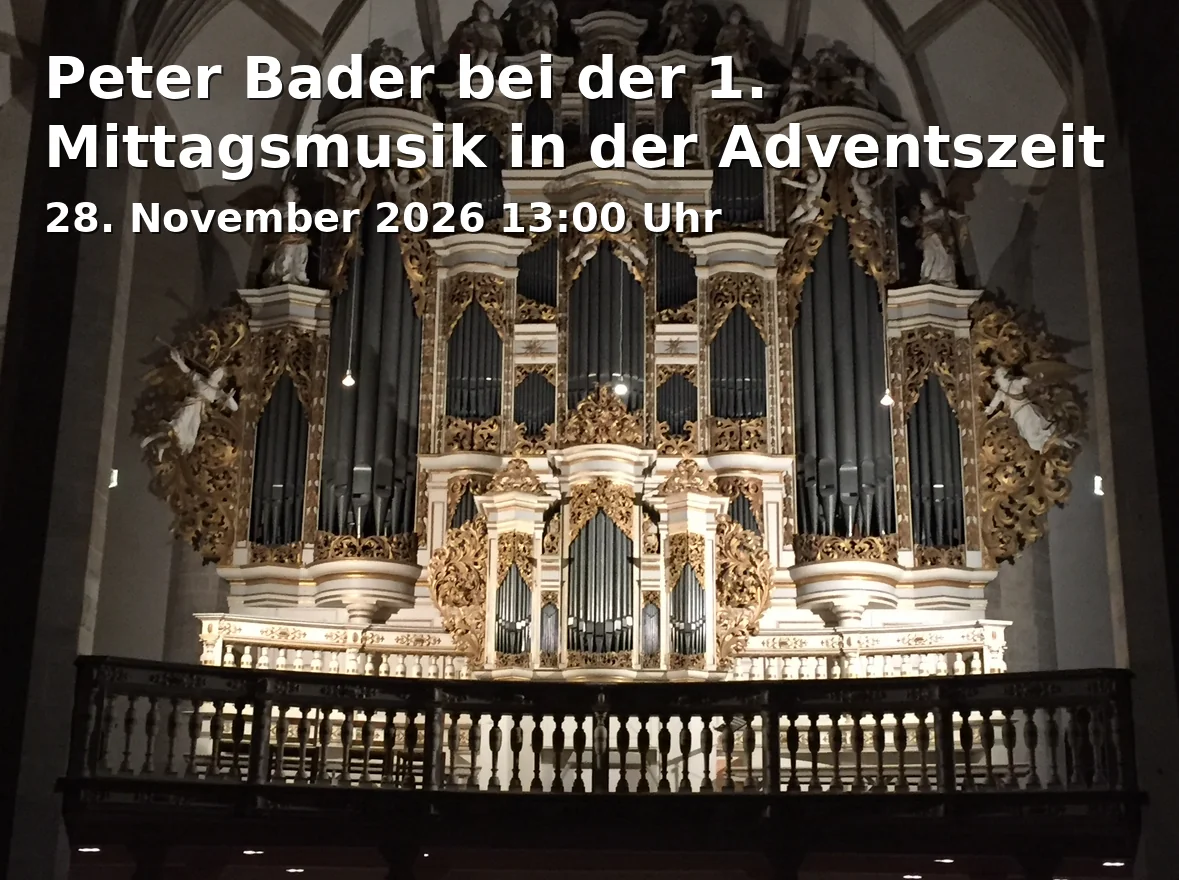
A special unique feature of the basilica is its Eule organ, which was realized between 2018 and 2020. The system consists of three parts: the main organ in the historical case from 1898 on the west gallery, the choir organ on and behind the organ balcony in the north wall, and a remote work in the attic above the Holy Spirit hole. Two consoles allow for flexible operation; registrations can be used across both consoles, and even two organists can play simultaneously. The parish mentions 6,613 pipes and 37 sound plates, as well as electric register actions, a symphonic wind system, and a clear tonal differentiation of the individual works. The instrument was thus not only installed to exist but to fully explore the large church space acoustically. This is what makes its significance: the organ is not merely background accompaniment but a central part of the architectural and spiritual identity of the house. ([st-jakob-straubing.de](https://www.st-jakob-straubing.de/basilika/kirchenmusik/orgel-st.-jakob.php))
Church music continues to shape St. James very visibly today. The official homepage of the parish continuously announces services and events, including the Straubing Organ Summer, organ tours, Fatima services with candlelight processions, festive services for the patronage of St. James, confirmations, and other liturgical celebrations. The Diocese of Regensburg also emphasizes that organ matinees take place on Saturdays in Advent at St. James. Thus, the basilica is not only a place for major holidays but also for musical continuity in the church year. Those interested in events, concerts, or spiritual music will find a very lively program here. The organ is therefore not a completed restoration project but an instrument that accompanies the daily life of the community while also enabling concert culture. This mixture of liturgy and sound attracts people interested in music history, sacred space, and unique acoustic experiences. ([st-jakob-straubing.de](https://www.st-jakob-straubing.de/))
Tower Tours, Visits, and Special Experiences
The tower tours are among the most impressive offerings around the basilica. The parish mentions a cost contribution of 10 euros per person, a duration of about 90 minutes, a minimum age of 10 years, and a maximum participant number of 10 people. The ascent is not for the hasty: 363 steps must be overcome, including wooden and spiral staircases as well as some narrow passages and openings. These requirements make the tour particularly appealing to many visitors, as it offers not just a beautiful view but also a genuine architectural experience with substance. Those who climb the tower experience the basilica not from the perspective of the church space but from the viewpoint of its supporting structure. This creates an understanding of the dimensions, craftsmanship, and historical logic of this monument. The dates for 2026 are published on the page, and booking is done exclusively through the online portal of the church building support association. ([st-jakob-straubing.de](https://www.st-jakob-straubing.de/basilika/turmfuehrungen.php))
The organ tours are also interesting because they open a second level of experience. During these tours, the parish presents the large organ system with its three instrument parts and over 6,600 pipes. This allows for a good combination of tower and organ tours: above, the city; below, the sound; in between, the history of a building that has been continually developed. This is also attractive for groups, as it allows for a shared visit that is not only informative but also emotionally impressive. Especially for a basilica like St. James, this is important, as the place gains depth when one does not just look at it but experiences it with its spaces, stairs, consoles, and sound colors. Thus, a church visit becomes a genuine change of perspective that connects architecture, music, and city history. ([st-jakob-straubing.de](https://www.st.jakob-straubing.de/basilika/turmfuehrungen.php))
Access, Parking, and Community Life Around the Parish Square
For practical planning, the location in the city center is a central point. The basilica is located at Pfarrplatz 11a in 94315 Straubing; the Catholic city parish office is also located there and is open Monday to Friday from 9 to 11 a.m. Phone, fax, and email are provided on the official contact page, so visitors, groups, and interested parties have reliable points of contact. Especially for a church that serves both as a house of worship and an event venue, this accessibility is important. Those planning a tour, an inquiry about services, or a musical event will find quick and clear contact routes. This aligns with the role of the basilica as a vibrant city parish: it is not a closed museum space but an active place that is well connected organizationally and works with people daily. ([st-jakob-straubing.de](https://www.st-jakob-straubing.de/basilika/kontakt.php))
Regarding parking, Straubing offers several official options. The city operates a parking guidance system with about 1,100 parking spaces in parking garages, underground garages, and parking levels in the city center. Additionally, it points to the free large parking lot Am Hagen, which is primarily used as a festival and large parking lot and provides good access to the old town. There are also additional parking spaces directly at the city square, including designated disabled parking spaces. For visitors to the basilica, this means: those arriving by car should plan within the city but will find several official options and clear digital as well as signposted orientation. In everyday life, this is particularly helpful when planning a walk through the old town or a detour to other attractions alongside the church visit. The location at the parish square also makes the basilica well integrable into a tour of the historic center. ([straubing.de](https://www.straubing.de/leben/mobilitaet/parken-in-straubing/799.Parken-in-Straubing.html))
Furthermore, the church was also considered in terms of accessibility during renovation measures. The Diocese of Regensburg emphasized in 2018 that St. James was the first church in Old Bavaria to incorporate elements of accessibility into its renovation. This is particularly significant for a historic basilica, as accessibility and monument protection are often perceived as opposites, but here they were thought of together. For visitors, this means a bit more openness and practical usability, especially when traveling with limited mobility or when wanting to prepare a visit well. Together with the central location, parking options, and clear contact details, this creates a very usable overall picture: St. James is not only significant but also comparatively well organized. This facilitates spontaneous visits as well as planned group or concert appointments. ([bistum-regensburg.de](https://bistum-regensburg.de/news/bayern-barrierefrei-ministerialdirektor-der-bayerischen-staatsregierung-ueberreicht-bischof-rudolf-voderholzer-auszeichnung-fuer-basilika-st-jakob-in-straubing--5935?utm_source=openai))
Photos, Reviews, and a Lively Parish
Those searching for photos or reviews usually want to know in advance whether a visit is worthwhile and what the atmosphere on site is like. Here, the basilica has a strong advantage because it is visually very striking and already conveys a good first impression online. The homepage of the parish shows an interior view of the church, while the city of Straubing presents St. James in its church overview as one of the outstanding sacred buildings of the city. Thus, interested parties not only get a picture but also a reliable classification. The basilica does not appear as an interchangeable church space but as a place with a very clear identity. For the search intent behind terms like photos or reviews, this is ideal, as visitors do not just want to read an evaluation but understand why this building evokes so much emotionally and aesthetically. The official pages provide a serious, factual entry point for this. ([st-jakob-straubing.de](https://www.st-jakob-straubing.de/))
The current parish life further reinforces this impression. The homepage of the parish continuously announces services and events, including confirmations, Fatima services with candlelight processions, the patronage on July 25, tent services at the Gäuboden folk festival, organ tours, and concerts as part of the Straubing Organ Summer. The Diocese of Regensburg also describes St. James as the central city parish of Straubing. As a result, the basilica is not only a monument and photo motif but also a place where the annual cycle of the city becomes ecclesiastically visible. Especially in a city like Straubing, where tradition and public life are closely intertwined, this connection is important. Therefore, those visiting the basilica experience not only historical substance but usually also a piece of lived present. For seekers asking about programs, events, or a lively church location, this is a strong signal. ([st.jakob-straubing.de](https://www.st.jakob-straubing.de/))
In summary, the Basilica of St. James in Straubing is a place where many search intents converge: history, architecture, organ, tower, parking, photos, and spiritual atmosphere. Precisely because the building is so densely charged both culturally and religiously, it serves excellently as a destination for a conscious city visit. Those strolling through Straubing's old town can experience the basilica as a calm counterpoint to urban everyday life, as a sound space during concerts, or as an architectural highlight of a tour through the city center. The best access is often a combination of a brief preliminary glance at the official information and a genuine visit on site. Then it becomes clear what makes St. James special: a historical masterpiece that has not passed but continues to live in the heart of Straubing. ([straubing.de](https://www.straubing.de/entdecken-erleben/wissens-und-sehenswertes/kirchen/index.html))
Sources:
Mehr anzeigenWeniger anzeigen
Basilica of St. James | History & Organ
The Basilica of St. James in Straubing is much more than a distinctive house of worship in the parish square. As the city parish church of St. James and St. Tiburtius, it shapes the old town, the spiritual life, and the historical identity of the city. The city of Straubing describes it as a sacred building of national significance, and the German Foundation for Monument Protection classifies it as one of the largest hall churches in Bavaria. Thus, St. James represents exactly that mixture of faith, art, and city history that many visitors seek in a special location: a place with weight, atmosphere, and a distinctive architectural presence. Those walking through the city center discover not just a church, but a focal point that opens the view upwards, into the past, and into the present at the same time. The basilica is a structure that allows Straubing to be read like a history book made of stone, glass, and music. ([straubing.de](https://www.straubing.de/entdecken-erleben/wissens-und-sehenswertes/kirchen/index.html))
History and Significance of the Basilica in Straubing
The beginnings of the St. James Church date back further in Straubing than many visitors initially suspect. The Lower Bavarian city chronicle documents the first St. James Church as early as 1288. The construction of the present church began around 1415, when the late Gothic hall church was built under the master builder Hans von Burghausen. By 1418, the choir was partially completed, while the nave could only be finished in 1512/1513. The tower construction began in 1516; the upper square tower floor bears the year 1579, and older city views clearly show the gradual development of the tower. This long construction history shows that St. James was never a static single project but has grown over generations. It reflects the wealth, ambitions, and art-historical aspirations of a city that operated far beyond the regional framework during the Gothic and early modern periods. ([niederbayern-wiki.de](https://www.niederbayern-wiki.de/wiki/Basilika_St._Jakob_%28Straubing%29?utm_source=openai))
In the age of the Counter-Reformation, the church gained even greater ecclesiastical and symbolic significance. In 1581, the St. Tiburtius chapter was moved from Münster to St. James to solidify the Catholic character of Straubing. The interplay between St. James and St. Tiburtius thus created a dual city and parish patronage that remains visible in the name of the church to this day. The parish sees itself as the central city parish of Straubing, and this is evident in everyday life: services, festivals, church music, and liturgical celebrations make St. James a vibrant place that goes far beyond mere monument preservation. In 2016, after extensive renovations, the church was celebrated as a papal basilica minor, which further underscores its significance in the Diocese of Regensburg. Thus, the basilica connects historical depth with an active present, where faith, art, and city life intertwine closely. ([bistum-regensburg.de](https://bistum-regensburg.de/news/st-jakob-in-straubing-feiert-abschluss-der-grossen-kirchenrenovierung-4833?utm_source=openai))
Architecture, Hall Church, and Distinctive Tower
Architecturally, the basilica belongs to the great hall churches of Bavaria. The city of Straubing describes it as a brick Gothic hall church with a surrounding chapel ring; the German Foundation for Monument Protection complements the precise architectural effect with the long brick hall, massive flying buttresses, large pointed-arch traceried windows, and the low chapels between the flying buttresses. The architect was Hans von Burghausen, who is regarded as a leading master of late Gothic in Old Bavaria. This is where the charm of the building lies: it is not just large but consistently composed. From the outside, the church appears strictly structured, almost fortress-like, while the interior is open, bright, and spatially expansive. This contrast makes the visit exciting, as the Gothic logic of the building can be grasped immediately without requiring specialized knowledge. The construction leads the gaze upwards, while remaining grounded through the warm material of the brick and the calm order of the facades. ([straubing.de](https://www.straubing.de/entdecken-erleben/wissens-und-sehenswertes/kirchen/index.html))
The basilica is dominated by a tower that continues to shape the cityscape of Straubing today. The German Foundation for Monument Protection states that it is nearly 95 meters high, while the tower tours page mentions over 89 meters; regardless of the exact measurement method, it is clear that the tower is one of the dominant orientation points in the city center. The north side, with a small stair tower, is also part of the spatial diversity that distinguishes the building from many other sacred structures. The tower does not stand alone but is closely related to the parish square, the city square, and the silhouette of the old town. Those traveling in Straubing encounter it repeatedly from new perspectives. This is precisely why it serves so well as a motif for photos, as a fixed point during city walks, and as a visual symbol of the close connection between urban culture and sacred architecture. The basilica is thus not only a religious space but also an urban landmark with great visibility. ([denkmalschutz.de](https://www.denkmalschutz.de/denkmal/basilika-st-jakob.html))
Interior, Stained Glass Windows, and Artistic Furnishings
The interior is one of the strongest reasons why the basilica is so frequently sought after and visited. The city of Straubing points to an extremely rich interior decoration spanning six centuries and particularly highlights the Moses window based on a design by Albrecht Dürer. The German Foundation for Monument Protection further explains that the stained glass windows of the St. James Church make the development of Bavarian stained glass painting from the early 15th to the late 19th century visible. This makes the place particularly exciting for art lovers, as not only individual pieces but entire epochs become visible side by side. At the same time, the 38 stained glass windows, which were donated between 1895 and 1908, point to a civic engagement that continues to shape the beauty of the space today. St. James is therefore an example of how medieval structure and later glass and furnishing programs can form a harmonious unity. ([straubing.de](https://www.straubing.de/entdecken-erleben/wissens-und-sehenswertes/kirchen/index.html))
The spatial effect itself is also remarkable. The hall shape and the surrounding chapel ring create a pathway system of sight axes, side aisles, and ancillary rooms that turns the visit into a small tour through art history. Those who do not just quickly pass through the church but enter slowly experience very different impressions: above, the light from the windows; to the sides, the chapels; in the middle, the calm, generous hall space. The building always remains related to its liturgical function, as the furnishings are not museum-like and frozen but integrated into religious everyday life. This lively balance between monument and house of worship makes the basilica so strong. It is a place where contemplation, historical curiosity, and aesthetic perception can be combined simultaneously. For visitors, this means: one does not just see art objects but experiences a space that has gained its effect from centuries of use. ([straubing.de](https://www.straubing.de/entdecken-erleben/wissens-und-sehenswertes/kirchen/index.html))
Organ and Church Music in St. James
A special unique feature of the basilica is its Eule organ, which was realized between 2018 and 2020. The system consists of three parts: the main organ in the historical case from 1898 on the west gallery, the choir organ on and behind the organ balcony in the north wall, and a remote work in the attic above the Holy Spirit hole. Two consoles allow for flexible operation; registrations can be used across both consoles, and even two organists can play simultaneously. The parish mentions 6,613 pipes and 37 sound plates, as well as electric register actions, a symphonic wind system, and a clear tonal differentiation of the individual works. The instrument was thus not only installed to exist but to fully explore the large church space acoustically. This is what makes its significance: the organ is not merely background accompaniment but a central part of the architectural and spiritual identity of the house. ([st-jakob-straubing.de](https://www.st-jakob-straubing.de/basilika/kirchenmusik/orgel-st.-jakob.php))
Church music continues to shape St. James very visibly today. The official homepage of the parish continuously announces services and events, including the Straubing Organ Summer, organ tours, Fatima services with candlelight processions, festive services for the patronage of St. James, confirmations, and other liturgical celebrations. The Diocese of Regensburg also emphasizes that organ matinees take place on Saturdays in Advent at St. James. Thus, the basilica is not only a place for major holidays but also for musical continuity in the church year. Those interested in events, concerts, or spiritual music will find a very lively program here. The organ is therefore not a completed restoration project but an instrument that accompanies the daily life of the community while also enabling concert culture. This mixture of liturgy and sound attracts people interested in music history, sacred space, and unique acoustic experiences. ([st-jakob-straubing.de](https://www.st-jakob-straubing.de/))
Tower Tours, Visits, and Special Experiences
The tower tours are among the most impressive offerings around the basilica. The parish mentions a cost contribution of 10 euros per person, a duration of about 90 minutes, a minimum age of 10 years, and a maximum participant number of 10 people. The ascent is not for the hasty: 363 steps must be overcome, including wooden and spiral staircases as well as some narrow passages and openings. These requirements make the tour particularly appealing to many visitors, as it offers not just a beautiful view but also a genuine architectural experience with substance. Those who climb the tower experience the basilica not from the perspective of the church space but from the viewpoint of its supporting structure. This creates an understanding of the dimensions, craftsmanship, and historical logic of this monument. The dates for 2026 are published on the page, and booking is done exclusively through the online portal of the church building support association. ([st-jakob-straubing.de](https://www.st-jakob-straubing.de/basilika/turmfuehrungen.php))
The organ tours are also interesting because they open a second level of experience. During these tours, the parish presents the large organ system with its three instrument parts and over 6,600 pipes. This allows for a good combination of tower and organ tours: above, the city; below, the sound; in between, the history of a building that has been continually developed. This is also attractive for groups, as it allows for a shared visit that is not only informative but also emotionally impressive. Especially for a basilica like St. James, this is important, as the place gains depth when one does not just look at it but experiences it with its spaces, stairs, consoles, and sound colors. Thus, a church visit becomes a genuine change of perspective that connects architecture, music, and city history. ([st-jakob-straubing.de](https://www.st.jakob-straubing.de/basilika/turmfuehrungen.php))
Access, Parking, and Community Life Around the Parish Square
For practical planning, the location in the city center is a central point. The basilica is located at Pfarrplatz 11a in 94315 Straubing; the Catholic city parish office is also located there and is open Monday to Friday from 9 to 11 a.m. Phone, fax, and email are provided on the official contact page, so visitors, groups, and interested parties have reliable points of contact. Especially for a church that serves both as a house of worship and an event venue, this accessibility is important. Those planning a tour, an inquiry about services, or a musical event will find quick and clear contact routes. This aligns with the role of the basilica as a vibrant city parish: it is not a closed museum space but an active place that is well connected organizationally and works with people daily. ([st-jakob-straubing.de](https://www.st-jakob-straubing.de/basilika/kontakt.php))
Regarding parking, Straubing offers several official options. The city operates a parking guidance system with about 1,100 parking spaces in parking garages, underground garages, and parking levels in the city center. Additionally, it points to the free large parking lot Am Hagen, which is primarily used as a festival and large parking lot and provides good access to the old town. There are also additional parking spaces directly at the city square, including designated disabled parking spaces. For visitors to the basilica, this means: those arriving by car should plan within the city but will find several official options and clear digital as well as signposted orientation. In everyday life, this is particularly helpful when planning a walk through the old town or a detour to other attractions alongside the church visit. The location at the parish square also makes the basilica well integrable into a tour of the historic center. ([straubing.de](https://www.straubing.de/leben/mobilitaet/parken-in-straubing/799.Parken-in-Straubing.html))
Furthermore, the church was also considered in terms of accessibility during renovation measures. The Diocese of Regensburg emphasized in 2018 that St. James was the first church in Old Bavaria to incorporate elements of accessibility into its renovation. This is particularly significant for a historic basilica, as accessibility and monument protection are often perceived as opposites, but here they were thought of together. For visitors, this means a bit more openness and practical usability, especially when traveling with limited mobility or when wanting to prepare a visit well. Together with the central location, parking options, and clear contact details, this creates a very usable overall picture: St. James is not only significant but also comparatively well organized. This facilitates spontaneous visits as well as planned group or concert appointments. ([bistum-regensburg.de](https://bistum-regensburg.de/news/bayern-barrierefrei-ministerialdirektor-der-bayerischen-staatsregierung-ueberreicht-bischof-rudolf-voderholzer-auszeichnung-fuer-basilika-st-jakob-in-straubing--5935?utm_source=openai))
Photos, Reviews, and a Lively Parish
Those searching for photos or reviews usually want to know in advance whether a visit is worthwhile and what the atmosphere on site is like. Here, the basilica has a strong advantage because it is visually very striking and already conveys a good first impression online. The homepage of the parish shows an interior view of the church, while the city of Straubing presents St. James in its church overview as one of the outstanding sacred buildings of the city. Thus, interested parties not only get a picture but also a reliable classification. The basilica does not appear as an interchangeable church space but as a place with a very clear identity. For the search intent behind terms like photos or reviews, this is ideal, as visitors do not just want to read an evaluation but understand why this building evokes so much emotionally and aesthetically. The official pages provide a serious, factual entry point for this. ([st-jakob-straubing.de](https://www.st-jakob-straubing.de/))
The current parish life further reinforces this impression. The homepage of the parish continuously announces services and events, including confirmations, Fatima services with candlelight processions, the patronage on July 25, tent services at the Gäuboden folk festival, organ tours, and concerts as part of the Straubing Organ Summer. The Diocese of Regensburg also describes St. James as the central city parish of Straubing. As a result, the basilica is not only a monument and photo motif but also a place where the annual cycle of the city becomes ecclesiastically visible. Especially in a city like Straubing, where tradition and public life are closely intertwined, this connection is important. Therefore, those visiting the basilica experience not only historical substance but usually also a piece of lived present. For seekers asking about programs, events, or a lively church location, this is a strong signal. ([st.jakob-straubing.de](https://www.st.jakob-straubing.de/))
In summary, the Basilica of St. James in Straubing is a place where many search intents converge: history, architecture, organ, tower, parking, photos, and spiritual atmosphere. Precisely because the building is so densely charged both culturally and religiously, it serves excellently as a destination for a conscious city visit. Those strolling through Straubing's old town can experience the basilica as a calm counterpoint to urban everyday life, as a sound space during concerts, or as an architectural highlight of a tour through the city center. The best access is often a combination of a brief preliminary glance at the official information and a genuine visit on site. Then it becomes clear what makes St. James special: a historical masterpiece that has not passed but continues to live in the heart of Straubing. ([straubing.de](https://www.straubing.de/entdecken-erleben/wissens-und-sehenswertes/kirchen/index.html))
Sources:
Basilica of St. James | History & Organ
The Basilica of St. James in Straubing is much more than a distinctive house of worship in the parish square. As the city parish church of St. James and St. Tiburtius, it shapes the old town, the spiritual life, and the historical identity of the city. The city of Straubing describes it as a sacred building of national significance, and the German Foundation for Monument Protection classifies it as one of the largest hall churches in Bavaria. Thus, St. James represents exactly that mixture of faith, art, and city history that many visitors seek in a special location: a place with weight, atmosphere, and a distinctive architectural presence. Those walking through the city center discover not just a church, but a focal point that opens the view upwards, into the past, and into the present at the same time. The basilica is a structure that allows Straubing to be read like a history book made of stone, glass, and music. ([straubing.de](https://www.straubing.de/entdecken-erleben/wissens-und-sehenswertes/kirchen/index.html))
History and Significance of the Basilica in Straubing
The beginnings of the St. James Church date back further in Straubing than many visitors initially suspect. The Lower Bavarian city chronicle documents the first St. James Church as early as 1288. The construction of the present church began around 1415, when the late Gothic hall church was built under the master builder Hans von Burghausen. By 1418, the choir was partially completed, while the nave could only be finished in 1512/1513. The tower construction began in 1516; the upper square tower floor bears the year 1579, and older city views clearly show the gradual development of the tower. This long construction history shows that St. James was never a static single project but has grown over generations. It reflects the wealth, ambitions, and art-historical aspirations of a city that operated far beyond the regional framework during the Gothic and early modern periods. ([niederbayern-wiki.de](https://www.niederbayern-wiki.de/wiki/Basilika_St._Jakob_%28Straubing%29?utm_source=openai))
In the age of the Counter-Reformation, the church gained even greater ecclesiastical and symbolic significance. In 1581, the St. Tiburtius chapter was moved from Münster to St. James to solidify the Catholic character of Straubing. The interplay between St. James and St. Tiburtius thus created a dual city and parish patronage that remains visible in the name of the church to this day. The parish sees itself as the central city parish of Straubing, and this is evident in everyday life: services, festivals, church music, and liturgical celebrations make St. James a vibrant place that goes far beyond mere monument preservation. In 2016, after extensive renovations, the church was celebrated as a papal basilica minor, which further underscores its significance in the Diocese of Regensburg. Thus, the basilica connects historical depth with an active present, where faith, art, and city life intertwine closely. ([bistum-regensburg.de](https://bistum-regensburg.de/news/st-jakob-in-straubing-feiert-abschluss-der-grossen-kirchenrenovierung-4833?utm_source=openai))
Architecture, Hall Church, and Distinctive Tower
Architecturally, the basilica belongs to the great hall churches of Bavaria. The city of Straubing describes it as a brick Gothic hall church with a surrounding chapel ring; the German Foundation for Monument Protection complements the precise architectural effect with the long brick hall, massive flying buttresses, large pointed-arch traceried windows, and the low chapels between the flying buttresses. The architect was Hans von Burghausen, who is regarded as a leading master of late Gothic in Old Bavaria. This is where the charm of the building lies: it is not just large but consistently composed. From the outside, the church appears strictly structured, almost fortress-like, while the interior is open, bright, and spatially expansive. This contrast makes the visit exciting, as the Gothic logic of the building can be grasped immediately without requiring specialized knowledge. The construction leads the gaze upwards, while remaining grounded through the warm material of the brick and the calm order of the facades. ([straubing.de](https://www.straubing.de/entdecken-erleben/wissens-und-sehenswertes/kirchen/index.html))
The basilica is dominated by a tower that continues to shape the cityscape of Straubing today. The German Foundation for Monument Protection states that it is nearly 95 meters high, while the tower tours page mentions over 89 meters; regardless of the exact measurement method, it is clear that the tower is one of the dominant orientation points in the city center. The north side, with a small stair tower, is also part of the spatial diversity that distinguishes the building from many other sacred structures. The tower does not stand alone but is closely related to the parish square, the city square, and the silhouette of the old town. Those traveling in Straubing encounter it repeatedly from new perspectives. This is precisely why it serves so well as a motif for photos, as a fixed point during city walks, and as a visual symbol of the close connection between urban culture and sacred architecture. The basilica is thus not only a religious space but also an urban landmark with great visibility. ([denkmalschutz.de](https://www.denkmalschutz.de/denkmal/basilika-st-jakob.html))
Interior, Stained Glass Windows, and Artistic Furnishings
The interior is one of the strongest reasons why the basilica is so frequently sought after and visited. The city of Straubing points to an extremely rich interior decoration spanning six centuries and particularly highlights the Moses window based on a design by Albrecht Dürer. The German Foundation for Monument Protection further explains that the stained glass windows of the St. James Church make the development of Bavarian stained glass painting from the early 15th to the late 19th century visible. This makes the place particularly exciting for art lovers, as not only individual pieces but entire epochs become visible side by side. At the same time, the 38 stained glass windows, which were donated between 1895 and 1908, point to a civic engagement that continues to shape the beauty of the space today. St. James is therefore an example of how medieval structure and later glass and furnishing programs can form a harmonious unity. ([straubing.de](https://www.straubing.de/entdecken-erleben/wissens-und-sehenswertes/kirchen/index.html))
The spatial effect itself is also remarkable. The hall shape and the surrounding chapel ring create a pathway system of sight axes, side aisles, and ancillary rooms that turns the visit into a small tour through art history. Those who do not just quickly pass through the church but enter slowly experience very different impressions: above, the light from the windows; to the sides, the chapels; in the middle, the calm, generous hall space. The building always remains related to its liturgical function, as the furnishings are not museum-like and frozen but integrated into religious everyday life. This lively balance between monument and house of worship makes the basilica so strong. It is a place where contemplation, historical curiosity, and aesthetic perception can be combined simultaneously. For visitors, this means: one does not just see art objects but experiences a space that has gained its effect from centuries of use. ([straubing.de](https://www.straubing.de/entdecken-erleben/wissens-und-sehenswertes/kirchen/index.html))
Organ and Church Music in St. James
A special unique feature of the basilica is its Eule organ, which was realized between 2018 and 2020. The system consists of three parts: the main organ in the historical case from 1898 on the west gallery, the choir organ on and behind the organ balcony in the north wall, and a remote work in the attic above the Holy Spirit hole. Two consoles allow for flexible operation; registrations can be used across both consoles, and even two organists can play simultaneously. The parish mentions 6,613 pipes and 37 sound plates, as well as electric register actions, a symphonic wind system, and a clear tonal differentiation of the individual works. The instrument was thus not only installed to exist but to fully explore the large church space acoustically. This is what makes its significance: the organ is not merely background accompaniment but a central part of the architectural and spiritual identity of the house. ([st-jakob-straubing.de](https://www.st-jakob-straubing.de/basilika/kirchenmusik/orgel-st.-jakob.php))
Church music continues to shape St. James very visibly today. The official homepage of the parish continuously announces services and events, including the Straubing Organ Summer, organ tours, Fatima services with candlelight processions, festive services for the patronage of St. James, confirmations, and other liturgical celebrations. The Diocese of Regensburg also emphasizes that organ matinees take place on Saturdays in Advent at St. James. Thus, the basilica is not only a place for major holidays but also for musical continuity in the church year. Those interested in events, concerts, or spiritual music will find a very lively program here. The organ is therefore not a completed restoration project but an instrument that accompanies the daily life of the community while also enabling concert culture. This mixture of liturgy and sound attracts people interested in music history, sacred space, and unique acoustic experiences. ([st-jakob-straubing.de](https://www.st-jakob-straubing.de/))
Tower Tours, Visits, and Special Experiences
The tower tours are among the most impressive offerings around the basilica. The parish mentions a cost contribution of 10 euros per person, a duration of about 90 minutes, a minimum age of 10 years, and a maximum participant number of 10 people. The ascent is not for the hasty: 363 steps must be overcome, including wooden and spiral staircases as well as some narrow passages and openings. These requirements make the tour particularly appealing to many visitors, as it offers not just a beautiful view but also a genuine architectural experience with substance. Those who climb the tower experience the basilica not from the perspective of the church space but from the viewpoint of its supporting structure. This creates an understanding of the dimensions, craftsmanship, and historical logic of this monument. The dates for 2026 are published on the page, and booking is done exclusively through the online portal of the church building support association. ([st-jakob-straubing.de](https://www.st-jakob-straubing.de/basilika/turmfuehrungen.php))
The organ tours are also interesting because they open a second level of experience. During these tours, the parish presents the large organ system with its three instrument parts and over 6,600 pipes. This allows for a good combination of tower and organ tours: above, the city; below, the sound; in between, the history of a building that has been continually developed. This is also attractive for groups, as it allows for a shared visit that is not only informative but also emotionally impressive. Especially for a basilica like St. James, this is important, as the place gains depth when one does not just look at it but experiences it with its spaces, stairs, consoles, and sound colors. Thus, a church visit becomes a genuine change of perspective that connects architecture, music, and city history. ([st-jakob-straubing.de](https://www.st.jakob-straubing.de/basilika/turmfuehrungen.php))
Access, Parking, and Community Life Around the Parish Square
For practical planning, the location in the city center is a central point. The basilica is located at Pfarrplatz 11a in 94315 Straubing; the Catholic city parish office is also located there and is open Monday to Friday from 9 to 11 a.m. Phone, fax, and email are provided on the official contact page, so visitors, groups, and interested parties have reliable points of contact. Especially for a church that serves both as a house of worship and an event venue, this accessibility is important. Those planning a tour, an inquiry about services, or a musical event will find quick and clear contact routes. This aligns with the role of the basilica as a vibrant city parish: it is not a closed museum space but an active place that is well connected organizationally and works with people daily. ([st-jakob-straubing.de](https://www.st-jakob-straubing.de/basilika/kontakt.php))
Regarding parking, Straubing offers several official options. The city operates a parking guidance system with about 1,100 parking spaces in parking garages, underground garages, and parking levels in the city center. Additionally, it points to the free large parking lot Am Hagen, which is primarily used as a festival and large parking lot and provides good access to the old town. There are also additional parking spaces directly at the city square, including designated disabled parking spaces. For visitors to the basilica, this means: those arriving by car should plan within the city but will find several official options and clear digital as well as signposted orientation. In everyday life, this is particularly helpful when planning a walk through the old town or a detour to other attractions alongside the church visit. The location at the parish square also makes the basilica well integrable into a tour of the historic center. ([straubing.de](https://www.straubing.de/leben/mobilitaet/parken-in-straubing/799.Parken-in-Straubing.html))
Furthermore, the church was also considered in terms of accessibility during renovation measures. The Diocese of Regensburg emphasized in 2018 that St. James was the first church in Old Bavaria to incorporate elements of accessibility into its renovation. This is particularly significant for a historic basilica, as accessibility and monument protection are often perceived as opposites, but here they were thought of together. For visitors, this means a bit more openness and practical usability, especially when traveling with limited mobility or when wanting to prepare a visit well. Together with the central location, parking options, and clear contact details, this creates a very usable overall picture: St. James is not only significant but also comparatively well organized. This facilitates spontaneous visits as well as planned group or concert appointments. ([bistum-regensburg.de](https://bistum-regensburg.de/news/bayern-barrierefrei-ministerialdirektor-der-bayerischen-staatsregierung-ueberreicht-bischof-rudolf-voderholzer-auszeichnung-fuer-basilika-st-jakob-in-straubing--5935?utm_source=openai))
Photos, Reviews, and a Lively Parish
Those searching for photos or reviews usually want to know in advance whether a visit is worthwhile and what the atmosphere on site is like. Here, the basilica has a strong advantage because it is visually very striking and already conveys a good first impression online. The homepage of the parish shows an interior view of the church, while the city of Straubing presents St. James in its church overview as one of the outstanding sacred buildings of the city. Thus, interested parties not only get a picture but also a reliable classification. The basilica does not appear as an interchangeable church space but as a place with a very clear identity. For the search intent behind terms like photos or reviews, this is ideal, as visitors do not just want to read an evaluation but understand why this building evokes so much emotionally and aesthetically. The official pages provide a serious, factual entry point for this. ([st-jakob-straubing.de](https://www.st-jakob-straubing.de/))
The current parish life further reinforces this impression. The homepage of the parish continuously announces services and events, including confirmations, Fatima services with candlelight processions, the patronage on July 25, tent services at the Gäuboden folk festival, organ tours, and concerts as part of the Straubing Organ Summer. The Diocese of Regensburg also describes St. James as the central city parish of Straubing. As a result, the basilica is not only a monument and photo motif but also a place where the annual cycle of the city becomes ecclesiastically visible. Especially in a city like Straubing, where tradition and public life are closely intertwined, this connection is important. Therefore, those visiting the basilica experience not only historical substance but usually also a piece of lived present. For seekers asking about programs, events, or a lively church location, this is a strong signal. ([st.jakob-straubing.de](https://www.st.jakob-straubing.de/))
In summary, the Basilica of St. James in Straubing is a place where many search intents converge: history, architecture, organ, tower, parking, photos, and spiritual atmosphere. Precisely because the building is so densely charged both culturally and religiously, it serves excellently as a destination for a conscious city visit. Those strolling through Straubing's old town can experience the basilica as a calm counterpoint to urban everyday life, as a sound space during concerts, or as an architectural highlight of a tour through the city center. The best access is often a combination of a brief preliminary glance at the official information and a genuine visit on site. Then it becomes clear what makes St. James special: a historical masterpiece that has not passed but continues to live in the heart of Straubing. ([straubing.de](https://www.straubing.de/entdecken-erleben/wissens-und-sehenswertes/kirchen/index.html))
Sources:
Frequently Asked Questions
Reviews
No reviews found