Patrick J. Geary
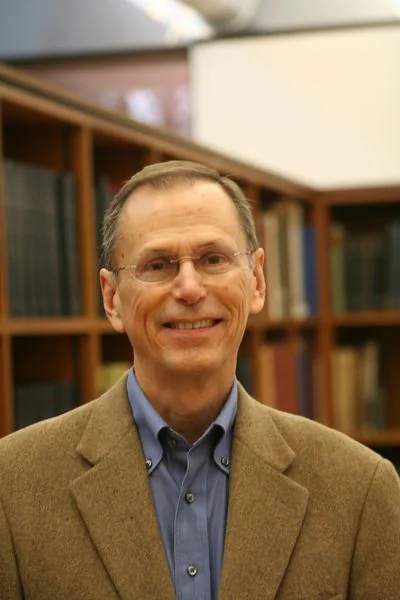
Image from Wikipedia
Image from Wikipedia
Patrick J. Geary: The Great Historian of the Early Middle Ages
A Life Dedicated to European Early Middle Ages
Patrick Joseph Geary, born on September 26, 1948, in Jackson, Mississippi, is among the most influential American historians of his generation. His name is synonymous with research on the early Middle Ages that is as precise as it is narratively robust, focusing on identity, memory, ethnogenesis, and the profound cultural upheavals in Europe between late antiquity and the high Middle Ages. Geary has taught at renowned universities such as Princeton, the University of Florida, UCLA, and Notre Dame, shaping medieval studies not only as a researcher but also as an academic networker and institution builder. ([de.wikipedia.org](https://de.wikipedia.org/wiki/Patrick_J._Geary?utm_source=openai))
Biographical Development and Academic Rise
From Yale to International Scholarly Authority
Geary studied medieval history at Yale University and spent formative time early in his career at the Katholieke Universiteit Leuven. This international education laid the foundation for a career marked by methodological openness and a European perspective. His academic path led him to central locations in medieval studies, where he influenced research, teaching, and professional debates alike. ([de.wikipedia.org](https://de.wikipedia.org/wiki/Patrick_J._Geary?utm_source=openai))
Over the years, Geary has assumed numerous key academic roles, including as Director of the UCLA Center for Medieval and Renaissance Studies and later as President of the Medieval Academy of America. UCLA designates him as Distinguished Professor Emeritus and University of California Presidential Chair in Modern European History, Art and Culture. These positions reflect not only recognition but also the extraordinary authority that Geary has built in the field of history. ([history.ucla.edu](https://history.ucla.edu/people/?utm_source=openai))
Research Focus and Methodological Signature
Geary’s research centers on early European history, particularly in the period between approximately 500 and 1100. His works examine how communities formed, how origins were narrated, and how memory, cults of saints, language, and written traditions created historical identities. In doing so, he connects classical medieval studies with questions of cultural history, anthropology, and historiography. ([en.wikipedia.org](https://en.wikipedia.org/wiki/Patrick_J._Geary?utm_source=openai))
His influential work on ethnogenesis and the construction of collective pasts is particularly notable. In scholarly circles, Geary is regarded as a historian who critically interrogates the grand narratives of the Middle Ages and instead demonstrates how flexible and contested historical identity can be. This inherent significance of his research lies not only in explaining the Middle Ages but also in elucidating the mechanisms through which societies historically define themselves. ([escholarship.org](https://escholarship.org/content/qt87n6j2f1/qt87n6j2f1_noSplash_914087ee52ef7c8254a22b7c04303169.pdf?t=krnrga&utm_source=openai))
Key Works and Scholarly Resonance
Among Geary's most recognized books are Before France and Germany and other foundational studies on medieval society and cultures of memory. Britannica explicitly highlights him as the author of this work, while specialized encyclopedias emphasize his position as a specialist in the medieval history of Europe. Reviews and academic commentaries particularly commend the analytical clarity and ability to place complex historical processes within a larger European context. ([britannica.com](https://www.britannica.com/contributor/Patrick-J-Geary/3539?utm_source=openai))
Another cornerstone of his reputation is the connection of archival work with theory. Geary’s research on charters, cartularies, hagiographies, and collective memory has profoundly changed medieval studies. His active participation in academic committees, international advisory boards, and funding projects underscores the breadth of his influence well beyond individual publications. ([history.ucla.edu](https://history.ucla.edu/wp-content/uploads/2021/11/cv_geary.pdf?utm_source=openai))
Teaching, Institutions, and International Impact
Geary’s career is also a story of academic mediation. At the universities where he taught, he shaped generations of historians and contributed to the strengthening of medieval studies as an interdisciplinary field. UCLA points to his long-standing role as Director of the Center for Medieval and Renaissance Studies, highlighting his role as an organizer of scholarly infrastructure. ([history.ucla.edu](https://history.ucla.edu/people/?utm_source=openai))
Additionally, his international networking with institutions in Europe and North America is noteworthy. His curriculum vitae lists roles in advisory boards and academic committees, as well as awards and research grants, including fellowships from prestigious institutions. This list documents not a music career, but rather a scholarly career of exceptional density and scope. ([history.ucla.edu](https://history.ucla.edu/wp-content/uploads/2021/11/cv_geary.pdf?utm_source=openai))
Current Research and Recent Topics
Even later in his career, Geary remained active in research. His CV indicates ongoing research interests in the study of vernacular languages, vocality, and memory in the early Middle Ages. This shows that his thinking continues to work at the intersections of language, oral tradition, and historical practice, thus reframing central questions of cultural history. ([history.ucla.edu](https://history.ucla.edu/wp-content/uploads/2021/11/cv_geary.pdf?utm_source=openai))
Moreover, his involvement in interdisciplinary projects, such as the Plan of Saint Gall and bioarchaeological questions surrounding migration and kinship, highlights the openness of his research to digital methods and scientific approaches without losing sight of historical interpretation. Geary thereby remains a historian who productively combines classical source criticism with modern research techniques. ([en.wikipedia.org](https://en.wikipedia.org/wiki/Patrick_J._Geary?utm_source=openai))
Discography, Hits, and Charts? A Different Canon
Since Patrick J. Geary is a historian and not a musician, there is no discography, hit singles, or chart career in the musical sense. Instead, his work can be read as a scholarly canon: books, articles, conference contributions, and academic projects outline the oeuvre of a researcher whose influence can be measured in citation practices, curricula, and historiographical debates. This form of resonance replaces the logic of the music industry for Geary. ([britannica.com](https://www.britannica.com/contributor/Patrick-J-Geary/3539?utm_source=openai))
The critical reception of his works oscillates between high praise for his methodological precision and recognition of his role as a renewer of medieval studies. He is particularly valued for describing ethnicity, saints' veneration, and collective memory as historical processes rather than fixed essences. This makes his texts continually relevant for historical, cultural, and memory studies. ([encyclopedia.com](https://www.encyclopedia.com/arts/educational-magazines/geary-patrick-j-1948?utm_source=openai))
Cultural Influence and Scholarly Authority
Geary’s cultural influence extends far beyond the university. His works have shaped debates about how historical identity is formed, how "people" and "nation" are constructed in hindsight, and how medieval sources may be read as testimonies of power and memory. In a time when historical narratives remain politically charged, this perspective has tremendous relevance. ([escholarship.org](https://escholarship.org/content/qt87n6j2f1/qt87n6j2f1_noSplash_914087ee52ef7c8254a22b7c04303169.pdf?t=krnrga&utm_source=openai))
As an author, teacher, and academic organizer, Geary embodies that rare combination of research depth, intellectual clarity, and institutional impact. The awards, fellowships, and positions in significant disciplinary associations testify to his authority in the field. Anyone involved in the emergence of Europe in the early Middle Ages cannot overlook Patrick J. Geary. ([history.ucla.edu](https://history.ucla.edu/wp-content/uploads/2021/11/cv_geary.pdf?utm_source=openai))
Conclusion
Patrick J. Geary is a historian of extraordinary stature: a precise analyst, a stylistically clear thinker, and a researcher who relentlessly pursues the great questions of origin, memory, and cultural formation. His biography illustrates the path of a scholar who has not only described the field but has actively shaped it. Those seeking to understand the early Middle Ages will find in his works an indispensable key. ([britannica.com](https://www.britannica.com/contributor/Patrick-J-Geary/3539?utm_source=openai))
Geary remains particularly compelling because he does not view history as a rigid archive, but as a living system of interpretation. This is precisely what makes his scholarly voice appealing: it is analytical, international, and remarkably present even today. Anyone who has the opportunity to encounter him in lectures, readings, or academic events experiences a historian whose presence and intellectual precision have a lasting impact. ([cmrs.ucla.edu](https://cmrs.ucla.edu/conference/geary/?utm_source=openai))
Official Channels of Patrick J. Geary:
- Instagram: No official profile found
- Facebook: No official profile found
- YouTube: No official profile found
- Spotify: No official profile found
- TikTok: No official profile found