
Katharina Thalbach
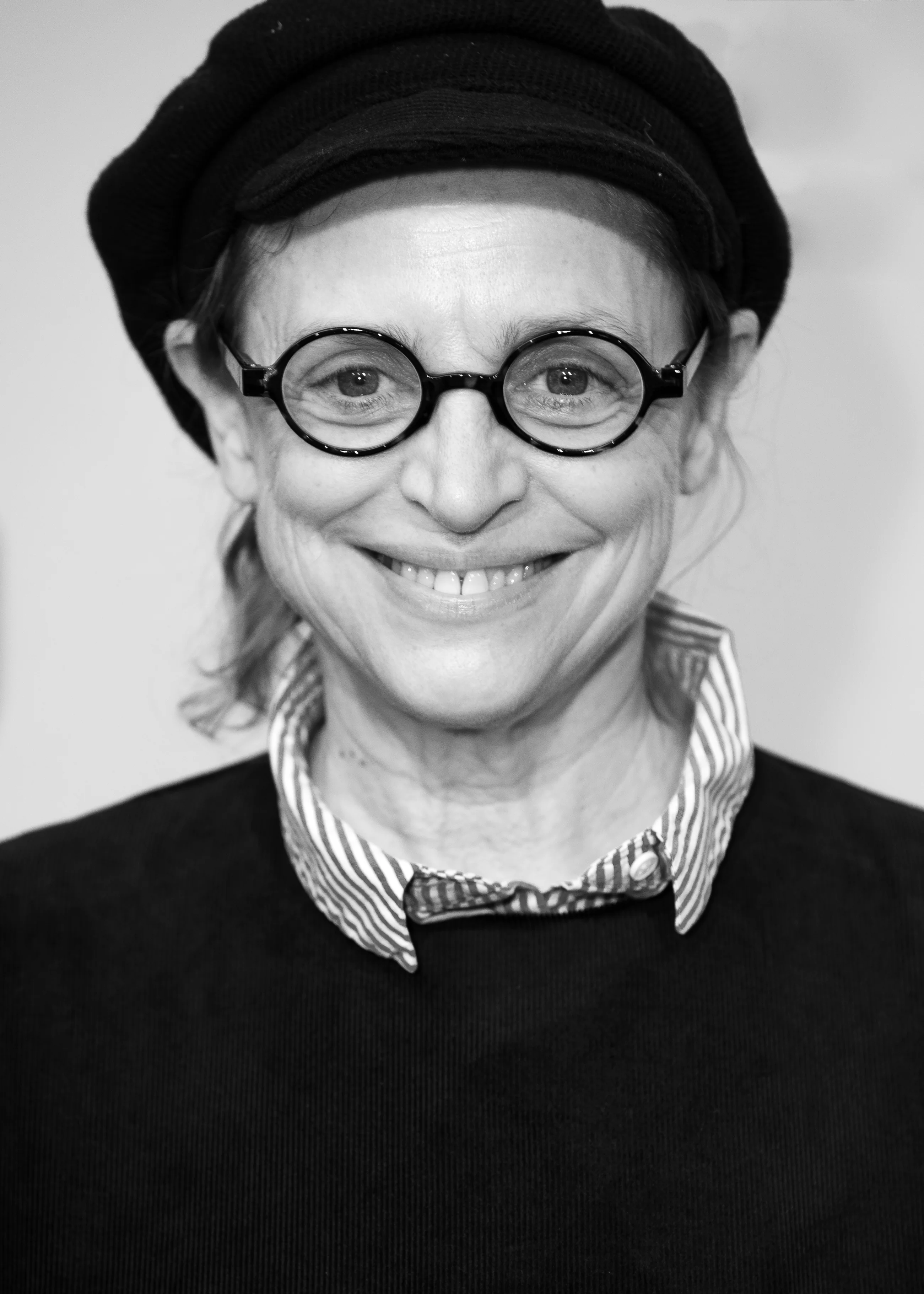
Image from Wikipedia
Image from Wikipedia
Katharina Thalbach – An Exceptional Artist Between Stage, Film, and Voice
A Berlin Theater Legend with Distinctive Presence
Katharina Thalbach is one of the defining personalities in German stage and film culture. Born on January 19, 1954, in East Berlin, she grew up in an artistic family and early developed that rare blend of intensity, precision, and charisma that continues to shape her music career in a broader sense as a speaker, interpreter, and stage artist. Her biography stands for artistic continuity, for wise role selection, and for a life dedicated to the performing arts. ([de.wikipedia.org](https://de.wikipedia.org/wiki/Katharina_Thalbach?utm_source=openai))
Biography: Early Start, Great School, Rapid Breakthrough
Thalbach was seen on stage, television, and film as a child; according to Wikipedia, she played child roles from the age of four. After her mother's death, Helene Weigel took her on as a master student, a training situation that significantly shaped her artistic development. This early closeness to the Berliner Ensemble and the Brecht tradition laid the foundation for a career that never relied solely on popularity but on substance, timing, and understanding of text. ([en.wikipedia.org](https://en.wikipedia.org/wiki/Katharina_Thalbach?utm_source=openai))
Her breakthrough came, according to Berliner Ensemble, at the young age of 15 when she took on the character of Polly in the Dreigroschenoper. From that moment, it was clear that a fully-fledged stage personality was emerging, not just a young actress. The combination of early-practiced discipline, stage presence, and linguistic musicality made Thalbach an exceptional figure, touching both theater history and popular culture. ([berliner-ensemble.de](https://www.berliner-ensemble.de/katharina-thalbach?utm_source=openai))
The Journey from East Berlin to West Berlin
In 1976, Thalbach moved to West Berlin with her partner Thomas Brasch in the context of Wolf Biermann's expatriation. This change marked not only a political but also an aesthetic turning point in her career. In West Berlin, she made her debut at the Schillertheater and worked with directors such as Hans Lietzau and Jürgen Flimm, extending her reach to the West German theater landscape. ([en.wikipedia.org](https://en.wikipedia.org/wiki/Katharina_Thalbach?utm_source=openai))
For her role in Kleist's Das Käthchen von Heilbronn, she was honored by Theater heute as Actress of the Year in 1980. This confirms how quickly the former child prodigy biography transformed into a serious, enduringly relevant artistic profile. Her career connects repertoire loyalty with a courageous embrace of new beginnings. ([berliner-ensemble.de](https://www.berliner-ensemble.de/katharina-thalbach?utm_source=openai))
Stage, Direction, and Opera: From Performance to Creation
From 1987, Thalbach also worked as a director; according to Wikipedia, her production of Macbeth was considered a breakthrough on this second artistic level. Later, she became active as an opera director, staging works including Mozart's Don Giovanni and Janáček's The Cunning Little Vixen. This shows that her artistic development is not a side path but an expansion of her expressive space. ([en.wikipedia.org](https://en.wikipedia.org/wiki/Katharina_Thalbach?utm_source=openai))
In her directorial work, her expertise in handling rhythm, language, and scene architecture is revealed. Thalbach conceives roles not only as performances but also compositionally: as movement in space, as the relationship between voice and silence, as precisely placed dramatic accents. These qualities also make her particularly valuable for music and literature formats. ([hbksaar.de](https://www.hbksaar.de/personen/details/Thalbach?utm_source=openai))
Awards and Authority in the Cultural Canon
Thalbach has received numerous awards. The Berliner Ensemble mentions honors such as Actress of the Year in 1980, the German Film Award in 1987 for Paradise, the Konrad Wolf Prize in 1991, and the Adolf Grimme Prize in 1997 for Gefährliche Freundin. Additionally, she received the German Audiobook Award for her lifetime achievement in 2014, which further highlighted her role as a speaker and interpreter. ([berliner-ensemble.de](https://www.berliner-ensemble.de/katharina-thalbach?utm_source=openai))
Her authority is also evident internationally: DOKFILM describes her as one of the few Germans to receive the French Ordre des Arts et des Lettres. Such awards are more than badges of honor; they reflect the lasting impact of an artist who has remained present in various media forms for decades. ([dokfilm.de](https://www.dokfilm.de/produktionen/katharina-thalbach/?utm_source=openai))
Film, Television, and the Art of Voice
Thalbach gained wide recognition through film, particularly for her role in Volker Schlöndorff's The Tin Drum. The work remains a focal point in her career and is one of the defining milestones of European auteur cinema. Her screen work combines immediacy with restraint, making her particularly strong in psychologically dense material. ([deutscheoperberlin.de](https://deutscheoperberlin.de/en_US/ensemble/katharina-thalbach.13261?utm_source=openai))
Additionally, her great presence as an audiobook, radio play, and voiceover actress is significant. Wikipedia lists numerous publishers she has worked with throughout her career, including Random House Audio, Der Audio Verlag, Argon Verlag, Audible, Hörbuch Hamburg, and Lübbe Audio. This continuity illustrates her importance in a field where voice color, intonation, and understanding of text are the actual instruments. ([de.wikipedia.org](https://de.wikipedia.org/wiki/Katharina_Thalbach?utm_source=openai))
The Voice as an Instrument
Thalbach's speaking work is not an appendage to her acting career, but an artistic cosmos of its own. Especially her readings and audiobook productions thrive on a confident articulation, a fine sense of tempo, and a distinctive, immediately identifiable timbre. The German Audiobook Award honored this achievement with a special award for her lifetime work. ([boersenblatt.net](https://www.boersenblatt.net/archiv/642994.html?utm_source=openai))
A recent example of this presence in the cultural landscape is her involvement in literary-musical formats such as A Winter's Tale at the Elbphilharmonie Hamburg on December 25, 2024. Such projects showcase how seamlessly Thalbach bridges theater, literature, and musical communication. ([elbphilharmonie.de](https://www.elbphilharmonie.de/en/whats-on/ein-wintermarchen/21285?utm_source=openai))
Current Projects and Artistic Presence 2024/2025
Even beyond her classical theater and film roles, Thalbach remains present. For 2026, Berlin.de lists an event at the Berliner Ensemble: Katharina Thalbach Reads – Kästner's Berlin on February 19, 2026. This emphasizes that she continues to be in demand as a reciter and literature interpreter, attracting her audience with linguistic authority. ([berlin.de](https://www.berlin.de/en/tickets/literature/katharina-thalbach-reads-kaestners-berlin/2026-02-19-katharina-thalbach-liest-kaestners-berlin-88e77440-a2ad-422b-95f3-f8e15d596a88/?utm_source=openai))
Additionally, she is involved in various concert and literature programs, including ensemble formats with a musical reference. The program notes from the Elbphilharmonie, the Munich Chamber Orchestra, and other cultural institutions confirm her ongoing role as a voice in cultural storytelling. Her work remains relevant and connected, not museum-like. ([elbphilharmonie.de](https://www.elbphilharmonie.de/en/whats-on/ein-wintermarchen/21285?utm_source=openai))
Cultural Influence: A Berlin School of Presence
Katharina Thalbach represents a rare connection of tradition and individuality. As the daughter of Sabine Thalbach and Benno Besson, she was born into an artistic environment, yet her career does not follow a mere hereditary path. She developed her own language of performance, where humor, seriousness, Berlin directness, and dramatic condensation come together. ([en.wikipedia.org](https://en.wikipedia.org/wiki/Katharina_Thalbach?utm_source=openai))
Her influence goes far beyond individual roles. Her work at the Berliner Ensemble, at the Volksbühne, in film, in opera, and in audiobooks creates a comprehensive picture that is central to German cultural history. Thalbach embodies an acting style that does not rely on effects but on substance, memory, and precision. ([en.wikipedia.org](https://en.wikipedia.org/wiki/Katharina_Thalbach?utm_source=openai))
Conclusion: Why Katharina Thalbach Continues to Fascinate
Katharina Thalbach fascinates because she has never been reducible to a single role. She is a theater icon, a film personality, a director, a speaker, and a cultural authority all at once. Her career shows how early talent, through discipline, courage, and stylistic independence, evolves into an exceptional body of work with enduring relevance. ([berliner-ensemble.de](https://www.berliner-ensemble.de/katharina-thalbach?utm_source=openai))
Whoever experiences Thalbach live encounters an artist who transforms language into physicality and instantly alters space. This is where her greatness lies: in the tension between intellect and emotion, between clarity and stage magic. An evening with Katharina Thalbach is not merely a performance but becomes an event. ([elbphilharmonie.de](https://www.elbphilharmonie.de/en/whats-on/ein-wintermarchen/21285?utm_source=openai))
Official Channels of Katharina Thalbach:
- Instagram: no official profile found
- Facebook: no official profile found
- YouTube: no official profile found
- Spotify: no official profile found
- TikTok: no official profile found
Sources:
- Wikipedia – Katharina Thalbach
- Berliner Ensemble – Katharina Thalbach
- Deutsche Oper Berlin – Katharina Thalbach
- HBKsaar – All Info about Katharina Thalbach
- Elbphilharmonie Hamburg – A Winter's Tale
- Berlin.de – Katharina Thalbach Reads: Kästner's Berlin
- Börsenblatt – Katharina Thalbach Honored for Her Lifetime Work
- INTHEGA – Press Release on the INTHEGA Awards 2025
- German Record Critics' Award – Quarterly Critics’ Choice
Upcoming Events
Katharina Thalbach reads »Shadows over Nothing«
An evening full of Black Romanticism at the Stadttheater Fürth: Katharina Thalbach, music, and eerie world literature on 11.1.2025. #Literature
World Premiere: Beloved People - The Extraordinary Friendship of Agnes & Amir
World premiere full of emotion at the German Theater Munich: Beloved People tells of friendship, courage, and new paths. 06/28/2026, from €15. #FilmfestMunich
Beloved People - The Extraordinary Friendship of Agnes & Amir
A world premiere full of heart and humanity at the Deutsches Theater Munich: Beloved People tells of friendship without boundaries. 28.06.2026, 8 PM. #FilmfestMuenchen
Insects – Heroes in the Shadows
A quiet, strong film evening in Bamberg: Insects – Heroes in the Shadows presents the microcosm of nature in impressive images. July 16, 2026, 6:45 PM. #NatureCinema
Insects - Heroes in Hiding
A quiet film with a great impact: Insects - Heroes in Hiding showcases nature in the microcosm. 07/25/2026, 5:45 PM, €9.90. #Cinema
Insects - Heroes in Hiding
A fascinating look into the microcosm: Insects - Heroes in Hiding shows nature in overwhelming proximity. July 28, 2026, 8:30 PM, €9.90. #Duisburg