
Ensemble Resonanz
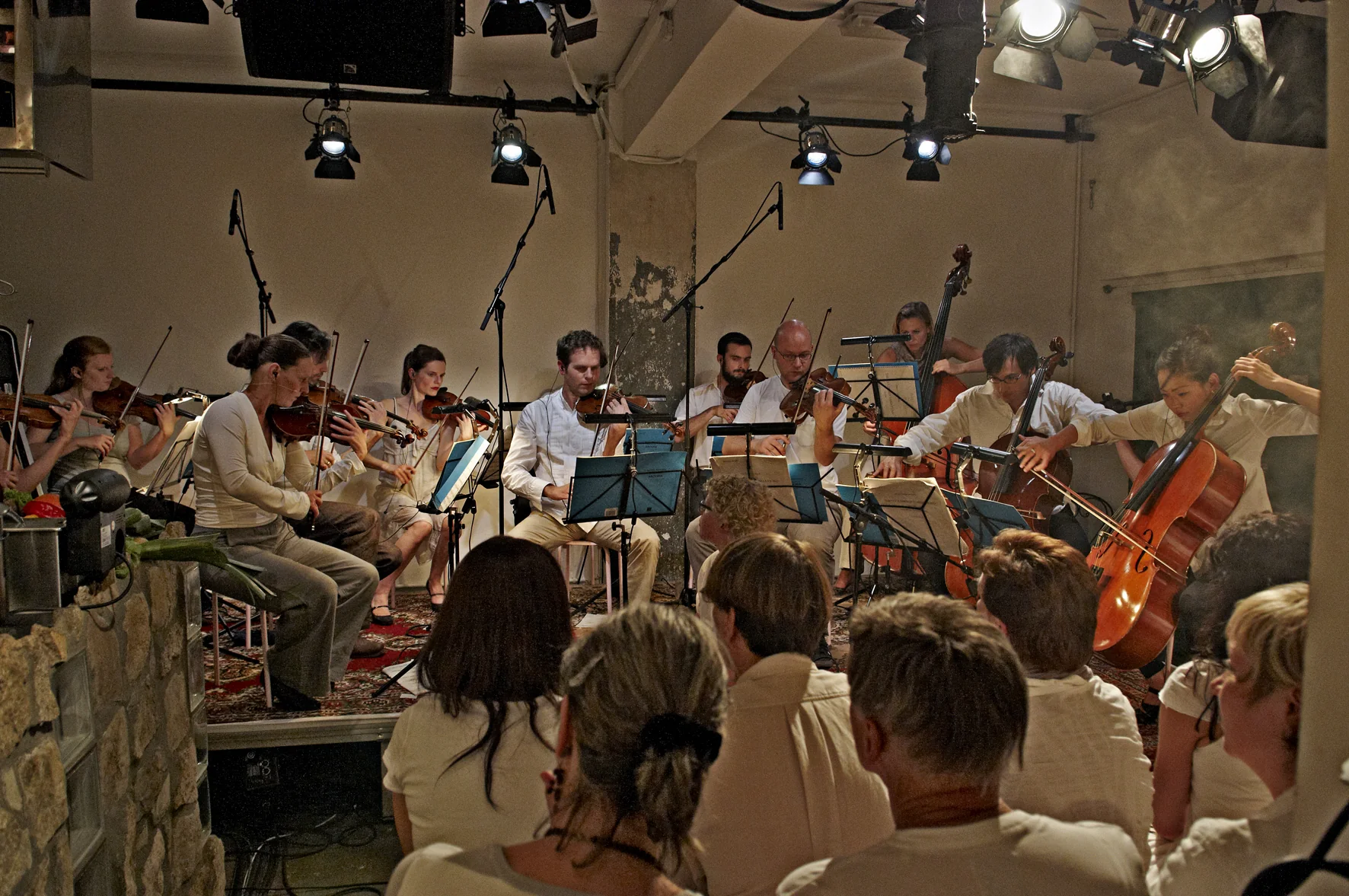
Image from Wikipedia
Image from Wikipedia
Ensemble Resonanz – The String Ensemble Between Classical, New Music, and Club Culture
An ensemble that seeks friction and rethinks sound spaces
Ensemble Resonanz is one of the most distinctive German chamber orchestras of the present day. Since its founding in 1994, and having been based in Hamburg since 2002, it has developed an artistic identity that consistently combines the care of classical repertoire, contemporary music, and experimental concert forms. In Hamburg, the ensemble performs at the Elbphilharmonie as an ensemble in residence and operates the resonanzraum St. Pauli, its own chamber music club where concert, encounter, and urban atmosphere intertwine. (de.wikipedia.org)
The self-description already points to an attitude that goes beyond mere interpretation: Ensemble Resonanz thinks of music as a dynamic system, as a dialogue between epochs, styles, and audiences. The ensemble's high level of enthusiasm for performance, its democratic organization, and openness to new formats shape its reputation as much as its presence in the international music world. On its official website, it is described as one of the leading chamber orchestras worldwide. (ensembleresonanz.com)
Biography: From Founding to Hamburg Institution
The roots of the ensemble lie in the youth and training scene of the German orchestral landscape. Founded by members of the Young German Philharmonic, Ensemble Resonanz established itself early on as a flexible formation with a string profile and open programmability. An important milestone was the early engagement with new music, understood not as a niche but as an artistic center. (music.metason.net)
Since 2002, the ensemble has been anchored in Hamburg, where it has built a rare double infrastructure: on one hand, its residence at the Elbphilharmonie, on the other, the resonanzraum in St. Pauli, which functions as a chamber concert club, event location, and experimental field. This location profoundly shapes its artistic development as it structurally embeds the proximity to the audience, openness to the city, and exchange with club culture and electronic art. (ensembleresonanz.com)
Artistic Profile: Between Chamber Orchestra and Soloists' Ensemble for New Music
Ensemble Resonanz consciously operates at an intersection: it is large enough for symphonic tension arcs yet transparent enough for chamber music precision. This duality explains why its repertoire includes Bach, Mozart, Beethoven, or Brahms alongside composers like Enno Poppe, John Cage, Luciano Berio, or Tyshawn Sorey. The ensemble utilizes historical music not as a monument but as contemporary material that is rearranged, contrasted, and dramatically sharpened. (ensembleresonanz.com)
A particularly important aspect is the collaboration with changing artistic partners. In the ensemble's recent history, Jean-Guihen Queyras, Tabea Zimmermann, Emilio Pomàrico, and Riccardo Minasi have significantly shaped its work as artist-in-residence or principal guest conductor. These partners mark various aesthetic poles, from classical textual fidelity to radical contemporary perspectives, and have clearly sharpened the artistic development of the ensemble. (de.wikipedia.org)
Career Highlights and Public Perception
The career of Ensemble Resonanz is closely linked to places, projects, and programmatic decisions that generate attention beyond the classical scene. The opening of the small hall at the Elbphilharmonie was just as significant as the profile of the resonanzraum St. Pauli as a site between club and concert hall. The press has described the ensemble for years as fearless, idiosyncratic, and interpretively excellent; especially the combination of intelligent dramaturgy and intense sound culture is repeatedly highlighted. (ensembleresonanz.com)
Another highlight was the awarding of the Johannes Brahms Medal of the Free and Hanseatic City of Hamburg in 2024. This accolade underscores the cultural authority of the ensemble in its hometown and points to its role as a mediator between musical tradition and contemporary relevance. At the same time, the media landscape shows that the ensemble is present not only in the concert hall but also in the public discourse regarding the future of classical music. (ensembleresonanz.com)
Current Projects: The Present as an Experimental Field
The years 2024 and 2025 depict an ensemble in productive motion. The official themes and press reviews feature projects like "resonanzen five" with a focus on Mozart, "resonanzen six" with Abel Selaocoe, the new production "longing to tell – a blues opera," as well as the format "urban string," which utilizes the resonanzraum as an intimate stage in the heart of St. Pauli. Additionally, there are digital projects and collaborations, such as with Nahre Sol as "Creator in Residence" at the Elbphilharmonie. (ensembleresonanz.com)
The Beethoven cycle "stolz & schmerz," which is designed to span several years, also showcases the strategic thinking of the ensemble. Such series connect musical analysis with a thematic focus, making the repertoire readable as a societal resonance space. Particularly striking is the combination of historical composition, new dramaturgy, and a stage language that understands the audience as part of the event. (ensembleresonanz.com)
Discography: Between Label Seriousness and Reassessing the Repertoire
The discography of Ensemble Resonanz is less a mere collection of recordings than a curated commentary on music history. On the official records page, you can find recordings of Mozart, Beethoven, Haydn, Bach, Pergolesi, Enno Poppe, and Bryce Dessner. These recordings demonstrate how the ensemble productively engages stylistic contrasts: historical performance practice, modern sound concepts, and precise ensemble work interplay harmoniously. (ensembleresonanz.com)
The collaboration with Riccardo Minasi and Harmonia Mundi is particularly noticeable, leading to several highly regarded releases in recent years. These include Mozart symphonies, Haydn projects, and recordings with soloists such as Anna Prohaska, Jean-Guihen Queyras, and Tabea Zimmermann. The press reviews emphasize clarity, drama, freshness, and structural precision – qualities that distinguish a good ensemble discography from a mere best-of collection. (ensembleresonanz.com)
Style and Musical Development: Precision, Risk, Openness
Stylistically, Ensemble Resonanz thrives on transparency and tension. The string sound remains fluid and articulated, the dynamics finely nuanced, and the phrasing often sharply defined, yet always warm. In programs featuring Mozart, Haydn, and Beethoven, a reading emerges that does not smooth out historical music but reveals its friction points. (ensembleresonanz.com)
Equally important is the openness to contemporary sound languages. In collaboration with composers and guests such as Enno Poppe, Patricia Kopatchinskaja, or Abel Selaocoe, the ensemble expands its horizon far beyond the classical core repertoire. The artistic value lies precisely in this agility: the interpretation remains technically high-precision, but dramaturgically unpredictable. (ensembleresonanz.com)
Cultural Influence: Hamburg Model with International Impact
Ensemble Resonanz has created a model in Hamburg that is rare in the European music scene. The combination of Elbphilharmonie, resonanzraum, and music mediation formats transforms the ensemble into a cultural infrastructure. As such, it influences not only the perception of classical music but also questions of accessibility, concert formats, and the role of an ensemble in a plural urban culture. (ensembleresonanz.com)
The press frequently articulates this influence in striking imagery: as a defibrillator for classical music, as an entity devoid of traditional frills, as an ensemble that not only serves the audience but actively engages them. This public resonance shows that the ensemble does not operate at the periphery of the music scene but at its center – with an artistic attitude that reimagines art, space, and audience. (ensembleresonanz.com)
Voices of the Fans
The ensemble's official channels show an audience that particularly appreciates the blend of virtuosity, experimentation, and atmosphere. On Instagram, the closeness to the stage and the energy of the projects are highlighted, while listeners on YouTube praise the musical precision and the courage to embrace unusual programs. On Spotify, many fans focus on the rediscovery of the repertoire – experiencing familiar music suddenly as if anew. (ensembleresonanz.com)
Conclusion: An Ensemble for Curious Listeners
Ensemble Resonanz is exciting because it connects the grand narratives of music history with the pressing questions of the present. It understands classical repertoire, new music, and urban presentation forms not as separate entities but as a cohesive artistic field. Those who experience this ensemble hear not only excellently performed string sound culture but also a clear stance on the future of concert life. (ensembleresonanz.com)
Especially in live performances, this work unfolds its full impact: in the tension between concentration and freedom, between concert hall and club, between awareness of tradition and curiosity. Ensemble Resonanz invites the audience to experience classical music as a living presence. Anyone who has the chance should definitely see this ensemble live. (ensembleresonanz.com)
Official Channels of Ensemble Resonanz:
- Instagram: https://instagram.com/ensembleresonanz/
- Facebook: https://facebook.com/ensembleresonanz
- YouTube: https://www.youtube.com/ensembleresonanz
- Spotify: https://open.spotify.com/artist/1iVYBsAuXpphPzqD1PQLKK?si=ChndWFYPRLipRB2tqSv6NQ
- TikTok: No official profile found
Sources:
Upcoming Events
Beethovenfest 2026: Momi Maiga & Ensemble Resonanz
An evening between Kora, strings, and great emotion: Momi Maiga & Ensemble Resonanz at Beethovenfest Bonn. 1.10.2026, 39 Euro. #Beethovenfest #Bonn
Charly Hübner & Ensemble Resonanz
Schubert meets Nick Cave: Charly Hübner & Ensemble Resonanz bring an evening full of tension, sound, and depth to Potsdam. #Concert