
David Garrett
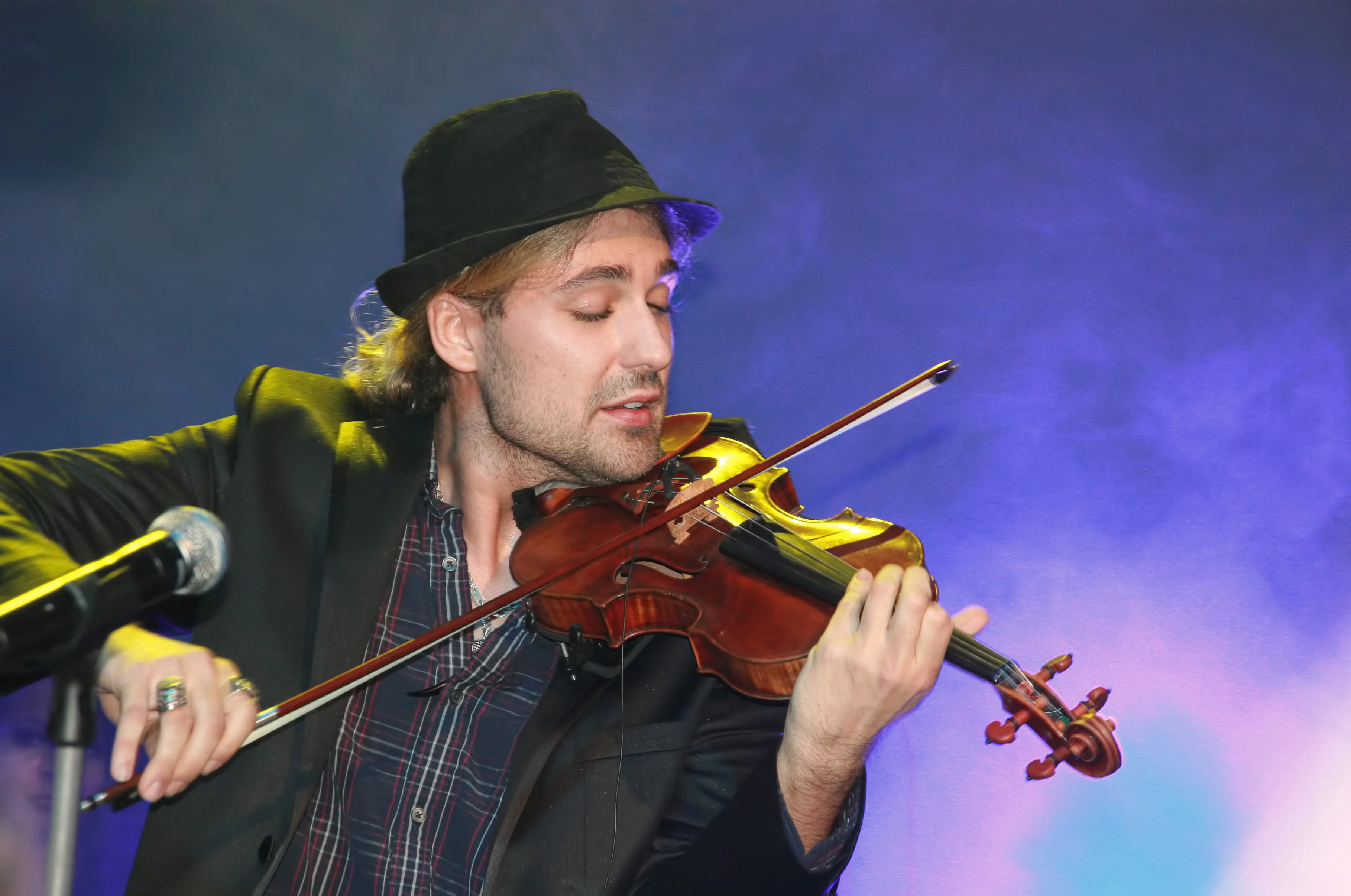
Image from Wikipedia
Image from Wikipedia
David Garrett: The Violinist Who Unites Classical and Pop at a World-Class Level
An Exceptional Artist Between Virtuosity, Crossover, and International Stage
David Garrett, born on September 4, 1980, in Aachen as David Christian Bongartz, is one of the most prominent personalities in modern violin artistry. Trained as a classical violinist, he is also a globally successful crossover artist who has consistently pushed the boundaries between concert halls, pop culture, and stadium experiences. His musical career tells a story of early-learned discipline, technical brilliance, and a stage presence that has made him well-known far beyond the classical scene. ([de.wikipedia.org](https://de.wikipedia.org/wiki/David_Garrett))
Early Influences: A Prodigy with a Clear Musical Mission
Garrett took up the violin at a young age, which determined his artistic life from the very beginning. His training early led him into the world of great classical music, where he grew up on repertoire from Beethoven, Bach, and Mozart, and faced the high demands of the instrument with utmost commitment even as a young musician. The official biography emphasizes that his path was shaped by daily work with his father and a childhood strongly based on discipline. ([david-garrett.com](https://www.david-garrett.com/en/bio))
Even at a young age, Garrett performed on stage with renowned orchestras and developed a reputation as an extraordinarily mature virtuoso. The Wikipedia biography describes him as a German violinist from Aachen who grew up with the classical tradition and gained a remarkable international perspective early on. Later, the child prodigy became a musician who not only interpreted but actively shaped his artistic identity. ([de.wikipedia.org](https://de.wikipedia.org/wiki/David_Garrett))
Education in New York and the Step Towards Artistic Independence
From 1999 to 2004, Garrett studied violin at the Juilliard School under Itzhak Perlman as well as musicology and composition. There, he even won a composition competition in 2003 with a fugue in the style of Johann Sebastian Bach, highlighting his stylistic depth beyond mere virtuosity. This phase marks the moment when the celebrated young talent became a reflective musician who combined technical sovereignty with compositional thinking. ([de.wikipedia.org](https://de.wikipedia.org/wiki/David_Garrett))
The early recordings already document his ability to penetrate classical literature with precision and expressiveness. On the official music section of his website, debut releases from the 1990s are listed alongside programs featuring Mozart, Beethoven, and Paganini; contemporary press reactions referred to the young violinist using terms such as "phenomenon," attributing him a maturity that surpassed his age. This particular phase laid the groundwork for his later reputation as an extraordinary musician with historical and technical authority. ([david-garrett.com](https://www.david-garrett.com/en/music/release/the-early-years-2))
The Breakthrough: From Classical Soloist to Crossover Star
The crucial boost in popularity in Germany came for Garrett in 2006 with the Berlin concert promoter DEAG, which took on his crossover project and shaped a new image as the "Violin Rebel." This marked the beginning of a career in which Garrett understood classical music not as a finished museum piece but as a vibrant language that could be intertwined with rock, pop, and orchestral force. This approach made him accessible to a broad audience without sacrificing compositional and technical substance. ([de.wikipedia.org](https://de.wikipedia.org/wiki/David_Garrett))
His official profile now describes Garrett as one of the most successful solo artists in the world, with more than five million albums sold, over 5.65 billion streams, and 32 gold and 14 platinum certifications. These figures not only reflect commercial success but also the unusual reach of his artistic model: Garrett connects with classical listeners as well as pop audiences seeking the energy of a grand live spectacle in his shows. ([david-garrett.com](https://www.david-garrett.com/en/bio))
Discography: From Classical to Cross-Genre Sound Architecture
David Garrett's discography shows a remarkable evolution from classical repertoire to large-scale crossover productions. Key albums include Virtuoso, Classic Romance, Rock Symphonies, Legacy, Music, Timeless, Explosive, Unlimited, Rock Revolution, ICONIC, and Millennium Symphony. These releases mark different stages of his artistic development: from conservatory-based classical to hymnal arrangements to hit-driven symphonic concepts of the present. ([david-garrett.com](https://www.david-garrett.com/en/music?utm_source=openai))
Particularly formative was Rock Symphonies, an album that did not pit classical music against rock music but rather brought them together in orchestral drama. Garrett explicitly states that for him there is no hierarchy between genres, citing influences from Jimi Hendrix to Itzhak Perlman. This attitude is central to his artistic identity: he thinks in arrangements, arcs of tension, and sonic contrasts, not in rigid stylistic boundaries. ([david-garrett.com](https://www.david-garrett.com/en/music/release/rock-symphonies-2))
With Alive - My Soundtrack and ICONIC, he further deepened the concept of emotionally charged reinterpretations of well-known melodies, while Millennium Symphony represents the clearest pop-historical approach to date. Released on October 18, 2024, the album processes hits from the last 25 years into symphonic versions, connecting titles from Taylor Swift, Rihanna, Ed Sheeran, The Weeknd, Coldplay, Beyoncé, and many others into a cross-genre panorama. Here, Garrett does not rely on mere cover aesthetics but on an orchestral rearrangement of pop history. ([david-garrett.com](https://www.david-garrett.com/en/music/release/david-garrett-millenium-symphony))
Style, Sound Language, and Musical Development
Garrett's style thrives on maximum control, lyrical tone, and a strikingly direct concert effect. In his interpretations, classical violin culture, virtuosity, and show dramaturgy converge; this mixture, in particular, creates a stage presence that makes him distinctive as a modern concert artist. His musical development reveals an artist who does not abandon tradition, but rather expands it by translating it into a contemporary sound and media understanding. ([david-garrett.com](https://www.david-garrett.com/en/bio))
His repertoire in the classical world ranges from Bach, Beethoven, Bruch, and Mendelssohn to Mozart, Paganini, Tchaikovsky, and Vivaldi. At the same time, he has collaborated with conductors such as Claudio Abbado, Zubin Mehta, Christoph Eschenbach, and Riccardo Chailly, as well as with renowned orchestras like the Vienna Symphony, the London Philharmonic Orchestra, the Filarmonica della Scala, and the Israel Philharmonic Orchestra. These collaborations lend his profile a classical authority that further legitimizes his popular successes. ([de.wikipedia.org](https://de.wikipedia.org/wiki/David_Garrett))
Critical Reception, Chart Successes, and Cultural Influence
Garrett's releases have consistently received high chart placements and awards. The Wikipedia discography documents platinum and gold status for several albums, while the official biography lists various ECHO Klassik, ECHO Pop, and other awards, including the Frankfurt Music Prize, the BZ Cultural Prize, the European Cultural Prize Taurus, and the OPUS Klassik Award 2023 for ICONIC. Thus, Garrett is not only a best-selling artist but also a widely recognized boundary crosser between high culture and mass audiences. ([de.wikipedia.org](https://de.wikipedia.org/wiki/David_Garrett))
The press regularly describes him as a musician who transforms classical concert formats into grand live experiences. Reports on the Millennium Symphony tour in 2025 talk of sold-out venues, great emotional impact, and a consistent combination of symphonic sophistication and pop energy. This cultural influence is crucial: Garrett has helped younger audiences perceive classical instrumental music as exciting, accessible, and spectacular. ([david-garrett.com](https://www.david-garrett.com/en/news/post/millennium-symphony-tour-successfully-started))
Current Projects: Millennium Symphony and the Continuation of the Success Story
With Millennium Symphony, Garrett launched a new chapter in his career in 2024. The album was announced as a “conceptual crossover album” and released on October 18, 2024; in 2025, an arena tour followed, which, according to the official website, sold out in Germany and Austria. Furthermore, more open-air dates in Germany and Austria are scheduled for March, July, and August 2026, impressively confirming the artist's continued relevance in live performances. ([david-garrett.com](https://www.david-garrett.com/en/music/release/david-garrett-millenium-symphony))
The official website describes the new project as a stylistic journey through pop, R&B, Latin, club/house, alternative rock, and soundtrack soundscapes. This range shows that Garrett views his artistic development not as repetition but as ongoing transformation. In the present, he appears less as a traditional crossover act and more as a curating architect of popular melodies clad in orchestral garments. ([david-garrett.com](https://www.david-garrett.com/en/music/release/david-garrett-millenium-symphony))
Conclusion: Why David Garrett Continues to Fascinate
David Garrett fascinates because he unites technical brilliance, media impact, and musical seriousness in a rare balance. He remains a violinist with classical depth but also a modern stage artist who brings together pop and classical music in a shared emotional space. Those who follow his career experience not only a virtuoso but a musician who continuously rethinks the concert format, thereby reaching an exceptionally wide audience. ([david-garrett.com](https://www.david-garrett.com/en/bio))
Especially in live performances, this power unfolds most strongly: the combination of precision, dynamics, show, and orchestral grandeur makes each concert an event. Anyone who experiences David Garrett on stage sees an artist who uses the violin as the voice of an entire musical present. This is where his lasting tension lies – and the strongest reason to experience him live. ([david-garrett.com](https://www.david-garrett.com/en/news/post/millennium-symphony-tour-successfully-started))
Official Channels of David Garrett:
- Instagram: https://www.instagram.com/davidgarrettinsta/
- Facebook: https://www.facebook.com/davidgarrettofficial/
- YouTube: https://www.youtube.com/@davidgarrettmusic
- Spotify: No official profile found
- TikTok: https://www.tiktok.com/@DavidGarrettTikTok
- X: https://twitter.com/david_garrett
Sources:
- David Garrett - About Me / Official Biography
- David Garrett - Music / Official Discography
- David Garrett - Millennium Symphony (official album page)
- David Garrett - Contact / Official Social Media Channels
- David Garrett - Millennium Symphony Tour successfully started
- David Garrett - Open Air Tour 2026
- Wikipedia: David Garrett - Image and Text Source
Upcoming Events
David Garrett - Millennium Symphony Open Air Tour 2026
David Garrett – Millennium Symphony Open Air Tour 2026
David Garrett – Millennium Symphony Open Air Tour 2026
DAVID GARRETT Millennium Symphony Open Air Tour 2026
David Garrett - Crossover Violin Show
David Garrett - Millennium Symphony Open Air Tour 2026
David Garrett – Millennium Symphony Open Air Tour 2026